
Exodraft
Shop Exodraft chimney fans, controls and accessories from Bonfire, an official UK Exodraft distributor. Powered chimney fans create controlled negative pressure within the flue, helping resolve inadequate draught, smoke spillage, difficult lighting and unstable combustion in suitable wood-burning, solid-fuel and gas installations.
Explore Exodraft RS, RSV, RSHT, RSG, RHG and specialist fan systems alongside controls, flanges and accessories. Correct fan selection depends on the appliance, flue diameter, chimney height, resistance and required draught, so speak to our team if specification has not already been completed.

Showing 1–48 of 61 results
-

RSVG Chimney Fans (3)
-
RSV Chimney Fans (11)
-
RSHT Chimney Fans (4)
-
RSHG Chimney Fans (2)
-
RSG Chimney Fans (2)
-
RS255-285 Chimney Fans (2)
-
RS (009-016) Chimney Fans (4)
-
RHGC Chimney Fans (2)
-
RHG Chimney Fans (1)
-
Controls For Chimney Fans (10)
-
Accessories For Chimney Fans (9)
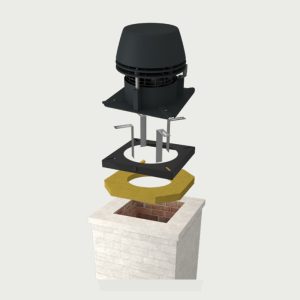
- Complete chimney fan package
- For single and multiple fireplaces
- RS009 chimney fan included
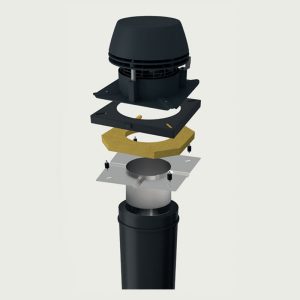
- Complete chimney fan package
- For steel chimneys
- RS009 chimney fan included
- Complete chimney fan package
- RS012 chimney fan included
- For open fireplaces
- Complete chimney fan package
- RS012 chimney fan included
- For open fireplaces
- Complete chimney fan package
- For single fireplaces
- RSV009 chimney fan included
- Complete chimney fan package
- For steel chimneys
- RSV009 fan included
- Complete chimney fan package
- RSV012 chimney fan included
- For open fireplaces
- Complete chimney fan package
- RSV012 chimney fan included
- For open fireplaces
- Reduces particles by 95%
- Suitable for wood burning/ multi fuel stoves
- Integrated chimney fan
- Reduces particle numbers by up to 99.5%
- Reduces particle mass by up to 90%
- Fits 150mm chimney systems
- Suitable for gas appliances
- Centrifugal impeller system
- Horizontal discharge design
- Handles up to 15 bends
- Wall mounted or top mounted design
- Suitable for gas installations, 13 kW
- Handles up to 15 bends
- Wall mounted or top mounted design
- Suitable for gas installations, 13 kW
- Suitable for solid fuel or oil
- Discharge is horizontal
- Additional control, isolation switch and flange required
- Suitable for solid fuel or oil
- Discharge is horizontal
- Additional control, isolation switch and flange required
- Suitable for solid fuel or oil
- Discharge is horizontal
- Additional control, isolation switch and flange required
- Suitable for solid fuel or oil
- Discharge is horizontal
- Additional control, isolation switch and flange required
- Horizontal flue gas discharge
- 0.4 A energy-efficient motor
- For oil, gas, biomass
- High-performance 0.8 A motor
- Horizontal discharge configuration
- Withstands 250 °C temperatures
- Ideal for gas installations
- Wall mounted design
- Ensures optimal draft pressure
- Suitable for gas installations
- Wall mounted design
- Creates optimal negative pressure
- Horizontal discharge for venting
- Fail-safe function for gas leaks
- Corrosion-resistant aluminum construction
- Horizontal discharge for venting
- Built-in fail-safe gas protection
- Corrosion-resistant aluminum construction
- Suitable for solid fuel or oil
- Discharge is horizontal
- Additional control, isolation switch and flange required
- Suitable for solid fuel or oil
- Discharge is horizontal
- Additional control, isolation switch and flange required
- Suitable for solid fuel or oil
- Discharge is horizontal
- Additional control, isolation switch and flange required
- Suitable for solid fuel or oil
- Discharge is horizontal
- Additional control, isolation switch and flange required
- Vertical discharge design
- Suitable for solid fuel
- Axial vane impeller
- Vertical discharge design
- Suitable for solid fuel
- Axial vane impeller
- Axial vane impeller – Consistent, efficient airflow.
- Vertical discharge system – Safely directs smoke away.
- High-temperature resistant – Withstands up to 250°C.
- Axial vane impeller – Maximizes airflow efficiency.
- Vertical discharge design – Prevents smoke backdrafts.
- High-temperature resistant – Endures temperatures up to 250°C.
- Compact, lightweight design
- For multi storey buildings
- Suitable for gas, oil and biomass boilers
- Medium capacity airflow
- For gas, oil and biomass boilers
- Suitable for multi storey biuldings
- High performance impeller
- For multi storey buildings
- Suitable for oil, gas and biomass boilers
- Commercial grade power
- Suitable for oil, gas and biomass boilers
- For multi storey buildings
- Handles up to 250°C
- Suitable for oil, gas, biomass boilers and multi-storey buildings
- Vertical discharge
- Three phase for high output
- Suitable for gas, oil and biomass boilers
- For multi storey buildings
- Maximum airflow capacity
- Suitable for gas, oil and biomass boilers
- For multi storey buildings
- Suitable for gas
- Discharge is vertical
- Additional control, isolation switch and flange required
- Suitable for gas
- Discharge is vertical
- Additional control, isolation switch and flange required
- Suitable for gas
- Discharge is vertical
- Additional control, isolation switch and flange required
- For systems above 15 kW
- 1/2” connection size
- Strong, reliable gas flow control
- For gas systems up to 15 kW
- 1/4” connection size
- Reliable single solenoid operation
- Fits Exodraft chimney fans
- Airtight, vibration-free seal
- Ideal for steel chimneys
- Reduces noise and vibration
- Fits flange-mounted fans
- Extends system lifespan
- Wireless touch and app control
- Boost for quick ignition
- Learns and adapts automatically
- 2-pole safety disconnection
- For EFC/EBC control units
- Quick, safe power isolation
- 4-pole full isolation
- For EFC18 and EFC21
- Suitable for larger setups




















Showing 1–48 of 61 results
You've viewed 48 of 61 products
Exodraft Powered Chimney Fans
Exodraft specialises in mechanical chimney draught systems for fireplaces, wood-burning stoves, solid-fuel appliances, gas fires and commercial flue systems.
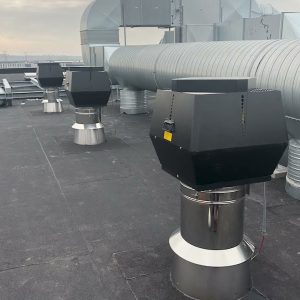
An Exodraft fan is installed at or near the termination of the chimney and creates controlled negative pressure within the flue. Rather than relying entirely on natural chimney draught, the system actively draws combustion gases upwards and away from the appliance.
Bonfire is an official UK Exodraft distributor, supplying chimney fans, controllers, flanges and accessories alongside professional survey, calculation and installation services.
When Is a Chimney Fan Needed?
A chimney fan should normally solve a defined draught problem rather than simply being added to every fireplace.
Common reasons for specifying an Exodraft system include:
- Smoke entering the room when lighting the fire
- Smoke spillage when opening the stove door
- Insufficient natural chimney draught
- A chimney that is too short to perform reliably
- Complex flue routes or excessive resistance
- Negative pressure within the property
- Large fireplace openings with demanding draught requirements
- Difficult wind conditions around the chimney termination
- Gas appliances requiring mechanically assisted flue-gas removal
The underlying cause should be established before choosing the fan. Blockages, incorrect flue sizing, insufficient ventilation or an unsuitable appliance installation should not simply be hidden by fitting a powered fan.
How Does an Exodraft Chimney Fan Work?
The fan creates suction at the top of the chimney, producing negative pressure throughout the flue.
This helps draw combustion air through the appliance and moves smoke and flue gases safely towards the terminal. On a correctly designed system, this can make lighting easier, stabilise combustion and greatly reduce smoke spillage into the room.
The amount of suction must be controlled. Too little draught will not solve the problem, while excessive draught can cause the appliance to burn too quickly and reduce controllability.
This is why the fan, controller and flue system should be specified together.
Exodraft RS Chimney Fans
The RS series is one of Exodraft’s principal fan ranges for wood-burning stoves, open fireplaces and other solid-fuel applications.
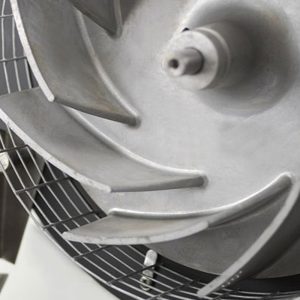
RS fans discharge the flue gases horizontally and are available in several capacities, including RS009, RS012, RS014 and RS016 models alongside larger RS255 and RS285 units.
They are designed to withstand the operating conditions associated with solid-fuel combustion and can be opened to provide access for chimney cleaning and maintenance.
The correct RS model is selected from the calculated flue-gas volume and pressure requirement rather than simply matching the fan to the diameter of the chimney.
Exodraft RSV Chimney Fans
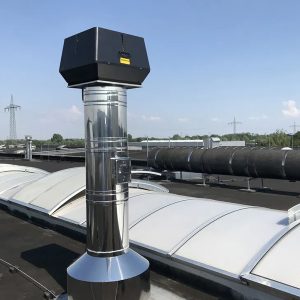
The RSV series performs the same basic function but discharges flue gases vertically.
This can make RSV more appropriate where the chimney terminal, surrounding roof or prevailing conditions favour vertical discharge.
Current versions span several sizes, allowing the system to be specified for different residential and commercial applications.
Choosing between RS and RSV therefore involves more than capacity alone; the required discharge direction and chimney arrangement also matter.
Exodraft RSHT High-Temperature Fans
The RSHT range is intended for more demanding solid-fuel applications with higher flue-gas temperatures.
Typical applications can include larger fireplaces, masonry heaters, wood-fired boilers and other installations where the operating temperature exceeds the intended range of a standard chimney fan.
A high-temperature fan should only be specified where the calculated operating conditions require it.
Exodraft Fans for Gas Appliances
Exodraft also manufactures mechanical draught systems specifically for gas-fired appliances.
Bonfire’s range includes models from families such as RHG, RSHG, RHGC, RSG and RSVG, depending on the appliance and flue arrangement.
Some systems can accommodate long or complex flue routes that would be difficult to achieve through natural draught alone.
Gas applications require appropriate fail-safe control and must be designed and installed in accordance with the appliance, Exodraft system and current gas regulations.
Which Exodraft Fan Do I Need?
There is no reliable rule such as “6-inch flue equals RS009”. Fan selection depends on the complete system.
Important factors include:
- Appliance type and fuel
- Required chimney draught
- Flue diameter
- Total chimney height
- Vertical and horizontal flue lengths
- Number and angle of bends
- Flue-gas temperature
- Open-fire dimensions
- Terminal position
- Existing natural draught
- Pressure losses through the system
The fan should be sized so it can overcome the calculated resistance while still operating within a sensible controllable range.
Controls Are Part of the System
A powered chimney fan normally requires more than the fan itself.
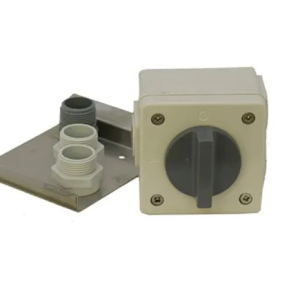
Depending on the installation, the complete specification may include a controller, isolation switch, mounting flange, temperature sensor or safety-monitoring equipment.
Controls allow the fan speed or required draught to be adjusted so the appliance is not subjected to excessive suction.
For gas installations, the correct safety-control arrangement is particularly important because appliance operation may need to be prevented if adequate flue draught is not established.
Exodraft Draftbooster
Exodraft also produces the Draftbooster for suitable domestic wood-burning installations.
It is designed as a more straightforward draught-assistance solution than some of the larger professional RS systems, but suitability should still be checked against the appliance, chimney and required performance.
Where the installation has significant resistance, an unusually large fireplace or a known complex draught problem, a properly calculated professional chimney-fan system may be more appropriate.
Survey & Installation by Bonfire
A chimney fan is not simply something we recommend “putting on top of the chimney” without understanding the system below it.
Bonfire can provide a survey and chimney-fan installation service, which can include:
- Assessment of the existing appliance and chimney
- Flue dimensions and route
- Draught and performance considerations
- Fan and controller specification
- Electrical requirements
- Suitable mounting flange and termination
- Professional installation
- Testing and commissioning
For supply-only purchases, the installer or system designer remains responsible for confirming that the selected components are suitable for the application.
Why Buy Exodraft from Bonfire?
Bonfire supplies complete chimney and flue systems as well as appliances, so our team understands the relationship between the fire, chimney, ventilation and fan rather than treating the Exodraft unit as an isolated accessory.
- Official UK Exodraft distributor
- Residential and commercial products available
- Solid-fuel and gas fan systems
- Controllers, flanges and accessories
- Supply-only or professional installation
- Chimney surveys and technical specification
- Aftercare and maintenance support
Exodraft FAQs
What does an Exodraft chimney fan do?
It creates controlled negative pressure within the chimney, helping draw smoke and combustion gases away from the appliance and improving draught where natural chimney performance is insufficient.
Will a chimney fan stop smoke coming into the room?
It can resolve smoke spillage caused by inadequate draught when correctly specified. The underlying chimney, ventilation and appliance installation should still be checked first.
What is the difference between Exodraft RS and RSV?
Both are powered chimney fans, but RS models discharge horizontally while RSV models discharge vertically. Capacity and model size must also be selected according to the system calculation.
Can I choose an Exodraft fan from my flue diameter?
No. Flue diameter is only one factor. Chimney height, bends, appliance type, flue temperature, pressure loss and required draught all influence correct fan sizing.
Does an Exodraft chimney fan need a controller?
Most professional powered-fan installations require an appropriate control arrangement so fan performance can be matched to the appliance and chimney. The exact controller depends on the application.
Can Exodraft be used with gas fires?
Yes. Exodraft manufactures dedicated gas-flue fan systems. These must be correctly specified with the required safety controls and installed by appropriately qualified professionals.
Can Bonfire specify and install an Exodraft fan?
Yes. Bonfire can survey suitable installations, specify the fan and associated components and provide professional installation and commissioning.


