Installing a wood burning stove is one of the most effective ways to add warmth, atmosphere, and character to a home and, if chosen and installed correctly, it can also be an economical and efficient heating option.
However, a safe and legal installation involves much more than placing a stove and lighting a fire. Building regulations, flue design, ventilation, hearth construction, and smoke control rules all affect whether your stove installation is safe, efficient, and compliant.
At Bonfire, a family run company with over 25 years experience, we have fitted thousands of wood burning stoves across homes in the UK.
In this guide, we provide homeowners with everything they need to know: from the tools and materials required, to step by step installation instructions, safety regulations, common mistakes, maintenance advice, and cost considerations.
We also explain why many homeowners choose a HETAS certified installer to ensure compliance, avoid delays, and secure warranties.

Image Features: Jotul F400 wood burning stove with tracery door
This guide combines practical instructions, expert insights, and links to essential resources so you can approach stove installation confidently, whether DIY or professional.
Estimated reading time: 29 minutes
Table of contents
- Safety, Regulations and the First Decisions
- DIY vs HETAS Certified Installation
- Why Signing Off Your Stove Installation Matters
- Tools, Parts and Materials You’ll Need
- Step by Step Installation: Existing Chimney
- Step by Step Installation: No Chimney
- Installing with a False Chimney Breast
- Choosing the Right Wood Burning Stove
- Choosing the Right Fuel
- How Much Does It Cost to Fuel?
- Common Mistakes (From 25+ Years of Bonfire Experience)
- First Burn, Testing and Certification
- Maintenance & Aftercare
- Typical Costs and Timeframes
- Why Choose Bonfire
- FAQ
Safety, Regulations and the First Decisions
Before buying or fitting a stove, it’s crucial to understand the legal framework that governs solid fuel appliances in the UK.

If you’re still deciding whether a wood-burning stove is right for your home, read our comparison guide:
👉 Log Burner vs Electric Fire vs Gas Fire: What’s Best for You?
🏡 Regulations You Must Follow
A wood burning stove installation in the UK is governed by:
- Building Regulations Approved Document J
- The manufacturer’s installation instructions
- HETAS regulations and guidance
🔧 Building Regulations: Approved Document J
Approved Document J sets out the official guidance for the safe installation of combustion appliances, including wood burning stoves, as well as the requirements for flues, chimneys, air supply, and hearth construction.
It is the definitive UK standard for safe and compliant solid fuel installations.
🔗 Approved Document J – GOV.UK
🧱 Manufacturer’s Installation Instructions
Every stove model has specific requirements for clearances, flue size, and ventilation. Following the manufacturer’s instructions is mandatory to ensure safety and maintain your warranty.
🧑🔧 HETAS Regulations & Competent Installers
Installations should also comply with HETAS (Heating Equipment Testing and Approval Scheme) standards.
HETAS approved installers are trained to meet Building Regulation requirements and issue a Certificate of Compliance when the work is complete.
🔗 HETAS Regulations & Guidance – hetas.co.uk
🌫 Smoke Control Areas
If you live in a Smoke Control Area, additional restrictions apply. Only DEFRA approved (exempt) stoves and authorised fuels are legal to use.
Using non approved appliances or fuels can lead to fines or enforced removal.
🔗 Check Smoke Control Areas – GOV.UK
🔗 DEFRA Interative Map – GOV.UK
Key Points Before Installation
- The stove, flue, and hearth must all comply with manufacturer instructions and Part J of the Building Regulations.
- A carbon monoxide alarm is mandatory in any room containing a solid-fuel appliance.
- Hearths must meet specific projection and clearance requirements.
- Flues must be correctly sized, sealed, and supported for safe operation.
DIY vs HETAS Certified Installation
When it comes to installing a wood burning stove, there are two legal routes to achieve compliance in the UK:
A. HETAS Registered Installer (recommended)
HETAS is the UK’s official competent person scheme for solid fuel appliances.
A HETAS engineer completes an intensive four day training course, followed by both practical and theoretical assessments. Certification must be renewed every three years to ensure their installations remain safe and fully compliant with current regulations.
Using a HETAS registered installer simplifies everything:
- Self certification: The installer can register the work and no separate council inspection required.
- Immediate compliance: Work is registered online and legally compliant as soon as installation is complete.
- Certificate of Compliance: You receive a HETAS Certificate, needed for insurance purposes or property sales.
- Peace of mind: The installer takes full responsibility for compliance and quality, reducing stress, delays, and risk of costly errors.
Find a Local HETAS Installer – Or get a quote from us or learn more about our installation service
When choosing a HETAS installer, there are two main options: independents (“a man in a van”) and fireplace shops.
While both are qualified, using a fireplace shop is the most common and usually the wiser choice. Unlike independent installers, fireplace shops can manage the full process, from supply and design to installation, making the experience smoother and more convenient.
Important Note: A HETAS installer is not allowed to “sign off” another person’s work. They take legal responsibility for the entire installation, which is why most prefer to supply and install all components, often passing on trade discounts and warranties.
They offer access to a wider range of stoves, including premium models, often with better discounts and expert guidance tailored to your home. Plus, they provide ongoing support, warranties, and aftercare, giving you peace of mind long after the installation is complete.
Choosing a fireplace shop means you’re not just hiring an installer, you’re gaining a trusted partner for your home heating needs, avoiding the potential hassles and limited options that can come with a one person operation.

B. DIY Installation (with Building Control sign off)
Technically, you can fit a stove yourself if you’re not part of a recognised competent person scheme but the DIY route comes with significant challenges:
- Notify Building Control: The local council must liaise with Building Control to arrange an inspection and formally sign off your installation in person.
- Typical inspection costs: £600+ (councils vary).
- Waiting times: Usually 5 weeks to 2 months, sometimes longer.
- Risk of failed inspection: If your installation doesn’t meet Part J or manufacturer standards, you could face costly remedial work before approval. This can significantly delay use of your stove.
- Complex paperwork: Detailed records and photos are required to demonstrate compliance.
In practice, while this route is technically permitted, most homeowners find it time consuming, stressful, and expensive if issues arise. The potential pitfalls make it the least common and straightforward option.
Expert tip: Most homeowners choose a HETAS installer because it’s faster, more reliable, and often more cost effective than hiring a builder and then arranging inspection approvals.
Why Signing Off Your Stove Installation Matters
Getting your wood burning stove installation officially signed off is far more than just a paperwork step. It ensures safety, legal compliance, and protects your investment.
In the UK, Building Regulations (Part J) and smoke control rules make sign off mandatory unless the work is self certified by a HETAS registered installer.

1. Safety is Critical
Incorrect stove or flue installation can lead to serious hazards:
- Carbon monoxide poisoning: The Health and Safety Executive (HSE) estimates that around 50 UK deaths per year are linked to CO from solid fuel appliances – Learn about the dangers of carbon monoxide and log burners
- Fire risk: Improper hearths, flue clearance, or chimney installation increase the likelihood of house fires. In England, a total number of 2,019 chimney fires occurred from April 2024 to March 2025 – Fire statistics
- Smoke spillage: Can cause respiratory issues and property damage.
Official sign off ensures a competent authority or HETAS installer has checked compliance with Part J of the Building Regulations, manufacturer guidance, and local smoke control rules.
2. Legal Compliance
Failing to have your stove signed off can have serious legal consequences:
- Building Regulations enforcement: Local authorities can issue notices requiring you to make remedial work if installations do not comply.
- Fines: Non compliance with Part J can lead to fines up to £5,000 in some cases, particularly if unsafe installations are identified after a fire or incident.
- Property sales: Mortgage lenders may request evidence of compliant installation. Lack of sign off can delay or even prevent a sale.
3. Insurance Protection
Home insurance policies generally require evidence of a certified installation for wood burning stoves:
- If a fire occurs and there’s no approved sign off, insurers can refuse to pay claims.
- HETAS certified installation or Building Control approval protects you from disputes over liability and ensures your claim is valid.
4. Financial & Practical Peace of Mind
- DIY inspection fees: Council Building Control inspections cost £600 to £1,000 on average and can take 5 weeks – 2 months to schedule.
- HETAS certification: Avoids inspection delays, provides a certificate immediately, and guarantees the work is compliant.
- Property value: Certified stoves maintain property value, giving potential buyers confidence in safety and compliance.
Tools, Parts and Materials You’ll Need
Before beginning, gather every required component. Missing or incompatible parts are the biggest cause of unsafe or delayed projects.
You’ll need:
- A DEFRA approved (dependant on whether in a smoke control area) or Eco Design Ready 2022 stove.
- The manufacturer’s installation manual.
- A flue system (liner, pipes, support brackets, register plate, terminal, and cowl).
- Flue insulation, if required.
- Non combustible hearth materials (correct thickness, projection and finish).
- High temperature sealant and refractory mortar.
- Carbon monoxide alarm.
- PPE (gloves, goggles, dust mask).
- Tools: measuring tape, drill, level, masonry bits, silicone gun, spanners, chisels, and supports.

Step by Step Installation: Existing Chimney
This walkthrough outlines the installation of a wood burning stove using a flexible flue liner into a pre-existing fireplace with a chimney and chamber.

Image Features: Charnwood C Four wood burning stove
Package deals are a great way to save. As an example, view flexible flue liner package deal
Follow these steps closely and consult manufacturer instructions or a HETAS installer if unsure.
Watch our video below showing a stove installation within a chamber. Although the example features a gas stove, the same principles apply to solid fuel appliances, except for the inclusion of a gas feed and no liner which a log burner will obviously require.
Step 1: Choose the Location
- Critical clearances: Ensure all sides, rear, and top of the stove meet Part J requirements. Accurate measurements are essential for safety and efficient operation.
- Heat distribution: Place the stove to allow even room heating and avoid overloading the flue.
- Hearth verification: Check that the hearth is load bearing, of the correct thickness, and projects the minimum distances (manufacturer specific).
- Outside air connector: Some properties require a dedicated air supply or core room vent. Factors include property age, open plan kitchens, or stoves with heat output above 5 kW.
A freestanding stove (with 4 legs) can be installed or an inset (cassette) wood burning fire like the below.
View the difference with our video here

Tip: Measure twice and plan the layout carefully before moving the stove into position.
Step 2: Inspect the Chimney
- Ensure the chimney is structurally sound, fully clear of obstructions, and appropriately sized for the stove and flue liner. Mainly a 5″ or 6″ liners is used.
- Most installations require a 316 stainless steel flexible flue liner, which must be installed continuously from the stove outlet to the terminal.
- Check for cracks, loose joints, or damage that could affect draught or stove performance.
Tip: Professional assessment from a certified chimney sweep or HETAS engineer is recommended, especially if the chimney hasn’t been used recently.

Step 3: Prepare the Hearth
- Confirm the bespoke cut hearth is made from non combustible materials and meets thickness, projection, and load requirements.
- Hearth projections: minimum 150 mm at the sides, 300 mm in front of the stove door (check manufacturer specs).
- Ensure the surface is level and stable to support the stove’s weight and any flue attachments.
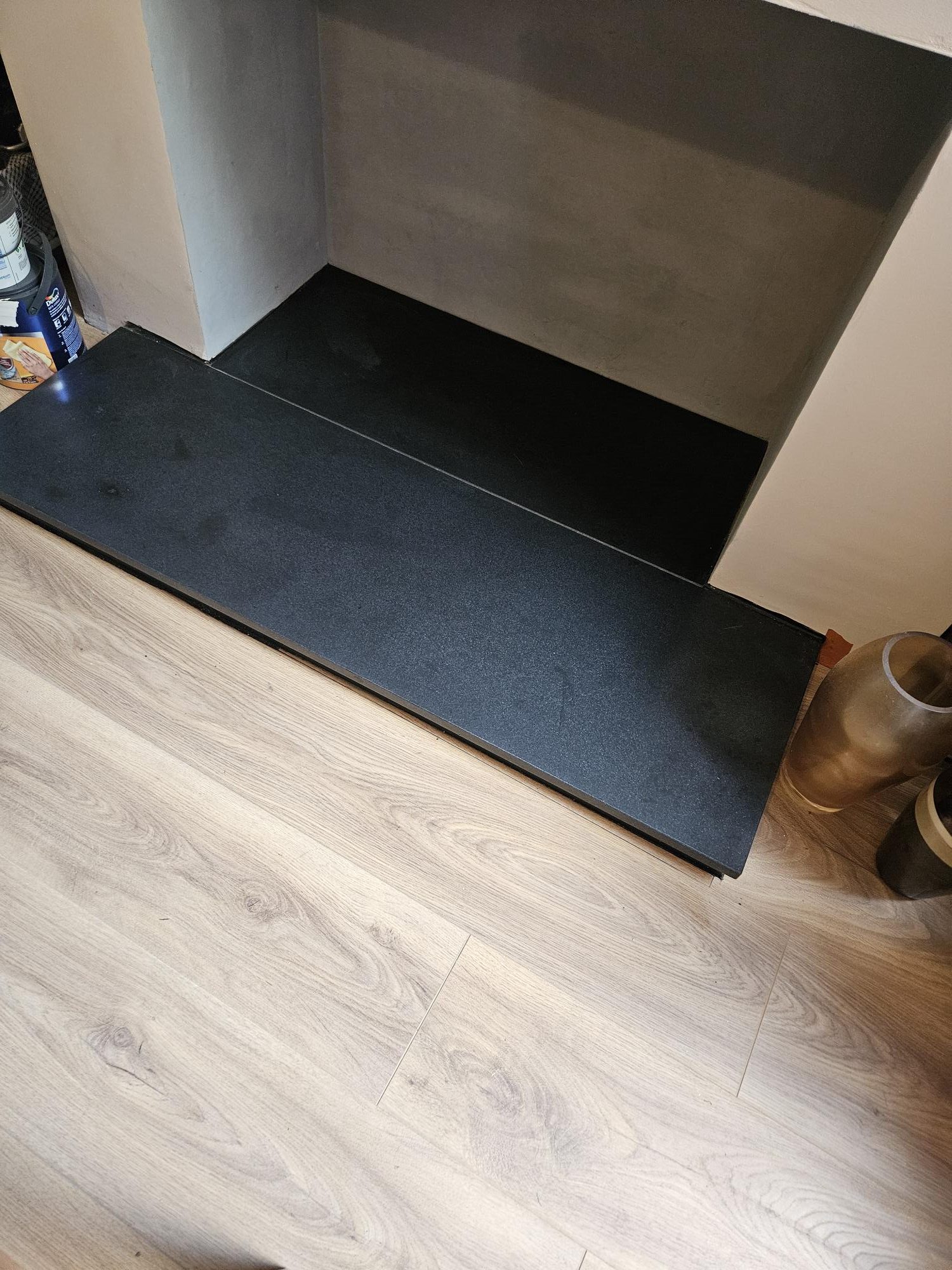
Tip: Opting for a front and rear fireplace hearth is the most common configuration. It is cheaper, easier to transport and install, allows the front section to be replaced if damaged, and provides stronger expansion points without weakening at the wall.
A properly constructed hearth not only ensures compliance with a designated area but also protects floors and enhances efficiency.
Require bespoke fireplaces hearths cut to size? Use our Customer Fireplace Hearth service
Step 4: Fit the Flue Liner and Terminal

- Install the liner continuously from stove outlet to terminal, with all joints properly aligned and sealed.
- Terminal height and positioning must meet Document J roof clearance requirements, considering building shape, nearby structures, and wind exposure.
- Airflow: Never reduce the flue diameter or restrict airflow, as this can reduce efficiency and compromise safety.
- Orientation: Ensure the liner is installed the correct way up; reversing it can affect draught and performance.
Tip: Take your time with each joint and support bracket; even small gaps can impact stove efficiency.
Step 5: Position and Connect the Stove
- Carefully lift the stove into position on the prepared hearth.
- Connect the flue to the stove via the register plate (closure plate), ensuring alignment and airtight joints.
- Verify that the stove is level and stable before proceeding.
Tip: Using supports, soft surfaces or small lifting aids can help prevent damage and make alignment easier.

Step 6: Seal, Test, and Finish
- Seal all gaps around the register plate with high temperature refractory sealant.
- Install and test carbon monoxide alarms and smoke detectors in the same room. These have to be installed in specific locations.
- Conduct a controlled first burn or smoke pellet test to confirm proper draught, flue operation, and absence of leaks.
- Once confirmed, finish any cosmetic work, such as sealing or plastering around the chimney breast.
You can furthermore enhance your fireplace with a fireplace beam or fire surround.

Image Features: Abingdon Limestone Fireplace Surround
A stone fire surround can be added to enhance the overall look of your fireplace, creating a stylish focal point in the room. It also adds character and depth, complementing both traditional and modern interior designs.
When you’re planning a wood burner installation and you’re wanting to twin it with a fireplace surround it is important to understand the following:
- A rebate is a recessed groove cut into the edge of a material to allow one piece to neatly overlap or fit into another, creating a flush and secure joint. Learn more
- A slip set bridges the gap between the fireplace surround and the opening size or to an inset wood burner, ensuring the wall behind is not visible for a clean, professional look. It is important for the slips to go behind the fire surround. Learn more
Require bespoke fireplaces or slip sets cut to size? Use our Cut To Size service
Step by Step Installation: No Chimney
For this type of installation a twin wall flue system is required.
We also have a no chimney package dealer, please view twin wall package deal
Step 1: Choose the Location

Image Features: Dovre Astroline 4 Wood Burning Stove
- Ensure sufficient clearance to combustibles (sides, rear, top).
- Plan for optimal heat distribution in the room.
- Verify your hearth construction complies with Part J and manufacturer specifications.
- Consider whether the flue will run internally through a loft/ceiling or externally along the wall.
Step 2: Prepare the Hearth
- Construct or verify a non combustible base of adequate thickness.
- The hearth should project at least 150mm on sides and 300mm in front of the stove door (or follow manufacturer guidance).
- Ensure the base can safely support the stove weight plus any flue attachment brackets.
Step 3: Plan and Route the Twin Wall Flue

- Decide whether the flue will be routed internally (through the ceiling and loft) or externally (along an outside wall).
- Maintain required clearances: typically 50mm from combustibles.
- Check roof or wall penetrations for safe installation, sealing, and insulation as required.
- Ensure there is a practical access point for cleaning and maintenance, such as a soot door or inspection hatch.

Pro Tip: Regulations specify limits on the horizontal distance, the number of bends permitted within a system, angle when going through a wall and the minimum overall flue length. Always check these requirements before installation.
Step 4: Assemble the Flue Sections
- Connect the twin wall flue sections securely from the stove outlet up to the terminal.
- Use brackets or support straps where required to maintain stability and prevent sagging.
- Ensure all joints are sealed and tight to avoid smoke leaks.
Pro Tip: Not all twin wall flue systems are created equal. Choose a high quality, open ended system from a reputable manufacturer to ensure long term performance, durability, and safety.
For a closer look at the best options, watch our detailed video on the best twin wall flue below.
Step 5: Install the Flue Terminal
- For external systems, ensure the terminal extends a minimum of 600 mm above the roof surface and 2.3 m from any nearby weather surface. Use a cherry picker or scaffolding for areas inaccessible by ladder.
- For internal systems: the terminal should meet Document J guidance for height above roof or ceiling, ensuring good draught.
- Fit the storm and bird cowl to prevent ingress of rain, debris, or birds.
Tip: Every installation is different, so it’s a good idea to speak with a local HETAS registered engineer to make sure your setup is right for your specific project.
Step 6: Position and Connect the Stove
- Carefully move the stove into position on the hearth.
- Connect the stove outlet to the twin wall flue using the appropriate collar or register plate (closure plate).
- Ensure the stove is level and stable, and all flue joints are properly aligned.
Step 7: Seal, Test, and Finish
- Seal any gaps around the flue penetration points and the base of the terminal.
- Install a carbon monoxide alarm and smoke detector in the room for safety. These are to be installed in certain places only.
- Conduct a controlled first burn or smoke pellet test to verify draught and check for leaks.
- Once confirmed, finish any cosmetic work, such as covering exposed flue sections or plastering around internal walls.
Pro Tip: For twin wall installations, a loft cage is recommended for internal flues to prevent combustible materials (like stored boxes) from coming into contact with the flue. Always leave access for maintenance.
Installing with a False Chimney Breast
A false chimney breast can give your log burner a traditional fireplace appearance while concealing the flue system.

Image Features: Charnwood Cranmore 5 Wood Burning Stvoe
This is ideal for homes without an existing chimney or when you want a clean, built-in look.
Step 1: Planning And Design
- Measure your log burner and allow the recommended clearances on all sides.
- Sketch the breast dimensions, including height, depth, and flue route.
- Plan for an access panel for maintenance and flue inspection.
- The chimney breast must be adequately ventilated.
Step 2: Gather Materials
- Use non combustible materials such as A1 fire rated board or cement boards.
- Ensure the structure can safely accommodate the flue without risk of heat damage.
Step 3: Building The Framework

- Construct a frame using metal stud work (c track). Ensure it is level and securely fixed. Do not use wood!
- Add horizontal supports at the top and inbetween to maintain stability for the breast and flue pathway.
- A block chamber must be created around where the stove will sit within the framework . This is to ensure that the heat transfer is reduced and can provide a proper fixing for a chamber lining and closure plate.

Step 4: Boarding And Finishing
- Attach non combustible boards to the framework, leaving openings for the flue system.
- Plaster over the joints for a smooth, cohesive finish. This will get hot and so should be undertaken by a specialist to avoid cracking later down the line. Plastering A Fireplace: All You Need To Know.
- Line the chamber with non combustible board/ panels and use water based or heat resistant paint, if required.
- Consider a non combustible hearth, non combustible beam or mantelpiece for aesthetics.
Top Tip: Plasterboard is combustible and should not be used
Which Boards Are Safe to Use Around a Fireplace or Stove?
Step 5: Incorporating the Flue And Stove
- Use a twin wall flue system for safety and compliance with Part J if there is no chimney.
- Route the flue through the breast, securing and sealing all connections.
- Position the log burner, check for correct clearances, and connect it to the flue.
Expert Tip: Using a HETAS registered installer is highly recommended to ensure your false chimney breast and log burner installation meets all safety and legal requirements.
Choosing the Right Wood Burning Stove
Selecting the right stove is just as important as installing it correctly.
The right model ensures efficient heating, legal compliance, and long term satisfaction.
1. Consider the Room Size and Heat Output

It is essential to get the right size kW heat output based on the room size along with a few other factors, which your installer will be able to advise on.
- Wood burning stoves are rated in kilowatts (kW). As a general guide:
- 2–4 kW: Suitable for small rooms or supplementary heating.
- 5–8 kW: Ideal for medium sized living spaces.
- 8–12 kW+: Large rooms or open plan areas.
- Installing a stove that is too small means insufficient heating; learn more here. Too large, and you risk overfiring, wasting fuel, and excessive wear on the appliance.
Wood Burning Stove Heat Output Calculator
2. Smoke Control Area Compliance
A DEFRA approved stove has been independently tested and certified to meet the Department for Environment, Food and Rural Affairs (DEFRA) standards for smoke control areas.
This approval means the stove is designed so that its air supply cannot be fully closed, ensuring more complete combustion and reducing the release of smoke and harmful particulates.
If your home is in a Smoke Control Area, you must choose a DEFRA approved or exempt stove.
Non compliant stoves can lead to fines of up to £1,000 per offence.
Use the interatice map to see if you’re in a DEFRA Smoke Control Area
3. Efficiency and Eco Standards
- Look for Ecodesign ready stoves (2022+ standard) for lower emissions, better fuel efficiency, and compliance with UK regulations.
- Modern stoves can achieve efficiency ratings of 75 to 85% or more, reducing fuel costs and environmental impact.
4. Style and Installation Requirements
- Freestanding vs. inset stoves: Freestanding stoves have 4 legs and can be positioned away from a wall, inset (cassette) fires fit flush into existing fireplaces.
- Check the manufacturer’s recommended clearance distances, hearth size, and flue connections to ensure your chosen model can be installed safely in your space.
5. Fuel Type
- Most stoves burn logs or manufactured smokeless fuels only.
- Consider convenience, cost, and availability of your preferred fuel when selecting a stove.
Expert Tip from Bonfire
Before purchasing, use our 2025 Wood Burning Stove Buying Guide to compare models, efficiency, and DEFRA compliance.
Choosing the right stove upfront saves installation complications and ensures the appliance meets your heating needs for years to come.
Choosing the Right Fuel
Using properly seasoned, certified wood ensures higher heat output, less smoke, and reduces creosote build up in your flue, helping your stove operate efficiently and safely.

Instead of buying small, costly bags of wood from a supermarket for convenience, choose a Woodsure certified supplier.
Look for the Woodsure logo on the packaging and consider purchasing larger bulk bags which this is often more economical. Find a Woodsure supplier here

Ensure that moisture content must be below 20%, tested from the centre of the log using a moisture meter.

The best wood to burn on a log burner is well seasoned hardwood, such as ash, beech, or oak, as it burns hotter, longer, and cleaner than softwood.
How Much Does It Cost to Fuel?
Running a stove isn’t just about installation, it’s also about ongoing fuel costs. The exact cost depends on the type of fuel, stove efficiency, and usage frequency. How Much Are Log Burners To Run In The UK?
1. Logs
- Seasoned hardwood logs (ash, oak, beech): £200 – £300 per cord (1 cubic metre)
- Typical usage: A medium stove in a living room might burn 2 – 3 logs per hour.
- Estimated monthly cost (heating season): £80 – £150
2. Smokeless Coal / Manufactured Fuels
- Cost: £300 – £400 per tonne
- Often burns longer and hotter than wood, meaning fewer refills.
3. Efficiency Factors
- Ecodesign ready stoves are 75 – 85% or more efficient, reducing fuel costs.
- Poorly seasoned wood or incorrect installation can increase fuel consumption by up to 30%.
4. Tips to Save on Fuel
- Buy in bulk from a Woodsure certified supplier.
- Store logs in a dry, ventilated space to maintain seasoning.
- Use a stove thermometer to optimise burn rate and efficiency.
Common Mistakes (From 25+ Years of Bonfire Experience)
- Incorrect flue sizing or loose joints causes poor draw and smoke spillage.
- Inadequate hearth projection often fails Building Control checks.
- Insufficient ventilation affects combustion and can cause CO build up.
- Assuming HETAS installers can sign off DIY work – they can’t.
- Ignoring smoke control rules results in fines and reinstallation costs.
Pro Tip: Many homeowners assume buying a stove online and hiring a local fitter is cheaper. In reality, professional installers get trade rates, include full warranties, and ensure compliance from day one.
First Burn, Testing and Certification
Your first few fires are crucial.
- Light small, gradual fires to cure sealants and paint. This is called the “bedding in process”.
- Check for smoke leaks or poor draw.
- If fitted by a HETAS installer, you’ll receive your certificate of compliance automatically.
- DIY installs require inspection and sign off from Building Control.
Keep all documents, manuals, and photos as you’ll need them for insurance and future servicing.
Maintenance & Aftercare
To keep your stove efficient and safe:
- Sweep your chimney annually (more often if heavily used).
- Check seals, glass, and rope gaskets for wear.
- Service the stove yearly (HETAS servicing scheme recommended).
- Empty ash regularly, leaving a 2cm small layer for protection and air flor.
Learn more about Bonfire’s annual servicing packages
Typical Costs and Timeframes
Installing a log burner can transform your home, providing warmth, ambiance, and energy savings.
However, costs vary widely depending on your stove, the complexity of the installation, and whether you have an existing chimney.
Below is a breakdown to help homeowners budget and plan effectively.
| Installation Situation | What’s Included | Typical Cost | Timeframe | Notes / Tips |
|---|---|---|---|---|
| DIY + Council + Building Control | Stove, flue, hearth, materials, inspection fee | £600 – £1,200 (excluding stove) | Several months | Must notify Building Control, arrange inspection; risk of costly remedial work if installation fails inspection; slower route overall. |
| HETAS Registered Independant or retail fireplace shop | Full supply, design, installation, certification | £1,200 – £2,500+ | 1 to 2 weeks | Installer self certifies; registration with Building Control; includes trade discounts and warranty; recommended for compliance and peace of mind. |
| Log Burner with Existing Chimney | Labour for stove fit, flue liner, cowl, hearth | £800 – £1,500+ | 1 to 2 days | Installation only, assumes pre existing chimney in good condition; excludes stove supply and design. |
| Log Burner without Chimney | Labour for stove fit, twin wall flue, hearth, terminal | £1,000 – £2,500+ | 2 to 3 days | For homes without a chimney; more complex and labour intensive. |
| Full Installation with Supply & Design | Stove supply, hearth, flue liner or twin wall flue, cowl, closure plate, chamber lining, HETAS certification | £3,500 – £5,500+ | 3 to 7+ days | Typical project for a new or renovated fireplace; includes all materials and installation by a HETAS registered team; final cost depends on stove type and complexity of work. |
Additional Considerations & Hidden Costs
- Carbon monoxide alarm: £15 to £20 (legally required).
- Structural work / knockouts: £600+ (if fireplace opening needs enlarging).
- Appliance removal / safe disposal: £250 to £150.
- Plastering / finishing: £120+ (depends on scale).
- Scaffolding / cherry picker hire: £500 to £550/day (if high ceilings or external flue routing).
- Gas pipe capping (if necessary): £60 to £80+.
Top tip: Many fireplace companies prefer to manage the entire supply and installation. Attempting partial DIY can increase costs and delay certification. Using a reputable HETAS registered installer ensures compliance, warranty coverage, and professional aftercare.
Installation Duration
- Standard installation: 1 or 2 days
- Complex or full renovation projects: 5 to 7+ days
- Unforeseen issues (hidden structural repairs, flue adjustments): may extend timelines
- Fast jobs: These could be completed in half a day
Why Costs Differ
- Stove choice: Luxury models vs. budget stoves can dramatically alter costs.
- Chimney situation: Existing chimney vs. no chimney affects labour, flue type, and complexity.
- Project complexity: Structural changes, additional venting, or bespoke hearths increase installation time and cost.
- Location: Travel and accessibility for installation teams can add to the overall quote. Installations are typically more expensive in the south of the UK.
Stove Component Costs (Installation Only)
Generally, fireplace companies quote full installations rather than individual components. While breaking down costs is possible, total project quotes are usually more accurate and efficient for homeowners.
What Are The Component Parts of a Fireplace?
| Component / Task | Average Labour Cost | Notes |
|---|---|---|
| Flexible flue liner installation | £200 – £450 | Depending on length and chimney condition |
| Twin wall flue system installation | £400 – £900 | Includes brackets, insulation, and terminal |
| Hearth installation / upgrade | £150 – £500 | Depends on size and material |
| Stove removal / disposal | £150 – £250 | Safe removal of old appliance |
| Structural adjustments / knockout | £600+ | Required to fit larger stoves or chimney modifications |
Why Choose Bonfire
We’re a family run, HETAS registered team with over 25 years experience fitting stoves and flue systems.
You can also speak to our knowledgeable HETAS trained professionals in person at our showroom for more helpful advice and knowledge regarding your wood burning stove installation.

- HETAS registered engineers
- Full documentation and certification
- Trade rates on parts and components
- Local expertise with smoke control and compliance
See what our customers say:
“From the survey to the first fire, the team were exceptional. The HETAS certificate and paperwork made everything straightforward for our insurer.”
Laura Bennett – Berkshire
“Bonfire relined our chimney, supplied the stove and fitted everything the same week. Professional, tidy and honest pricing. Highly recommended.”
Daniel Price – Surrey
“We used Bonfire for an annual service and a small repair. They explained everything, left the house spotless and updated our compliance file.”
Priya Shah – London
Book your free home survey with Bonfire
FAQ
Please view our frequently asked questions on wood burner installations below:
Yes, you can, but if you are not a member of a competent person scheme you must notify the council and Building Control to arrange an inspection/sign off. Many homeowners find the paperwork, waiting times and potential for remedial work make this less cost effective than using a HETAS registered installer.
HETAS is the UK’s recognised competent person scheme for solid fuel installations. HETAS installers can self certify and register compliant installations, reducing the need for a council and building control inspection. Use the HETAS find installer tool to locate someone local.
Many existing chimneys require relining when fitting a new stove, particularly to meet modern performance and safety standards. A chimney sweep or HETAS engineer can assess the condition and recommend the correct liner.
If you live in a smoke control area you must burn authorised fuels or use a DEFRA exempt stove. Check the DEFRA and GOV.UK guidance for your area.
At minimum, an annual chimney sweep and a service by a competent engineer is recommended; heavier use may require more frequent sweeping.
In most cases, you don’t need planning permission to install a wood burning stove in your home. However, the installation must comply with building regulations, particularly regarding the flue or chimney. If you live in a listed building or conservation area, you may need additional permissions before installation.
Eco Design Ready 2022 refers to new environmental standards introduced in 2022 for wood burning stoves and fireplaces. These regulations ensure appliances meet strict limits on emissions and efficiency to reduce air pollution. Stoves with this label are cleaner, more efficient, and better for the environment than older models.
If you found this article helpful, we’d love for you to share it on social media and join the conversation by leaving a comment below.
Have questions or need further guidance? Our team of experts is ready to provide answers and help you make the most of this information.
Engage with us in the comments and let’s continue the discussion!