
When it comes to installing a wood burning stove or gas fire, your choice of wall and lining materials isn’t just a design decision, it’s a safety critical one.
As a company that supplies and installs solid fuel appliances, we’ve seen firsthand how misunderstood fire rated boards are, and how often unsafe materials end up dangerously close to heat-producing stoves.
Estimated reading time: 10 minutes
Table of contents
- Why Your Wall Board Choice Matters in Fireplace and Stove Installations
- Fire Safety Terms Explained: Fire Resistant vs Non Combustible
- Complete Guide: Major Board Materials Reviewed for Stove and Fireplace Use
- Recommended Boards for Fireplace Chambers and Stove Surrounds
- Caution: Boards Commonly Misused in Stove Installations
- Safe Finishing: Plaster, Paint, and Adhesives
- UK Building Regulations (Document J): What You Must Comply With
- Final Checklist: Do’s and Don’ts
- Can I Put Non-Combustible Board in Front of Combustible Board?
- Conclusion: Don’t Risk It, Use the Right Materials Around Heat
In this guide, we’ll share the knowledge gained from years of real world installations, inspections, and compliance checks to help you understand:
- The difference between fire resistant, fire retardant, and non-combustible boards
- Which major board materials are safe or dangerous near a stove or fireplace
- What the UK Building Regulations (Document J) require for safe installation
- How to finish stove chambers safely with high temperature plasters and paints
If you’re planning a stove installation or refurbishment, this is essential reading.
Looking to purchase insulation boards? Shop Now
Why Your Wall Board Choice Matters in Fireplace and Stove Installations
Stoves and fireplaces generate intense radiant and convective heat, especially in enclosed fireplace chambers. Materials that aren’t properly rated for prolonged exposure to heat can:
- Degrade or crumble
- Crack, warp, or discolour
- Catch fire or release toxic fumes
- Invalidate insurance and building control approval
This is why choosing non combustible, high temperature rated materials is non negotiable. Not only for peace of mind but also to remain compliant with UK regulations.
To prevent cracking and ensure long term durability, it’s essential to finish your fireplace walls with the correct materials and methods.
Require a professional? Contact Us

For a detailed guide on fire safe plastering techniques, see our related article: Plastering a Fireplace: All You Need to Know.
Fire Safety Terms Explained: Fire Resistant vs Non Combustible
A major cause of confusion is how manufacturers label fire related board products.
Let’s define the terms properly:
Fire-Resistant (Fire-Rated)
These boards are designed to delay fire penetration, typically for 30 to 90 minutes.
They’re used in compartmentation such as between flats or escape routes and not for direct exposure to heat.
Many contain combustible cores like gypsum.
Fire-Retardant
Fire retardant materials have been chemically treated to slow burning.
This treatment reduces flammability, but the material will still burn and break down over time.
Non-Combustible (Class A1 or A2 per EN 13501)
Non combustible boards will not ignite or contribute to fire development.
These are the only boards suitable for use directly around a stove, inside fireplace chambers, or behind flue pipes.
Complete Guide: Major Board Materials Reviewed for Stove and Fireplace Use
Here’s a detailed breakdown of commonly used board materials in the UK, their fire classification, and whether they are suitable for use in stove and fireplace surrounds:
| Board Type | Fire Class | Core | Safe Near Stove? |
|---|---|---|---|
| Standard Plasterboard | Combustible | Gypsum + paper face | ❌ No |
| Pink Fire Rated Plasterboard | Fire resistant | Gypsum + glass fibre | ❌ No |
| Moisture Resistant Board | Combustible | Gypsum + additives | ❌ No |
| MDF / OSB / Chipboard | Combustible | Timber composite | ❌ No |
| Thermal Foil Backed Board | Combustible | Gypsum + PIR/PUR foam | ❌ No |
| Cement Board (e.g. HardieBacker) | A1 or A2 | Fibre cement | ✅ If A1-rated |
| Magnesium Oxide (MgO) Board | A1 or A2 | MgO + mineral additives | ✅ If A1-rated |
| Calcium Silicate Board | A1 | Calcium silicate | ✅ Yes |
| Vermiculite Fire Board | A1 | Expanded vermiculite | ✅ Yes |
| Skamol / Supalux / Promat | A1 | High temp mineral boards | ✅ Yes |
The information provided in this table is based on current industry standards and typical product specifications. Actual suitability, fire ratings, and safe installation distances may vary depending on specific manufacturer guidelines, stove models, and local building regulations. Always consult product datasheets and professional installers before beginning any fireplace or stove installation.
Key Notes:
- Gypsum based boards (even fire rated) are combustible.
- Foam core boards (like insulated plasterboard) are extremely dangerous near heat sources.
- Only A1-rated, non combustible boards are approved under Building Regulations Document J for use around stoves.
Recommended Boards for Fireplace Chambers and Stove Surrounds
1. Calcium Silicate Board
Used widely by professionals, it’s lightweight, easy to cut, and withstands temperatures over 1000°C.
Ideal for lining stove recesses and constructing false chimney breasts.

Example: Silca 250KM, Promat Supalux
2. Vermiculite Fire Board
Light, insulative, and non combustible. Great for DIY or professional use, especially for lining the inside of the fireplace chamber.


Example: Vitcas Fireboard, SkamoEnclosure Board
3. High Spec Thermal Boards (Skamol, Promat, Supalux)
These mineral boards are engineered for use with solid fuel appliances.
They have excellent thermal insulation, dimensional stability, and resistance to cracking.
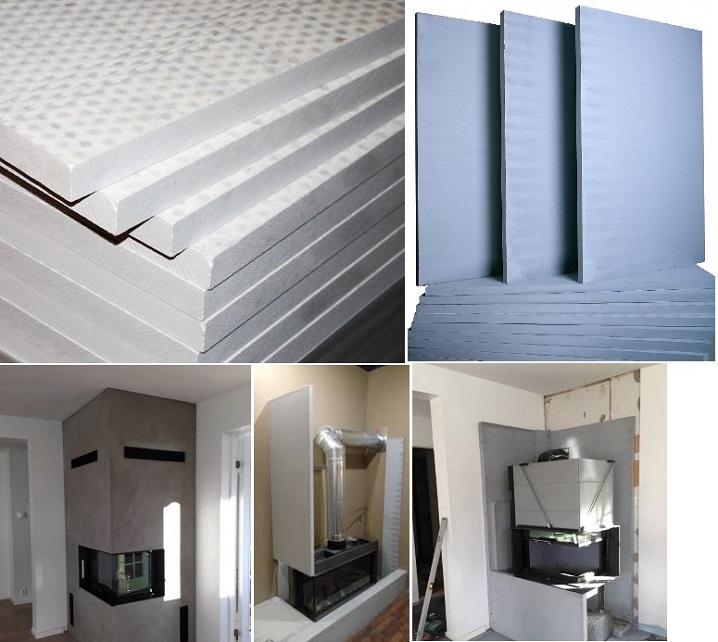
Example: Skamotec 225, Promat PROMAFOUR
Boards Used to Line Stove Chambers (Fireboxes)
When it comes to lining the stove chamber, you need materials that can withstand intense heat while providing thermal insulation to protect surrounding structures.

The most commonly used boards are:
- Calcium Silicate Boards – Highly heat resistant (up to 1100°C+), non combustible, and durable, making them ideal for direct contact with stove flames.
- Vermiculite Fire Boards — Lightweight insulating mineral boards that tolerate temperatures around 1000°C, often used as firebrick alternatives.
- Magnesium Oxide (MgO) Boards — Non combustible and heat resistant, MgO boards are also suitable, though quality can vary; always verify certification.
These boards form the safe lining inside your stove’s firebox, ensuring durability and safety.
Boards for False Chimney Breasts and Media Walls
For false chimney breasts or media walls surrounding your stove, the focus is on fire resistance combined with aesthetic finish:
- Cement Boards (Fibre Cement Boards) – Non combustible and moisture resistant, cement boards like HardieBacker are a popular choice for exterior stove surrounds.
- Calcium Silicate Boards – Also suitable here for their fire resistance and smooth finish, allowing plaster or tile finishes.

Fire Rated Plasterboards (e.g., Pink Board) – Although not recommended, it is to be used only far away from heat as it is combustible. Especially not within stove clearance/ combustible zones.
Choosing the right boards ensures compliance with safety standards and prevents fire hazards.
Caution: Boards Commonly Misused in Stove Installations
Pink Plasterboard
Often sold as “fireboard,” pink plasterboard is only rated to delay fire spread, not withstand constant heat. It is not non combustible and is not suitable near any stove or flue system.
Cement Boards
Brands like HardieBacker or AQUAPANEL are often assumed to be fire safe. While some are A1 rated, others are only A2 or B rated, and may contain combustible binders. Always check the datasheet before use near a stove.
Magnesium Oxide Boards
Not all MgO boards are created equal. Cheaper imports may delaminate or contain impurities. Look for certified A1 MgO boards from reputable suppliers only.
Safe Finishing: Plaster, Paint, and Adhesives
Once you’ve installed a non combustible board, the finish must also be able to withstand heat. Standard decorating materials won’t last in a stove chamber.
Use:
- Heat-resistant plaster/render (e.g. Vitcas HRP)
- High-temperature paint (rated at least 250°C)
- Fire-safe tile adhesive and grout
Avoid:
- Standard plaster or jointing compound
- Emulsion or acrylic paints
- Wallpaper, lining paper, or cladding
UK Building Regulations (Document J): What You Must Comply With
Approved Document J outlines the legal requirements for stove and flue installations in England and Wales. Key requirements include:
- No combustible materials within 200mm of the stove’s sides or rear (unless tested closer by the manufacturer)
- Flue pipes must be separated from combustible walls by 50–150mm, depending on diameter and insulation
- Hearths and chambers must be constructed from non combustible materials
- Any material used around a stove must be able to withstand continuous heat safely and not degrade or contribute to fire spread
For full compliance, installations should also meet HETAS standards and be inspected by a registered installer or building control officer.
Final Checklist: Do’s and Don’ts
Use:
- Calcium silicate board
- Vermiculite fire board
- A1-rated cement board (if specified)
- A1-rated MgO board
- High temperature finishes
Avoid:
- Pink fire rated plasterboard
- Standard plasterboard
- MDF, OSB, plywood
- Foil backed insulation boards
- Decorative wall panels unless certified for stove use
Can I Put Non-Combustible Board in Front of Combustible Board?
No. You should not rely on fixing a non-combustible board in front of combustible materials such as timber, standard plasterboard, MDF or plywood unless the product is a tested proprietary shielding system such as a heat shield that clearly states it can reduce the required distance to combustibles.
Every fireplace, wood burning stove, bioethanol or gas fire has its own clearance requirements. These are listed in the manufacturer’s installation manual and are based on how that specific appliance was tested. If the manual says there must be no combustible materials within a certain distance, that means combustible materials should not be present in that zone, even if they are hidden behind a non-combustible board.
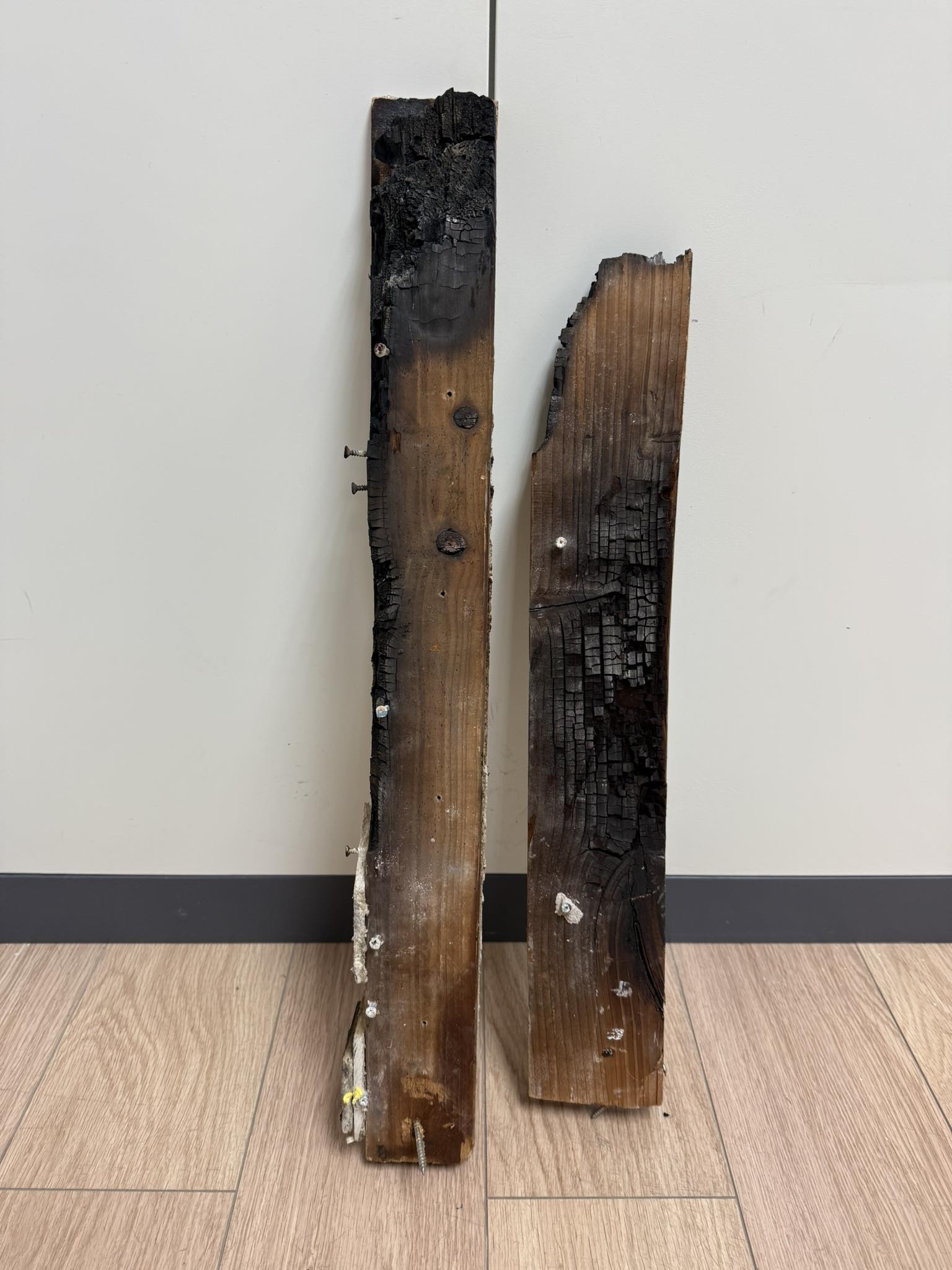
A non-combustible board may help protect the surface, but heat can still transfer through the board to the material behind it. Over time, timber or other combustible materials can dry out, overheat and become a serious fire risk. This is why simply boarding over wood or standard plasterboard does not automatically protect it and make a fireplace or stove installation safe.
We see this mistake regularly, especially where timber framing has been covered with fire-rated or non-combustible board around a stove chamber or fireplace opening. Unless that full construction has been tested and approved to reduce distances, no one can accurately say how much protection it provides.
The safest answer is simple: no combustible materials should be within the clearance zone stated in the manufacturer’s instructions. Each appliance is different, so always check the specific installation manual before building around a fireplace or stove.
In simple terms: non-combustible board in front of timber does not make timber non-combustible. Heat transfer can still occur, so follow the appliance manufacturer’s stated distances to combustible materials.
Conclusion: Don’t Risk It, Use the Right Materials Around Heat
In our professional experience, the number one mistake people make when installing a stove is using the wrong board behind or around it. Labels like “fire rated” or “fireboard” create confusion but the reality is clear:
If it’s not non combustible, it shouldn’t be anywhere near your stove.
For total peace of mind, always choose boards specifically designed and certified for high temperature environments. This ensures your installation is safe, long lasting, and compliant with the law.
Need expert advice? Our team supplies and installs industry approved fireboards, stove chambers, and compliant heat proof materials for every type of stove project.
Contact us today for guidance or a quote.
Disclaimer
Bonfire and its representatives provide this information for general guidance only. Installation of stoves, fireplaces, and associated materials must comply with manufacturer instructions, local building regulations, and safety standards.
Bonfire accepts no liability for any damage, injury, or loss arising from the use or misuse of the information provided in this post. Always consult a qualified professional before undertaking stove or fireplace installations.



Hi
My installer says I need heatproof/metal skirting boards around my woodburner. Is this something you can supply?
Thanks
Greg
Hi greg, we do not supply these. Our installers normally remove the combustible skirting boards. Max
Hi,
What is the regulation regarding wooden fireplace surrounds?
Thanks,
Jim
Hi there
What is the regulation regarding wooden fireplace surrounds?
Thanks,
Jim
Hi Jim,
Keep any wooden surround more than 300 mm from the sides and 450 mm above the opening per building regulations.
Please always consult a professional HETAS installer and check manufacturers guidelines as this can change dependant on the application.
Kind Regards,
Max
Hi,
Fitting a Free standing stove (boiler) in a corner of living room, i have been told to attach fireboard directly to the timber stud walls in the corner to conform to fire regulations, to allow stove to be fitted at minimum distance to non combustibles (150mm) sides and rear. Is this correct?
Hi Murray,
Fireboard fixed directly to timber studs does not normally make the wall non combustible, so standard clearances to combustibles still apply. Reduced distances are only allowed if you use a certified heat-shield system that meets the stove manufacturer’s and local regulations.
Kind Regards,
Max
Hi just moved into a bungalow and the previous owner has a gas fire fitted that replicates a log burner. The fitters have taken the chimney Brest out from the roof to the ceiling in the loft so I am now left with an hole around 1200mm x 600mm in the loft where the flue goes with no insulation. Any ideas what I could seal it off with due to the cold draft
If the gas fire is still in use, that opening shouldn’t be sealed with normal insulation or plasterboard, as the flue must maintain correct clearances for safety and ventilation.
The proper solution is to fire stop around the flue using non combustible, fire rated board (such as calcium silicate or cement board), then insulate around it with non combustible mineral wool, leaving the required air gap to the flue.
If the gas fire is no longer in use, the flue can be correctly capped and decommissioned, and the opening fully insulated and boarded over.
Given the size of the opening and that it’s a gas appliance, this should really be checked or completed by a Gas Safe engineer to ensure it’s safe and compliant and to eliminate the cold draught properly.