
With the cost of living rising within the UK, many people are finding different cost effective methods of heating their homes. A popular alternative being a log burner, wood burner or multi fuel stove.
However, are wood stoves really cheaper than a gas or electric heating appliance?
We have carefully analysed and weighed up the pros and cons of warming your home with different heat sources using calculations related to real life living circumstances.
Keep reading and we’ll tell you how much it costs to run a log burner in 2023…
Data correct as of October 2022.
Estimated reading time: 9 minutes
Table of contents
All wood burning stoves are now 80% or more efficient and must comply with new SIA Eco Design Ready from January 2022. This ensures that new stoves are clean burning and give off almost no pollution.
Heating your home cheaply and also being kind to the environment seems like the dream solution. This can be achieved with an eco design ready wood burning stove.
If you’re located within a smoke controlled area such as London or a built up area your wood stove must be Defra exempt. Checkout our Defra approved wood burning stoves here.
Solid Hard Wood logs
A typical bag of solid hardwood logs often found at the entrance of your local supermarket can range from £5 to £8 for a 16.5 litre bag of logs. (0.0165 cubic meter)
Petrol stations and garages workout more expensive with a standard bag of kiln dried wood at £11+.

If you’re wanting to save the pennies, buying in bulk can be a great way to save or recycling wood which is second hand. Even fallen trees from a local forest can often be a free alternative but you must always ask for the land owners permision.
Moreover, It must be noted you should never buy wood by weight (kg) and only by volume (cubic meters). Otherwise, you will most likely be paying for the heavier moisture content or at a premium price that looks like you’re getting a bargain.
On average, a local log supplier will often charge these prices:
- Single load – 1.3 cubic meter (1300 litres) (approx – loose filled) – £140 with free delivery
- Double load – 2.6 cubic meter (2600 litres) (approx – loose filled) – £250 with free delivery
Price from A1 Logs (correct as of October 2022)
A modern day log burner will use an average of 3.5 cubic metres of wood, if used during the evenings and weekends from October to April.
All wood logs burnt in 2022 must have a moisture content of below 20% and marked by a ‘Ready to Burn Approved’ logo.
This logo will be located on the outside of your logs packaging whether that be on a bag or crate. Log suppliers should be able to provide a certificate and identification number when asked. You can find your local dealer here.
This is to indicate they burn with less harmful particulates than unseasoned firewood. Furthermore, they produce less Tar when burning to protect your log burner and flue system.
Related: Shop Eco Friendly Wood Log Briquettes
Wood Logs Running Cost Calculation
If we start with Aldi’s Kiln Dried Logs, with a 7kg bag at £7.50.
1 bag = £7.50 for 7kg Solid hardwood logs
= 4.3 kwh per kg
7 x 4.3 = 30 kilowatt hours in 1 bag
= 25 pence per kilowatt hour
Average wood burner efficiency at 80%
= 31 pence per kilowatt hour
It costs £1.55 to run a log burner providing a nominal heat output of 5kW for 1 hour – Buying logs in bags from supermarkets
It costs 60 pence to run a log burner providing a nominal heat output of 5kW for 1 hour – Buying logs from local log supplier
So how does this relate to real life living? The average home owner will use their wood burner in the evenings and on the weekends.
The average wood burner in the UK has a 5kW nominal heat output with an 80% efficiency percentage.
The heating season runs from October to April, the months when it is coldest in the UK.
On a fairly regular use of a 5kW modern day wood burner throughout winter and comparing with personal use, the cost of running a log burner in 2022 is between £380 and £490 per year.
This cost can drastically change depending on your useage, stove efficiency and the source of your wood. Statistics based on the average home owner with a log burner.
Smokeless Fuels
Also, we looked into the cost of running your stove with smokeless fuels to see if it was any cheaper to heat a home with.
Smokeless fuels are anthracite, coke, charcoal and hexamine fuel tablets. Smoke-free carbonaceous fuels are usually supplied in the form of standard pillow-shaped briquettes.
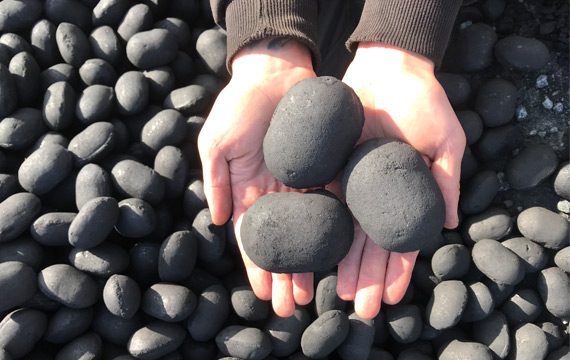
We picked up a 10kg bag from the Aldi supermarket at a cost of £6.98. See product
The bag consisted of rounded and compressed powdered coal which will produce less smoke and in turn pollute the atmosphere less.
Smokeless Fuels Running Cost Calculation
1 bag = £6.99 for 10kg of smokless fuel
= 6 kwh per kg
699 / 10 x 6 = per kilowatt hour
= 11.65 pence per kilowatt hour
Average wood burner efficiency at 80%
= 14.6 pence per kilowatt hour
Fireside Costs
Not only will you have to buy logs for a solid fuel appliance but firelighters and kindling to get your fire started.
Lekto Fuels natural Firelighters have a large selection of fireside fuelling packages that can be a cost effective solution when bought in bulk. These firelighters are easy to light and 100% natural, burning up to 10 minutes!
Furthermore, we found Certainly Wood Kindling that feature a moisture content of below 12% and from personal use are very good. They can be purchased online, are clean and easy to store.
Other cheaper alternatives are available, however you might find that they do not work as well or as efficiently.
What’s the cost per burn of a log burner?
For somebody that likes to use their wood burner on the weekends and occasionally on the weekdays, we estimated around 115 fires.
An average burn is around 4-6 hours.
Through the heating season of seven months this cost works out to £3.50 each burn.
This cost would increase if you were to have more fires, fuel your log burner with more fuel or if the price of logs increases.
How does the cost compare to electric fires?
Electric fires are 99% efficient and the current cap cost of £0.34 per/kWh in the UK, making plugging into the mains more expensive.

You must also remember that an electric fireplace only generates 1-2kW of nominal heat output as they’re used to lightly warm and take the chill off a room, not as a primary heat source.
It costs 51 pence to run an electric fire providing a nominal heat output of 1.5kW for 1 hour.
How does the cost compare to gas fires and bioethanol fires?
Typically, with gas fires it only costs around 10.3 pence per kW to run – when compared to electric which typically costs around 34p per kW and bioethanol which can cost up to 74 pence per kW, gas is by far the most efficient.

A standard gas stove or gas fireplace insert averaging a 6kW nominal heat output at 10.3 kilowatt per hour means a gas fire has a cost of 62 pence per hour.
Bioethanol fires can produce up to 3kW of heat output if you have the gauge fully open. They do not produce a lot of heat and are very costly to fuel in comparison.
It costs 62 pence to run a gas fire providing a nominal heat output of 6kW for 1 hour.
How will my gas installation effect cost?
When considering whether a gas fireplace is worth it if running costs are a big determining factor for you, you’ll need to consider the efficiency of your installation, which is where a gas fireplace can outperform other fuel types.
Cost Breakdown Table
The table below shows the cost of heating your home per killowatt hour for each common heating source available for a home in the UK in year 2022.
| Heating Source | Cost Per Kilowatt Hour (pence) | Average Nominal Appliance (kW) | Average Appliance Cost Per hour (pence) |
| Mains electric | 34p | 1.5kW | 51p |
| Mains gas | 10.3p | 6kW | 62p |
| Small bag of wood logs | 31p | 5kW | £1.55 |
| Big bag of wood logs | 12p | 5kW | 60p |
| Smokeless Fuels (Coal) | 14.6p | 5kW | 73p |
What does this table show us?
The running cost of each appliance using different fuels:
- Electric fireplaces are the cheapest to use but they will not provide you with much warmth.
- Gas appliances and log burners are marginally similar. This is only true when firewood is bought in bulk from a wood log supplier.
- Wood burners are expensive to heat your home when buying small bags of wood logs from supermarkets or garages.
Overall, any of these heating sources are cheaper than gas, electric or oil central heating. Wood burners and gas stoves are great alternatives as they have the ability to heat your home sufficiently.
Conclusion
The cost of fuelling a wood burning stove is considerably less than the cost of what people are currently paying for electricity on an annual basis.
Buying wood in bulk for a wood burner has a marginally similar cost to a mains gas supplied heating appliance.
The annual average heating bill for a log burner in the UK in October 2022 is between £380 to £490.
A gas stove or gas fireplace insert is considerably cheaper than people may presume although wood burners have a very similar cost and should be seriously considered as a cost effective heating method.
Wood burning stoves cost 12% less than gas central heating for the average household.
The Energy Savings Trust agrees that log burners are a great source of heat and can cut a household overall heating bill by up to 10%. This may seem minor but when energy prices are sky high this is a massive saving!
Bioethanol fires are very expensive to fuel and don’t provide a lot of heat output.




Looks like i’ll be getting a wood burner then, I can’t afford to heat my home with my central heating on.
I bought a 5kw multi fuel stove last November or rather it was fitted last November, I am home all day so light my stove around 9am after walking my dog, the stove is lit for most of the night, although I don’t live in a smokeless zone the stove does have the Defra kit so doesn’t shut down and is classed as an “evening & weekend” stove.
Using my stove all day for 6 months using smokeless coal and logs plus kindling ect cost £724 [£150 was for logs], coal and logs bought from local coal merchant, 50kilo sacks of coal £32 ,dumpy bag of logs £75
this stove kept the whole house at 18c [1970s 3 bed semi, rural location] so only used central heating when temps, dropped to freezing or below , normally I use 450 units of gas , this time used 92 units [Oct,13th to June 10th]
This may help someone to decide.
I’m myastified. Where does the 4.3 kWh / kg come from in this quite?
“1 bag = £7.50 for 7kg Solid hardwood logs
= 4.3 kwh per kg”
it’s also odd because earlier you said 9correctly) that it’s a mistake to measure logs by weight. the kWh per kilo or per cubic metre figures will vary hugely depending on how well seasoned the wood is.
Hi Rob, yes we do agree that you should never buy logs by weight, unfortunately this is how supermarkets advertise their logs. However, they all showcase the Woodsure logo meaning that they should all be under 20% moisture content.
“The calorific value of hardwood is about 4.1kWh per Kg for air-dried logs rising to 5.3kWh/Kg for kiln-dried.” For this we have gone with the value of 4.3 kwh per kg.
We hope this clarifies our calculations. Workings-out are backed by primary and secondary research from the date of publication. We understand that these figures may have changed slightly since then.
Hopefully this answers your query.
Kind Regards,
Jess
I was surprised by your websites claims that running a 5kw stove on bulk purchased seasoned logs (1.3m³ @ £140) costs 60p an hour.
So I did some calculations.
According to one source Log Wise, the calorific value of softwood sawlogs is around 21-22,000 kJ/kg. Assuming that the bulk purchased logs are softwood sawlogs with a density of 0.5 kg per litre, we can estimate the energy output of running a 5kW stove as follows:
The volume of 1.3m³ of logs is equivalent to 1300 litres.
The weight of 1300 litres of logs is 0.5 x 1300 = 650 kg.
The energy output of 650 kg of logs is 650 x 21,000 = 13,650,000 kJ or 650 x 22,000 = 14,300,000 kJ, depending on the calorific value.
The energy output of running a 5kW stove for one hour is 5kJ/s x 3600s = 18000kJ
The cost of running a 5kW stove for one hour is (18,000 / 13,650,000) x 140 = £0.18 or (18,000 / 14,300,000) x 140 = £0.17, depending on the calorific value.
Therefore, the cost of running a 5kW stove using bulk purchased logs at £140 for 1.3m³ is between £0.17 and £0.18 per hour, which is much lower than the website’s claim of 60p per hour.