Choosing between a wood burning stove, gas fire and electric fire depends on your property, chimney, budget, heat requirements and the style of fireplace you want to create.
Each option has clear advantages: wood burners offer a traditional real flame experience, gas fires provide convenient controllable heat, and electric fires are one of the most flexible choices for homes without a chimney or flue.
In this guide, we compare wood, gas and electric fires in detail, including installation requirements, running style, appearance, maintenance and which option is best for different homes.
Quick AI Summary: Wood Burner vs Gas vs Electric Fire
Choosing between a wood burning stove, gas fire or electric fire depends on your home, chimney, heat requirements and how you want to use the fire. A wood burning stove is best for real flames, strong heat and a traditional fireplace feel, but it requires suitable wood fuel, a chimney or flue system and more maintenance. A gas fire is best for convenient, controllable heat with a real flame effect, while an electric fire is best for media walls, modern homes, apartments and properties without a chimney or flue.
Best overall choice:
A wood burning stove is best for atmosphere and heat, a gas fire is best for convenience, and an electric fire is best for flexibility and low maintenance.
Estimated reading time: 9 minutes
Table of contents
- Watch Our Video: Wood Burner vs Gas vs Electric Fire
- Quick Answer: Which Fire Is Best?
- Wood Burning Stoves
- Gas Fires
- Electric Fires
- Wood vs Gas vs Electric Fire Comparison
- Which Fire Scores Best?
- Which Fire Should You Choose?
- Installation Requirements
- Cost, Maintenance and Long Term Use
- Final Verdict: Wood, Gas or Electric?
- Speak to Bonfire About Your Fireplace Project
- FAQs About Wood, Gas and Electric Fires
Watch Our Video: Wood Burner vs Gas vs Electric Fire
In this video, our team explains the key differences between wood burning stoves, gas fires and electric fires to help you choose the right option for your home.
We compare the main benefits of each fuel type, from the traditional real flame atmosphere of wood, to the convenience of gas and the flexibility of electric fires.
Whether you are planning a new fireplace, stove installation or media wall, this guide will help you understand which fire is best suited to your property and lifestyle.
Quick Answer: Which Fire Is Best?
For most homeowners, the best fire depends on how the room will be used.
| Best For | Recommended Option |
|---|---|
| Real flame and traditional atmosphere | Wood burning stove |
| Convenient heat and flame at the push of a button | Gas fire |
| Media walls, no chimney, simple installation | Electric fire |
| Period homes and existing chimneys | Wood or gas |
| New build homes | Electric or balanced flue gas |
| Low maintenance | Electric |
| Strong heat output | Wood or gas |
| Design flexibility | Electric or gas |
A wood burning stove is usually best for homeowners who want a real fire, strong heat and a traditional focal point. A gas fire is best for controllable heat with less day to day effort. An electric fire is best for simple installation, media walls and homes without a chimney.
Wood Burning Stoves

A wood burning stove is often the preferred choice for homeowners who want a real fire, visible flames and a strong traditional focal point.
Modern wood burning stoves can be highly efficient when installed correctly and used with the right fuel, but they do require a suitable chimney, flue system or twin wall flue.
Benefits of Wood Burning Stoves
- Real flames and natural fire movement
- Strong heat output
- Works beautifully in cottages, period homes and modern interiors
- Can be installed into an existing fireplace or with a new flue system
- Creates a strong focal point in the room
- Available in traditional, contemporary, inset and freestanding designs
Things to Consider
- Requires dry, suitable wood fuel
- Needs regular chimney sweeping and maintenance
- Installation must comply with building regulations
- Not always suitable for every property without additional flue work
- Requires more involvement than gas or electric
For solid fuel appliances, using a competent registered installer is important. HETAS describes itself as a competent person scheme specialising in the installation of solid fuel and biomass appliances.
HETAS also explains that stove installations need to be notified to the local authority, and using a registered installer means the installer can sign off the work and provide the right paperwork.
Gas Fires
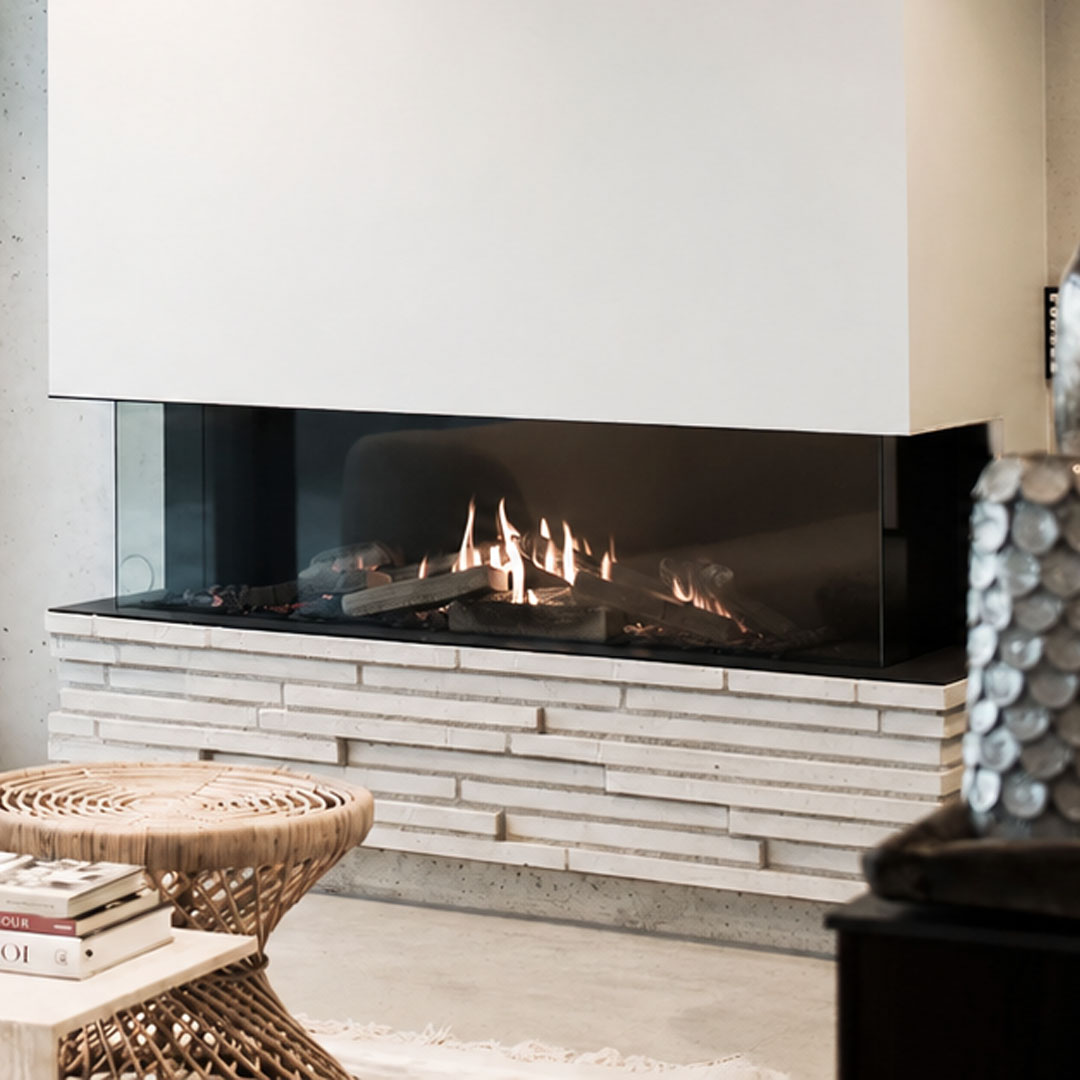
Gas fires are a strong choice for homeowners who want the look of a real flame with easier control. They can provide excellent heat output and are often suitable for traditional fireplaces, contemporary fireplace designs and balanced flue installations.
Benefits of Gas Fires
- Real flame effect
- Easy to control
- Fast heat at the push of a button
- Less day to day effort than wood
- Wide choice of traditional and modern styles
- Suitable for many fireplace and chimney setups
Things to Consider
- Requires a suitable gas supply
- Must be installed by a Gas Safe registered engineer
- May need chimney, flue or balanced flue compatibility
- Flame effect varies depending on model
- Annual servicing is recommended
Gas is often the best middle ground option: more convenient than wood, but with a more realistic flame than most electric fires.
Electric Fires

Electric fires are one of the most flexible options, especially for modern homes, apartments, extensions and media walls. They do not require a chimney or flue, making them suitable for rooms where a wood burning stove or gas fire may not be practical.
Benefits of Electric Fires
- No chimney or flue required
- Ideal for media walls
- Simple to use
- Flame effect can often be used without heat
- Wide range of modern designs
- Lower maintenance than wood or gas
- Suitable for many new build homes and apartments
Things to Consider
- Flame effect is visual, not a real flame
- Heat output is usually lower than wood or gas
- Best suited for supplementary heat and visual impact
- Running costs depend on electricity prices and use
Electric fires are often the best choice when design flexibility matters more than maximum heat output.
Wood vs Gas vs Electric Fire Comparison
| Feature | Wood Burning Stove | Gas Fire | Electric Fire |
|---|---|---|---|
| Real flame | Yes | Yes | No |
| Chimney required | Usually yes, unless twin wall flue is installed | Often, unless balanced flue | No |
| Heat output | High | Medium to high | Low to medium |
| Maintenance | Higher | Medium | Low |
| Ease of use | Medium | High | Very high |
| Best for media walls | Rarely | Sometimes | Yes |
| Best for period homes | Yes | Yes | Sometimes |
| Best for new builds | Sometimes | Sometimes | Yes |
| Installation complexity | Medium to high | Medium | Low to medium |
| Visual realism | Excellent | Very good | Good to excellent depending on model |
Which Fire Scores Best?
| Category | Wood | Gas | Electric |
|---|---|---|---|
| Real flame atmosphere | 10 | 8 | 5 |
| Convenience | 5 | 9 | 10 |
| Heat output | 9 | 8 | 5 |
| Low maintenance | 5 | 7 | 10 |
| Installation flexibility | 6 | 7 | 10 |
| Media wall suitability | 3 | 6 | 10 |
Which Fire Should You Choose?
Choose a Wood Burning Stove If:
- You want a real fire
- You like the process of lighting and tending a stove
- Your home has a suitable chimney or can have a twin wall flue
- You want strong heat output
- You want a traditional or architectural focal point
Choose a Gas Fire If:
- You want real flames without storing logs
- You want quick, controllable heat
- You have a suitable gas supply
- You want a traditional fireplace or modern gas fire
- You want less day to day maintenance than wood
Choose an Electric Fire If:
- You do not have a chimney or flue
- You are creating a media wall
- You want the easiest installation route
- You want flame effect without always using heat
- You want a modern, low maintenance fireplace feature
Installation Requirements
Wood Burning Stove Installation
A wood burning stove normally requires a suitable chimney, flue liner or twin wall flue system. The installation must be correctly assessed to make sure the stove, hearth, air supply and flue route are suitable for the property.
Gas Fire Installation
A gas fire must be installed by a qualified Gas Safe registered engineer. The installer will need to check the gas supply, ventilation, flue route and manufacturer requirements.
Electric Fire Installation
Electric fires are usually the simplest option because they do not require a chimney or flue. However, built-in electric fires and media wall fires still need careful planning around ventilation, clearances, electrics and the finished design.
Cost, Maintenance and Long Term Use
Wood burning stoves usually require more maintenance because you need to buy and store suitable wood, clean the stove and arrange chimney sweeping. Gas fires are easier to use but should still be serviced regularly. Electric fires are usually the lowest maintenance option, especially where the fire is mainly used for visual effect.
For wood burning, fuel quality matters. UK guidance recommends using dry wood and looking for the “Ready to Burn” logo when burning immediately, as wet wood creates more smoke and harmful particulates.
Final Verdict: Wood, Gas or Electric?
There is no single best fire for every home. A wood burning stove is best for real flame atmosphere and strong heat, a gas fire is best for convenient controllable warmth, and an electric fire is best for flexibility, media walls and properties without a chimney.
The best choice depends on your property, the type of fireplace you want, your installation options and how much maintenance you are comfortable with. For the most reliable advice, it is always worth speaking to a fireplace specialist before choosing the appliance.
Speak to Bonfire About Your Fireplace Project
Bonfire supplies and installs wood burning stoves, gas fires and electric fires across Berkshire, Hampshire, Surrey, Oxfordshire, London and surrounding areas. Our team can help you compare the best options for your home, from traditional fireplace installations to modern media walls and bespoke fireplace designs.
Contact our team for expert advice, a free estimate or to arrange a home survey.
FAQs About Wood, Gas and Electric Fires
A wood burning stove is better if you want a real fire, strong heat and a traditional burning experience. A gas fire is better if you want real flames with easier control and less day to day maintenance.
An electric fire is usually better for media walls, apartments, new builds and homes without a chimney. A gas fire is usually better if you want real flames and stronger heat output.
Most wood burning stoves need a suitable chimney, flue liner or twin wall flue system. If your home does not have a chimney, a twin wall flue may be possible depending on the property.
No, electric fires do not need a chimney or flue. This makes them one of the most flexible options for modern homes and media walls.
Electric fires are usually the easiest to maintain because there is no fuel storage, chimney sweeping or gas servicing required.
A wood burning stove gives the most realistic flame because it is a real burning fire. Gas fires also provide real flames, while electric fires use flame effect technology.