Whether you use your shed as a workshop, garden room, hobby space, home office or entertaining area, adding a wood burning stove is one of the most effective ways to keep it warm throughout the year.
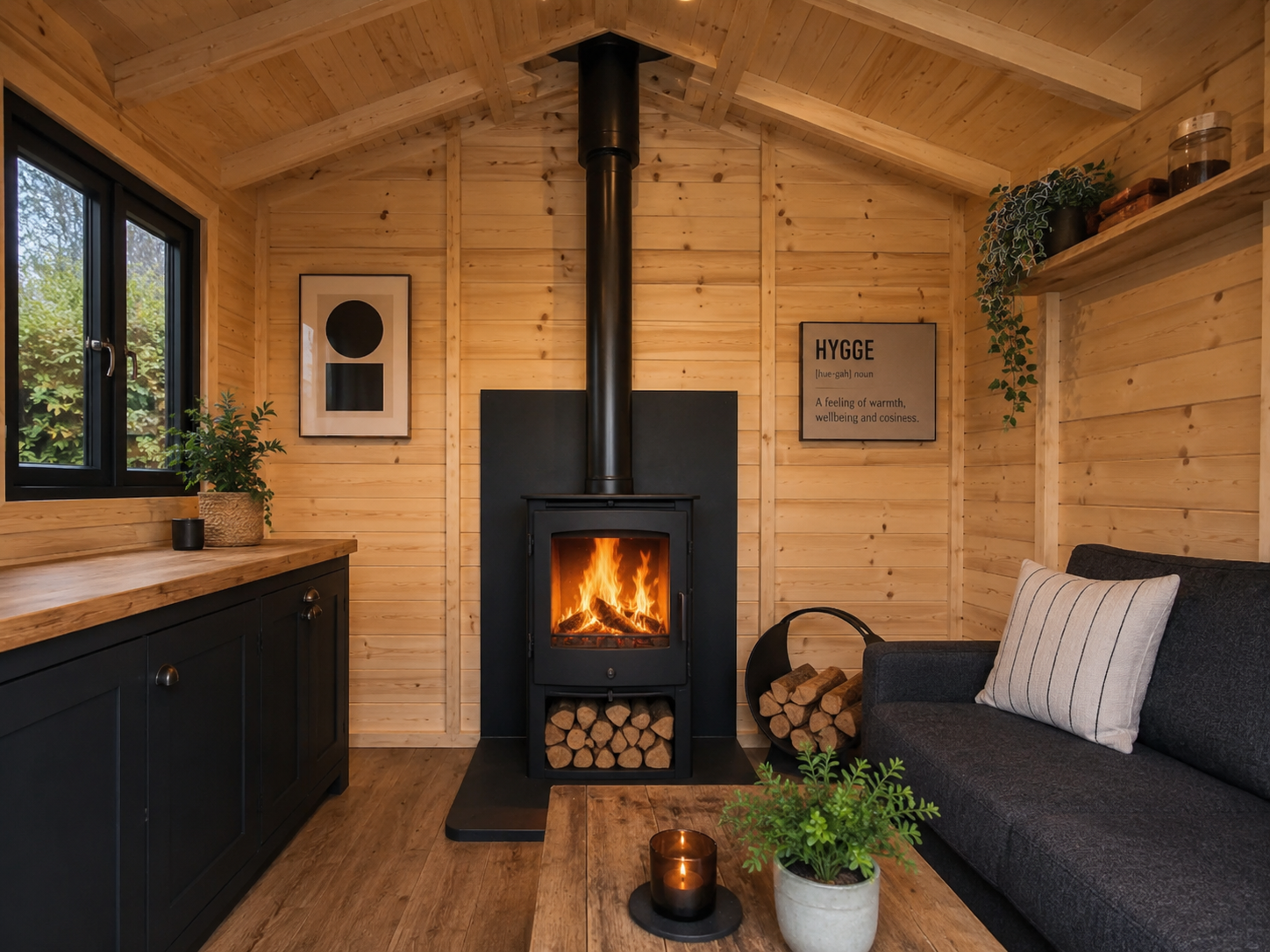
A properly installed wood burner provides comfortable radiant heat, creates a welcoming atmosphere and allows you to enjoy your outdoor building even during the coldest months.
However, choosing the right stove and installing it safely requires careful planning.
Estimated reading time: 14 minutes
Table of contents
At Bonfire Fireplaces & Stoves, we supply and install a wide range of wood burning stoves suitable for garden buildings, workshops, cabins and outbuildings, alongside complete twin wall insulated flue systems designed specifically for installations where there is no existing chimney.
Can You Install a Wood Burner in a Shed?
Yes.
A wood burning stove can be installed in most timber sheds, log cabins, workshops and garden rooms, provided the installation complies with UK Building Regulations and manufacturer requirements.
The key considerations include:
- Suitable hearth construction
- Correct distance to combustible materials
- Twin wall insulated chimney system
- Adequate ventilation where required
- Appropriate heat output for the room
- Installation by a competent installer
Because most sheds are timber framed, the flue system and surrounding materials require particular attention to ensure safe operation.
Is It Legal?
Yes.
Installing a wood burner inside a shed is perfectly legal in the UK when installed correctly.
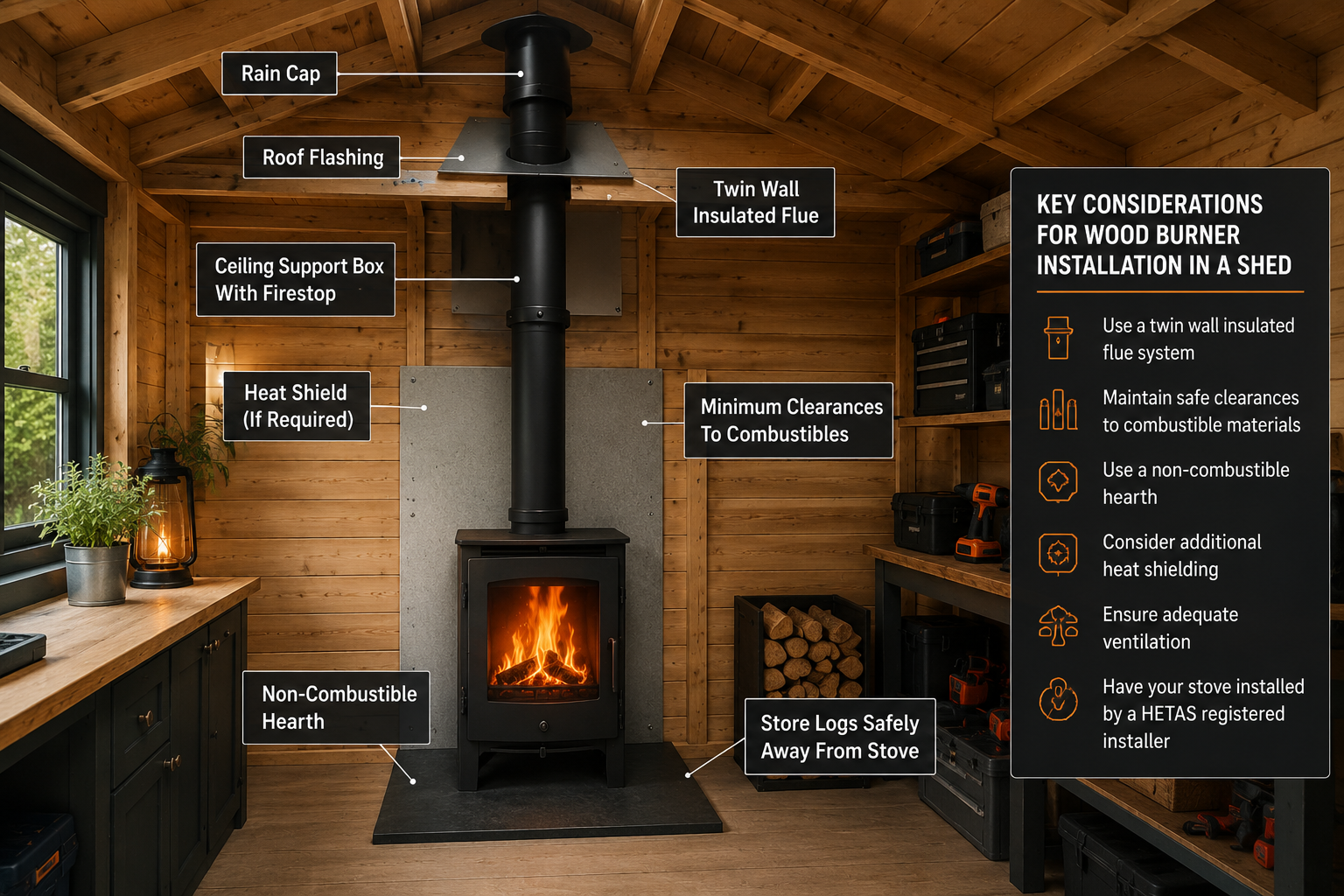
If you are installing a new appliance, the work must comply with Building Regulations Part J. This is normally achieved by using a HETAS registered installer who can self certify the installation.
Require a professional? Give us a call on 0118 970 1717 or email info@bonfire.co.uk
Do You Need a Chimney?
Most sheds don’t have a traditional chimney.
Instead, installations typically use a twin wall insulated flue system that passes through the roof or occasionally through a wall before rising vertically.
Twin wall chimney systems:
- Keep flue gases hot
- Reduce condensation
- Improve stove performance
- Maintain safe clearances
- Are suitable for timber buildings
At Bonfire we supply complete twin wall chimney systems from leading manufacturers including:
- Schiedel ICS
- Schiedel ICID Plus
- Midtherm HT-S
- Mi-Flues
- Poujoulat
- Jeremias
These systems are suitable for almost every garden building installation.
Choosing the Right Size Stove
One of the biggest mistakes is buying a stove that is too large.
A typical insulated garden office or workshop rarely needs more than 5kW.
As a guide:
| Building Size | Recommended Output |
|---|---|
| Small shed (8–12m²) | 3-4kW |
| Medium garden room (12–20m²) | 4-5kW |
| Large workshop (20–35m²) | 5-7kW |
Oversizing a stove often results in poor combustion and overheating.
Best Wood Burning Stoves for Sheds
The best wood burning stove for a shed depends on the size of the building, its insulation and how you intend to use the space. Most garden sheds, workshops and garden offices are best suited to compact stoves between 3kW and 5kW, as these provide efficient, controllable heat without overheating the room.
Below are some of our favourite wood burning stoves for sheds, ranging from traditional cast iron models to contemporary Scandinavian designs. If you’re heating a cabin, shepherd’s hut, tiny home or off grid building, you may also wish to browse our collection of glamping stoves, which includes compact appliances designed specifically for smaller spaces.
Best Overall: Woodpecker WP4

A fantastic budget friendly option offering superb efficiency and long term reliability. With its full cast iron body, it is very compact and ideal for smaller sheds.
It packs a punch being 4.3kW nominal heat output. If you’re looking for something slightly larger I would recommend the Woodpecker 5 or Woodpecker 5 Plus which can accommodate a larger log length.
Suitable for:
- Workshops
- Compact spaces
- Garden buildings
- Hobby rooms
Shop Now – £719 inc. vat (correct at time of publish)
Best Large Window: Contura 210
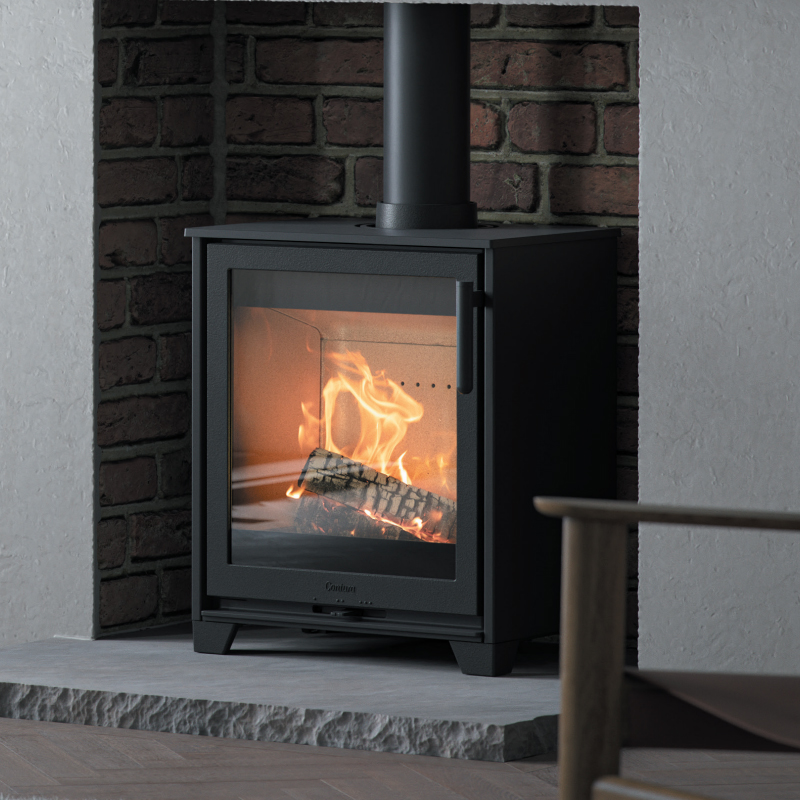
One of the best compact Scandinavian stoves available.
Why it’s ideal:
- Compact footprint
- Excellent flame picture
- Modern styling
- DEFRA Approved
- Perfect for contemporary garden rooms
Ideal for:
- Garden offices
- Studios
- Summer houses
- Small workshops
Shop Now – £1,595 inc. vat (correct at time of publish)
Best All Rounder: Charnwood C Five

The Charnwood C Five is one of Britain’s most popular premium stoves and works exceptionally well in larger insulated sheds.
Benefits include:
- 5kW nominal output
- DEFRA Approved
- Excellent controllability
- Traditional styling
- British built
Ideal for:
- Garden rooms
- Workshops
- Cabin offices
Shop Now – £1,359 inc. vat (correct at time of publish)
For Modern: Stûv 6-H

If you are looking for a modern architectural appearance, the Stûv 6-H offers minimalist styling combined with impressive efficiency.
Perfect for:
- Luxury garden rooms
- Contemporary offices
- Garden studios
Shop Now – £3,048 inc. vat (correct at time of publish)
For Longevity: Jøtul F 105

A beautifully compact Norwegian stove with exceptional build quality.
Ideal where floor space is limited.
Features include:
- Cast iron construction
- Excellent heat retention
- Compact dimensions
- Large viewing window
Shop Now – £1,799 inc. vat (correct at time of publish), short leg version.
Best Traditional: Morsø 1412 Squirrel
For those wanting a traditional appearance, few stoves are as iconic as the Morsø Squirrel.

Ideal for:
- Rustic workshops
- Timber cabins
- Shepherd huts
- Traditional sheds
Shop Now – £1,250 inc. vat (correct at time of publish)
Twin Wall Flue Systems for Sheds
A wood burning stove is only as good as the flue system connected to it. If your shed, garden room, workshop or home office does not have a suitable masonry chimney, you will normally need an insulated twin wall flue system to safely remove smoke and combustion gases.
A correctly designed flue helps create the necessary draught for the stove, supports efficient combustion and reduces the risk of condensation and tar building up within the chimney. You can learn more in our guide to choosing the best twin wall flue system.
What Does a Twin Wall Flue Installation Include?
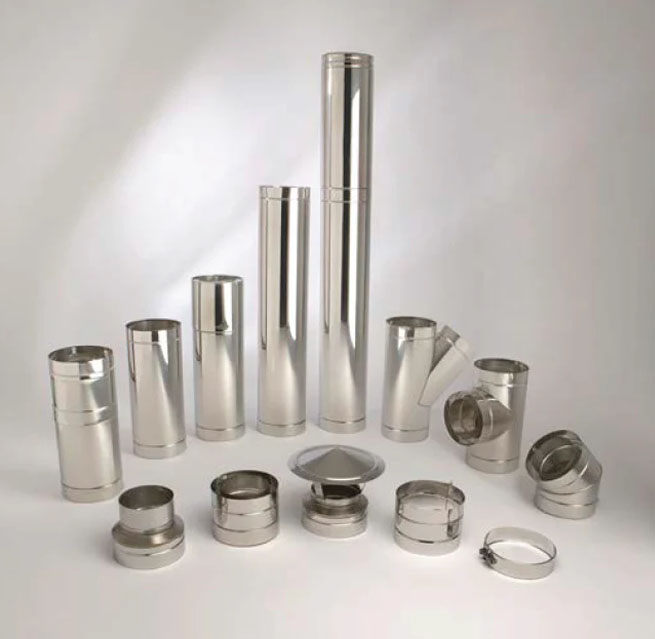
Most twin wall flue installations for sheds and garden buildings will include:
- Starter pipe or connecting flue pipe
- Twin wall adaptor
- Ceiling or wall support
- Firestop plates
- Insulated twin wall chimney sections
- Roof flashing
- Storm collar
- Rain cap or chimney terminal
- Locking bands
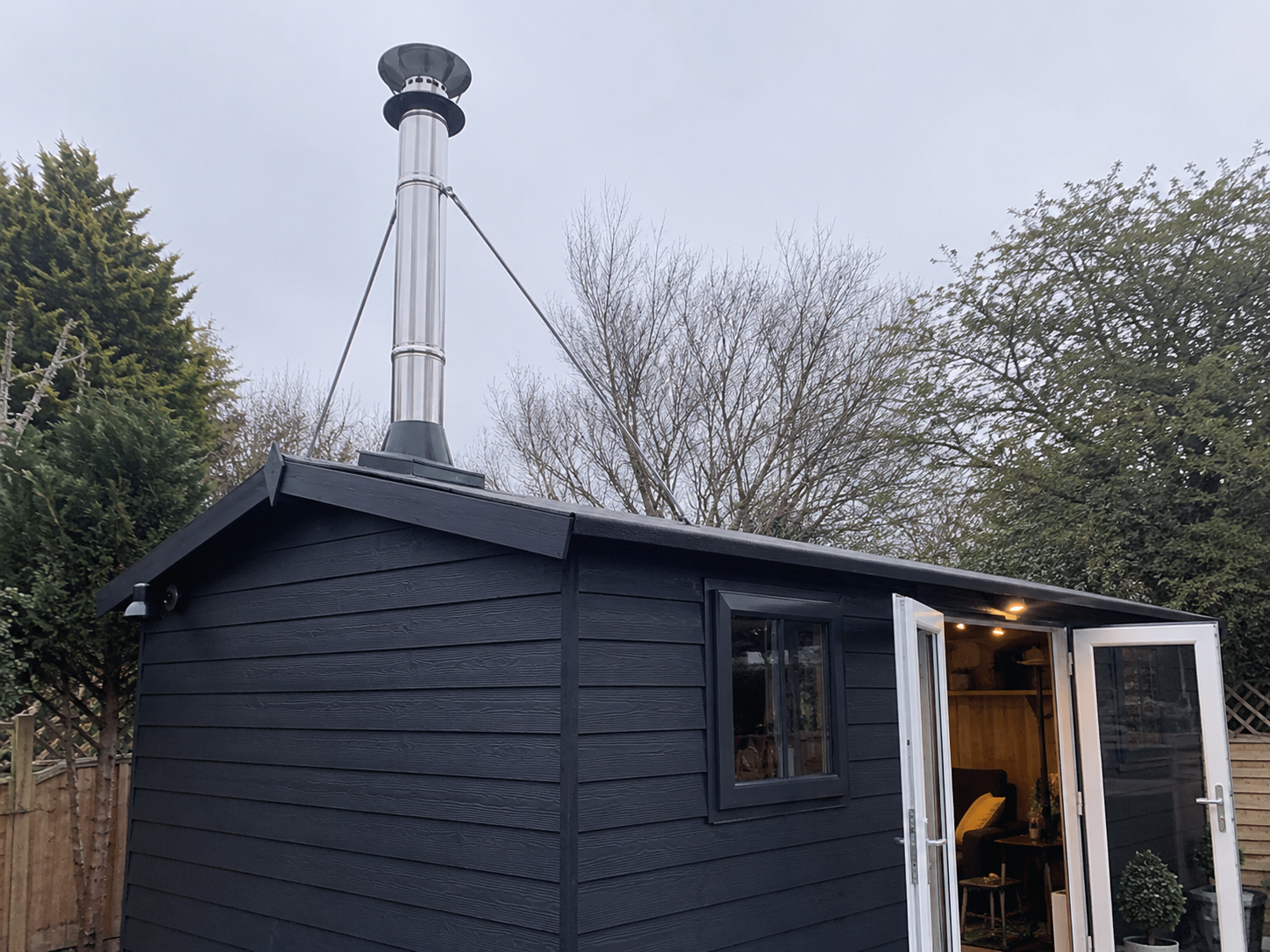
The exact components and configuration required will depend on several factors, including:
- The pitch and construction of the roof
- The overall height of the building
- The position of the stove
- The distance between the flue and the roof ridge
- Nearby buildings, trees and other obstructions
Why Flue System Quality Matters
Not all twin wall chimney systems are manufactured to the same standard. The quality of the stainless steel, insulation, joint design, locking system and available components can vary considerably between manufacturers.
Choosing a reliable, properly tested chimney system is therefore just as important as selecting the right stove. A higher quality system will generally provide better durability, safer clearances and more dependable long-term performance.
Professional Installation Is Recommended
A twin wall flue may need to pass through combustible materials such as timber walls, ceilings and roof structures. It must therefore be designed and installed in accordance with the manufacturer’s instructions and current UK Building Regulations.
Correct distances to combustible materials, suitable firestop components, adequate support, sufficient chimney height and a compliant terminal position are all essential. For this reason, we strongly recommend using a qualified HETAS registered installer to install and certify the stove and flue system.
At Bonfire Fireplaces & Stoves, our experienced team can help specify the correct stove and twin wall flue configuration for your shed, workshop, garden room or home office.
Watch: Understanding Twin Wall Flue Systems
Watch our video below to learn more about twin wall chimney systems, the differences in quality and what to consider before purchasing one.
Protecting Timber Walls
Because sheds are generally timber constructed, heat shielding is often required.

Common options include:
- Vermiculite chamber boards
- Calcium silicate boards
- Decorative chamber lining panels
- Steel heat shields
- Non combustible decorative panels
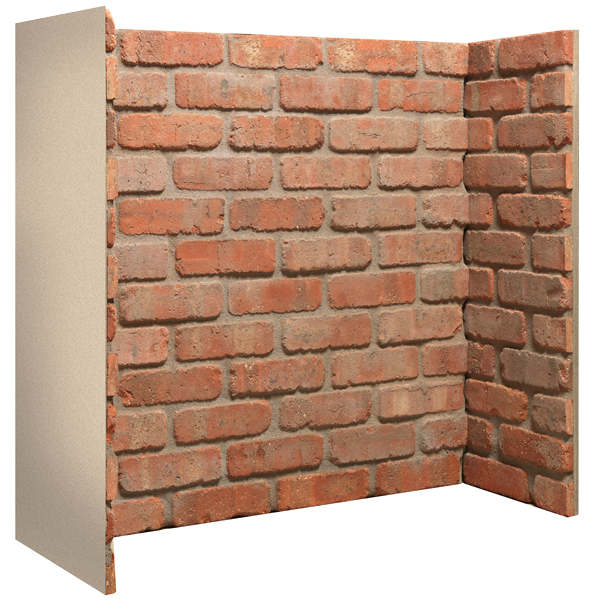
These help reduce clearances where permitted by the stove manufacturer.
Choosing the Right Hearth
Every stove requires a suitable hearth.
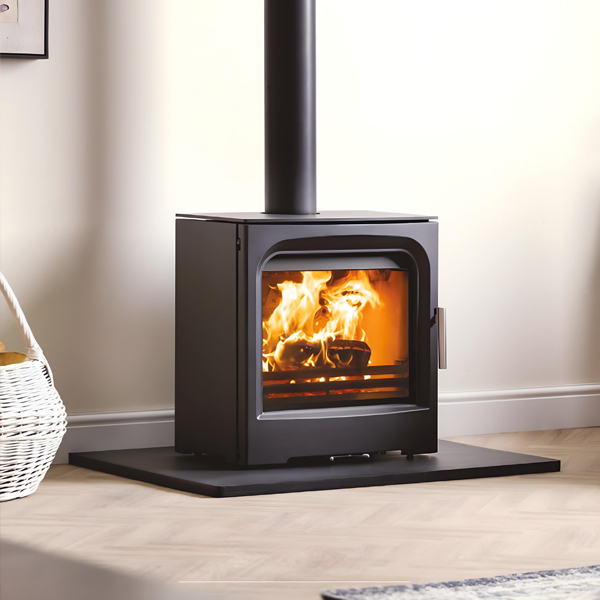
Popular choices include:
- Honed slate
- Granite
- Limestone
- Glass hearths
- Steel hearth plates
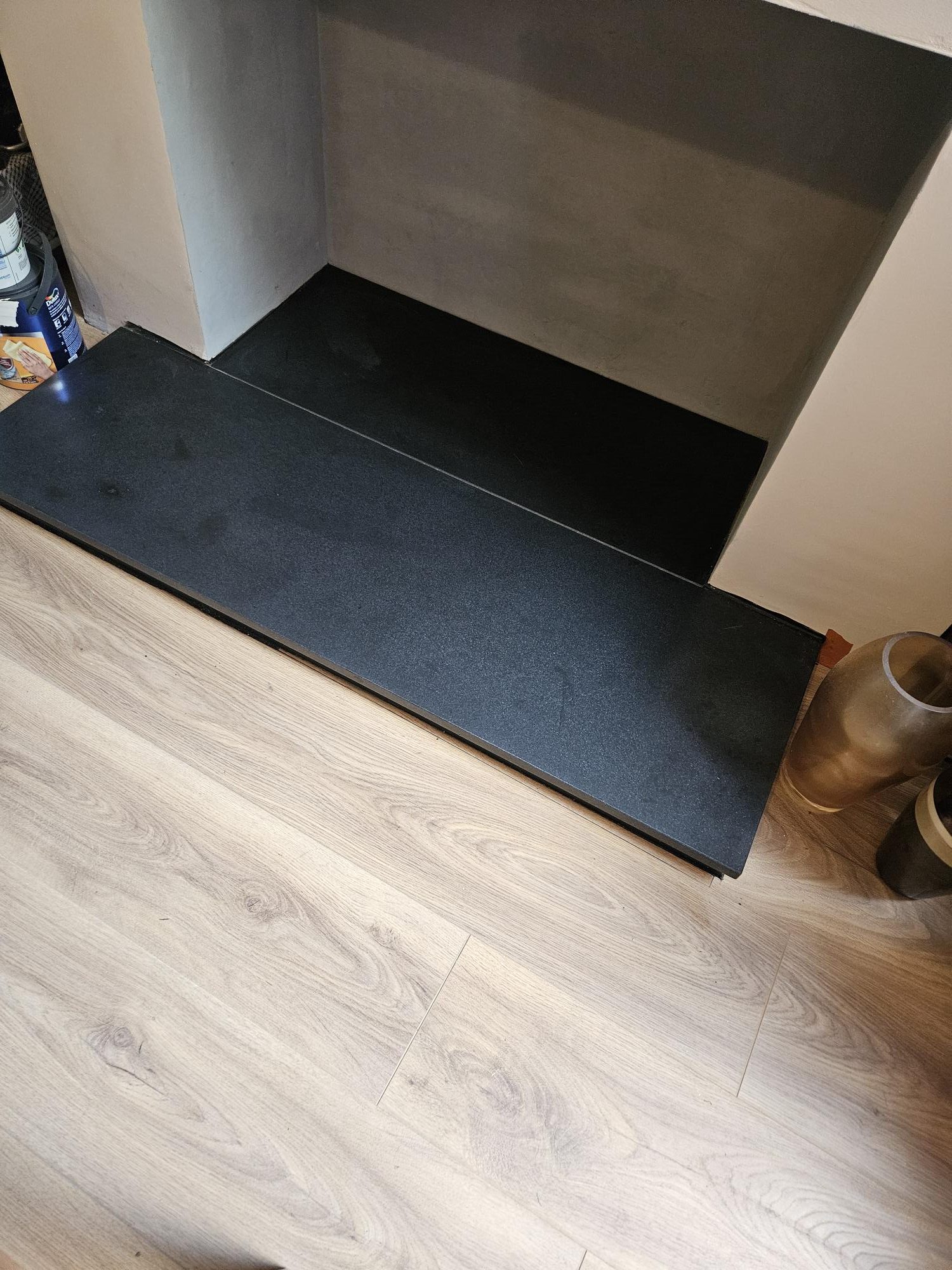
The correct hearth depends on the appliance and installation requirements.
Fuel Storage
For the best performance always burn properly seasoned logs with a moisture content below 20%.
Store logs:
- Off the ground
- Under cover
- With good airflow
- Away from the stove
Using dry logs helps improve efficiency, reduces chimney deposits and prolongs the life of your appliance.
Frequently Asked Questions
Yes, you can install a wood burner in a shed provided the installation complies with UK Building Regulations and the manufacturer’s instructions. Most shed installations require a suitable non combustible hearth, adequate clearances to combustible materials, and a twin wall insulated flue system because there is no existing chimney. Using a HETAS registered installer ensures the installation is safe and can be self certified.
Usually not for the stove itself, although larger outbuildings or listed properties may have additional requirements.
Some installations require permanent ventilation depending on the appliance output and building construction.
Building Regulations still apply. Most homeowners choose a HETAS registered installer to certify the installation. As this ensures that everything is safe and complies with all regulations.
The best wood burner for a shed depends on the size and intended use of the building. Compact, efficient stoves between 3kW and 5kW are ideal for most garden rooms, workshops and home offices. Popular choices include the Woodpecker WP4, Charnwood C Five, Contura 210 and Jøtul F 105 due to their efficiency, controllability and compact footprints.
In most cases, yes. Because sheds rarely have a traditional masonry chimney, a twin wall insulated flue system is required to safely carry smoke and combustion gases outside. Twin wall systems are specifically designed for timber buildings and help maintain safe operating temperatures while meeting Building Regulations.
The total cost depends on the stove, flue system, hearth and installation requirements. A typical installation may include the stove, twin wall insulated chimney, roof flashing, hearth, labour and certification. The final price varies depending on the size of the building, roof height and flue configuration, so it is always best to obtain a tailored quotation.
Some wood burning stoves require permanent ventilation depending on their heat output and the airtightness of the building. Modern garden rooms are often well insulated, so ventilation requirements should always be checked against the appliance manufacturer’s instructions and Building Regulations.
Most insulated sheds and garden rooms only require a stove between 3kW and 5kW. Choosing a stove that is too large can cause overheating and inefficient burning, while an undersized appliance may struggle to heat the space effectively. The correct size depends on the room dimensions, insulation levels and intended use.
Yes. Timber sheds are one of the most common places for wood burning stove installations, provided the correct safety measures are followed. These include maintaining the required clearances, using suitable heat shields where necessary, installing a non combustible hearth and fitting a twin wall insulated chimney system designed for combustible structures.
The safest installation uses a HETAS approved wood burning stove, a certified twin wall insulated flue system, the correct hearth construction and appropriate clearance distances from combustible materials. Having the work carried out by a HETAS registered installer ensures the installation complies with current UK regulations.
Yes. Wood burning stoves are a popular heating solution for garden offices, workshops, studios and hobby rooms because they provide efficient, comfortable heat without relying solely on electricity. The installation requirements are similar to those for a shed, with careful consideration given to flue routing, ventilation and fire safety.
A wood burner can provide higher heat output, lower running costs when seasoned logs are available, and continued heating during power cuts. It also creates a traditional focal point and comfortable radiant warmth. Electric heaters are simpler to install, but for regular use or larger garden buildings, many homeowners prefer the efficiency and atmosphere of a wood burning stove.
Which stove is best for a garden office?
Popular options include:
- Contura 210
- Charnwood C Five
- Stûv 6-H
- Jøtul F 105
The best choice depends on the size of the room and the style you prefer.
Why Choose Bonfire Fireplaces & Stoves?
For over 20 years, Bonfire Fireplaces & Stoves has supplied and installed premium wood burning stoves and twin wall chimney systems across Berkshire, Hampshire, Surrey, Oxfordshire, Buckinghamshire, London and the surrounding areas.
Whether you’re creating a cosy garden office, a fully equipped workshop or a luxury outdoor entertaining space, we can help specify the right stove, calculate the correct flue system and arrange professional installation through our experienced in-house HETAS registered team.
Visit our showroom to see a selection of wood burning stoves on display or contact our experts for tailored advice and a free, no obligation quotation.