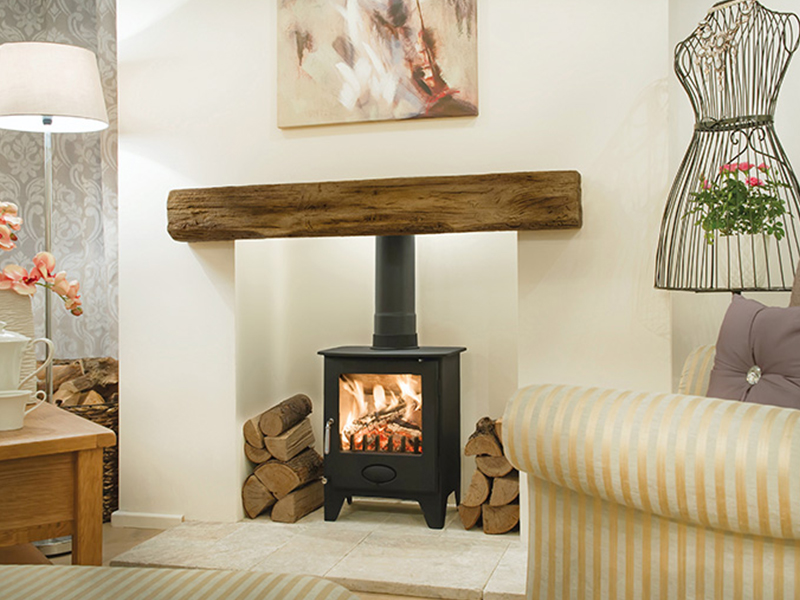
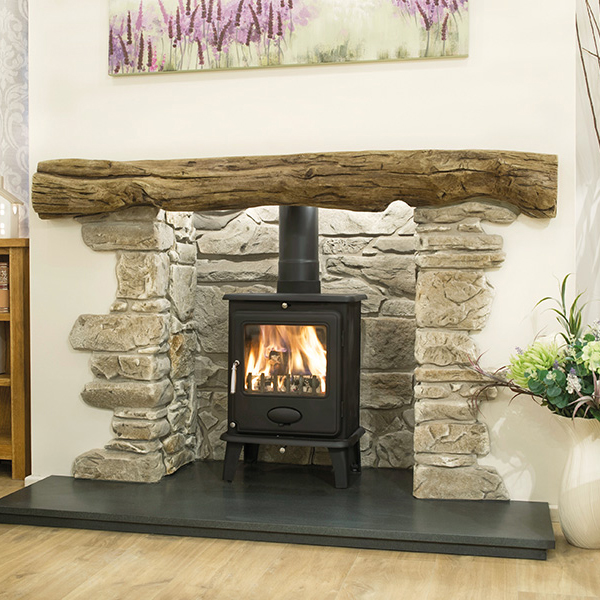
Newman non combustible fireplace beams give the appearance of a traditional timber beam without introducing a combustible timber mantel close to a stove or fireplace.
At Bonfire, we supply a range of non-combustible fireplace beams, including standard sizes and selected bespoke non-combustible fireplace beams.
The method used to install the beam depends on the beam construction, fixing system and the wall it is being attached to.
We always recommend that a non-combustible beam is installed by a competent person.
The official fitting guides can also be viewed here
Before Installing the Beam
Before installation, check:
- The construction of the wall or chimney breast.
- The weight and construction of the beam.
- The fixing system supplied with the beam.
- That the wall or supporting structure is capable of carrying the beam.
- The required clearance between the beam and the stove or fire.
- The appliance manufacturer’s installation instructions.
Non-combustible does not mean that the beam can automatically be positioned at any distance from an appliance. The required clearances will depend on the appliance, installation and manufacturer’s instructions.
If you are still choosing a beam, view our complete range of fireplace beams.
How To Install For Each Application
Please see diagram below for each of the three applications of these beams:
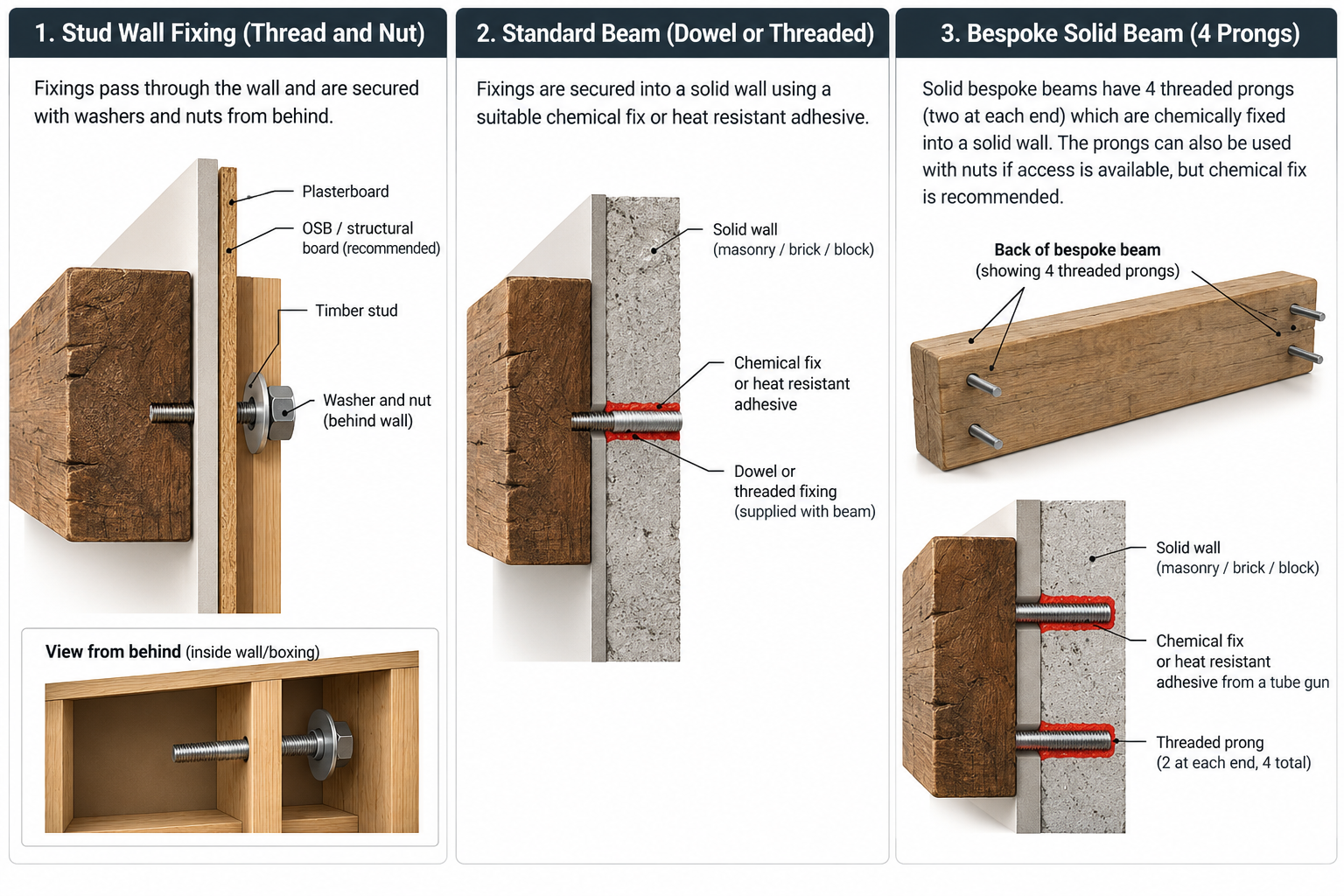
Thread & Nut: Generally suited to reinforced plasterboard/stud wall installations. Rear access is recommended so the nuts and washers can be securely tightened. Osb board can be used to strengthen the area. For use with standard hollow mould beams.
Dowels: Designed for fixing into a suitable solid wall using an appropriate chemical fixing or anchoring adhesive. For use with standard hollow mould beams.
Bespoke Solid Beams: Supplied with four threaded rear prongs — two at each end. These can be chemically fixed into a solid wall or used with nuts and washers where rear access is available. Chemical fix is advisable due to the weight of the solid beams (50-80kg).
Standard Newman Non Combustible Beams
Many standard Newman beams use fixing dowels or threaded fixings positioned from the rear of the beam.
The beam should first be offered into position so that the fixing locations can be accurately transferred onto the wall.
The wall can then be drilled to suit the supplied fixing system.
On a suitable solid masonry wall, the fixings may be secured into the wall using an appropriate chemical anchoring resin or two part fixing system suitable for the substrate and expected load.
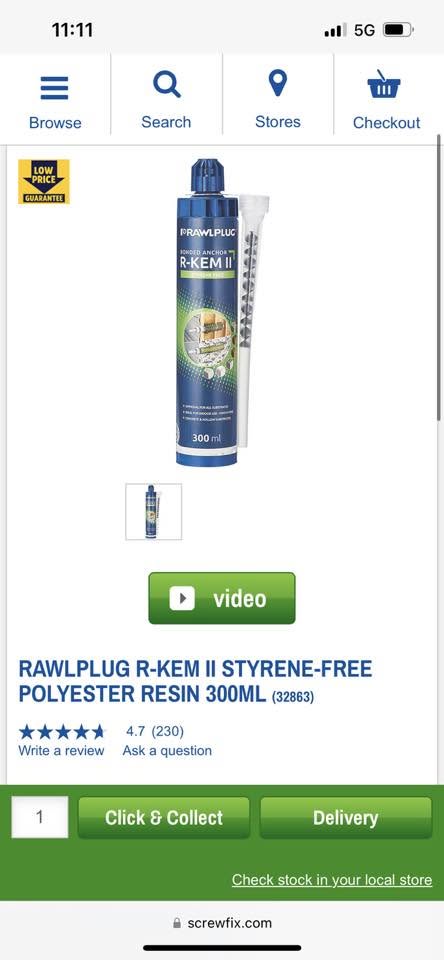
Where the fixing system incorporates threaded studs, nuts and washers, these should be installed in accordance with the fixing arrangement supplied with the beam.
Do not force the beam or its fixing pins into incorrectly positioned holes.
Installing a Bespoke Solid Newman Beam
Some bespoke Newman non-combustible beams are constructed differently from the lighter standard beams.
Our guide to bespoke non-combustible fireplace beams explains the available lengths, construction and considerations when ordering a custom-sized beam.
These can be solid and considerably heavier, with four threaded fixing prongs projecting from the rear of the beam.
You can see examples such as our Bideford non-combustible fireplace beam, which is available in standard and bespoke lengths.
Because of their weight, these beams are generally best suited to a substantial solid masonry or block wall.
Fixing a Bespoke Beam to a Solid Wall
The four fixing positions should be accurately transferred onto the wall and suitable holes drilled into the masonry.
The threaded prongs can effectively act as locating dowels and can be anchored into the masonry using a suitable structural chemical anchoring system.
This would normally be an appropriate chemical resin or two-part polymer anchoring product selected for the wall construction, fixing diameter and load.
The drilled holes should be properly cleaned before the anchoring product is applied.
The beam should then be carefully positioned and adequately supported while the fixing system cures.
An adhesive should not be relied upon as the primary structural fixing unless it is specifically suitable and specified for that particular application.
Dowels Fixing
Some Newman non combustible fireplace beams may be fixed using dowels into a suitable solid wall.
The beam should first be offered into position and the fixing points accurately marked out. The wall can then be drilled to suit the dowels supplied. The holes should be cleaned thoroughly before applying a suitable chemical fixing or heat-resistant adhesive where required.
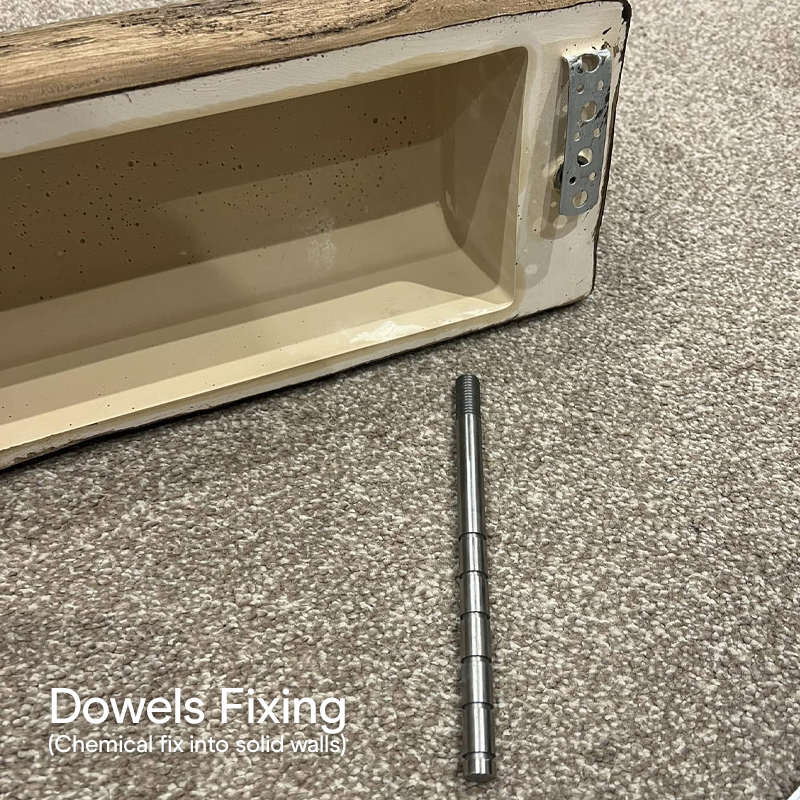
The dowels are then screwed into the back of the beam and then inserted into the holes drilled into the solid wall. Make sure to put the chemical fix such as heat resistant adhesive into the holes first.
Dowel fixing is generally only suitable where the wall construction is sound and capable of supporting the weight of the beam.
Bonfire always recommends installation by a competent person. For supply-only orders, the installer is responsible for checking the wall construction, fixing suitability and overall application.
Threaded Stud and Nut Fixing
This methods is used for generally a plasterboard stud wall, ideally strengthened with ocb timber board.
Where the installation allows it, a threaded fixing can also pass through the supporting structure and be secured from behind using a washer and nut.
This gives a positive mechanical fixing.
For this method, access behind the wall or boxing is ideally required so that the installer can position and tighten the nuts correctly.
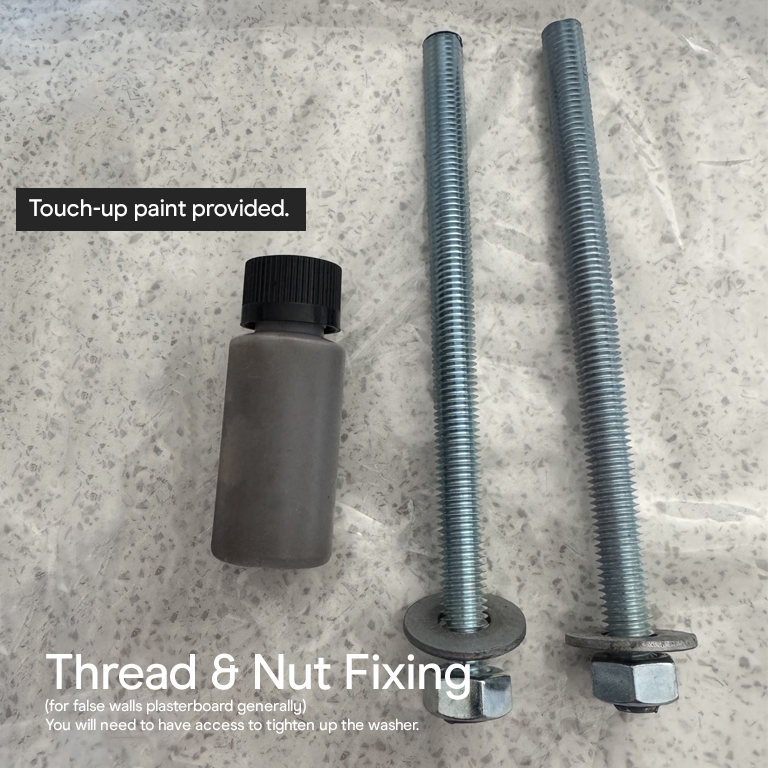
Where there is no existing access, it may sometimes be necessary to carefully open the boxing or wall construction to gain access to the rear of the fixings. The opening can then be repaired and made good once the beam has been securely installed.
Exactly how this is achieved will depend on the construction of the chimney breast or wall.
Can a Newman Beam Be Installed on a Stud Wall?
Potentially, but the supporting structure needs to be suitable.
A heavy beam should not simply be fixed to plasterboard.
Where the chimney breast or false wall has been constructed using timber or metal studs, additional structural support may be required.
For example, a suitable build-up might incorporate:
- Structural timberwork.
- OSB or similar structural board behind the plasterboard.
- Suitable support on either side of the chimney breast.
- Through-fixings secured with washers and nuts from behind.
The threaded fixings can then pass through the supporting material rather than relying on the plasterboard itself.
Where access behind the boxing is required, an installer may need to open a section of the wall, secure the beam and then make the surface good afterwards.
The exact construction will vary considerably between installations, so it is important that the person carrying out the work determines whether the wall is capable of safely carrying the beam.
Standard Beam vs Bespoke Solid Beam
A standard non combustible beam may use a relatively straightforward manufacturer’s fixing kit.
A bespoke solid beam can be considerably heavier (50-80kg) and may require a more substantial fixing method, particularly when manufactured at longer lengths.
For more information on the differences and available lengths, see our guide to bespoke non-combustible fireplace beams.
Supply Only Newman Beams
If Bonfire has supplied your Newman beam on a supply only basis, this article provides general guidance on the typical fixing methods that may be used.
The person carrying out the installation is responsible for determining the correct fixing method for the individual property and checking that the supporting wall or structure is suitable.
This includes selecting appropriate:
- Mechanical fixings.
- Chemical anchors.
- Resins or two-part fixing products.
- Supporting structure.
- Fixing positions.
- Appliance clearances.
We always recommend installation by a competent person.
Where Bonfire has quoted to supply and install your fireplace, stove or beam, our team can assess the installation and advise on the appropriate fixing method for the particular application.
Browse our non-combustible fireplace beams or contact Bonfire if you need help choosing the correct beam for your fireplace project.