Cast iron fireplace inserts are one of the most timeless ways to bring character, structure and warmth to a room.
Whether you are restoring a period property, updating a chimney breast in a modern home, or searching for a more decorative focal point, a cast iron insert offers a classic look that works with a wide range of surrounds, hearths and interiors.
In simple terms, a cast iron fireplace insert is the inner fire section that sits within a surround or opening. It frames the fire, gives the fireplace its visual identity, and can be designed for solid fuel, gas, electric or decorative use depending on the model.
Many homeowners choose them for their traditional detailing, strong heat resistant build, and ability to suit Victorian, Edwardian and cottage style interiors especially well.
This guide explains exactly what cast iron fireplace inserts are, the different styles available, how to choose the right one, what to consider before installation, and how to find the best option for your home.
Estimated reading time: 28 minutes
Quick summary
A cast iron fireplace insert is the inner section of a fireplace that fits within a surround or chimney opening and forms the main fire area. It can be used with solid fuel, gas, electric fires, or for decorative purposes depending on the setup.
This guide covers the main types of cast iron inserts, including tiled, arched, combination and high efficiency designs, and explains how to choose the right one based on size, style and fuel type.
It also outlines key considerations such as measuring your opening correctly, selecting the right hearth, and ensuring the insert is suitable for its intended use. UK specific guidance is included, covering chimney requirements and smoke control (DEFRA) rules.
Key takeaways
- A cast iron fireplace insert sits within a surround and forms the main fire opening
- Not all inserts are suitable for solid fuel or gas, always check the specification
- Inserts come in styles such as tiled, arched, combination and high-efficiency designs
- Higher quality inserts are typically thicker and better suited for regular heat use
- Accurate measurements are essential, especially to the outside of the arch
- The hearth must be suitable for heat, with cut and slabbed designs helping prevent cracking
- Installation must consider chimney condition, flue requirements and safe fixing
- In smoke control areas, open fires can only burn authorised smokeless fuels

Table of contents
- Quick summary
- Key takeaways
- What Is a Cast Iron Fireplace Insert?
- Why Choose a Cast Iron Fireplace Insert?
- Types of Cast Iron Fireplace Inserts
- Choosing the Right Cast Iron Insert for Your Home
- Sizes and Measurements
- Cast Iron Fireplace Inserts for Different Fuel Types
- Installation Considerations
- Cast Iron Inserts in Period and Modern Interiors
- Restoration, Cleaning and Maintenance
- Cast Iron Fireplace Inserts vs Other Fireplace Options
- Questions to ask before you buy
- Frequently Asked Questions
- Final Thoughts
What Is a Cast Iron Fireplace Insert?
A cast iron fireplace insert is the main inner section of a fireplace that fits inside a surround, chimney breast opening or mantel arrangement.
It usually includes the decorative frame around the fire opening and may also incorporate details such as patterned casting, arched designs, tiled side panels, hoods, frets or integrated convector features.
If you are new to fireplace inserts, this short video explains what a fireplace insert is, how cast iron inserts work, and the main things to consider before choosing one for your home.
Watch our guide to cast iron fireplace inserts:
In many period homes, the insert is the visual centrepiece of the fireplace. It sits between the surround and the actual fire opening, creating a finished appearance while helping define the fire area itself.
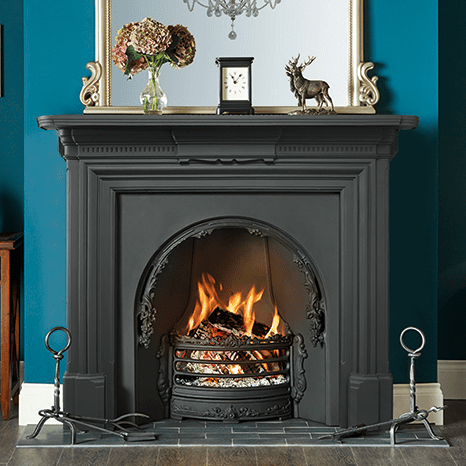
How a fireplace insert differs from a basket or combination fireplace
This is one of the most common areas of confusion for buyers.
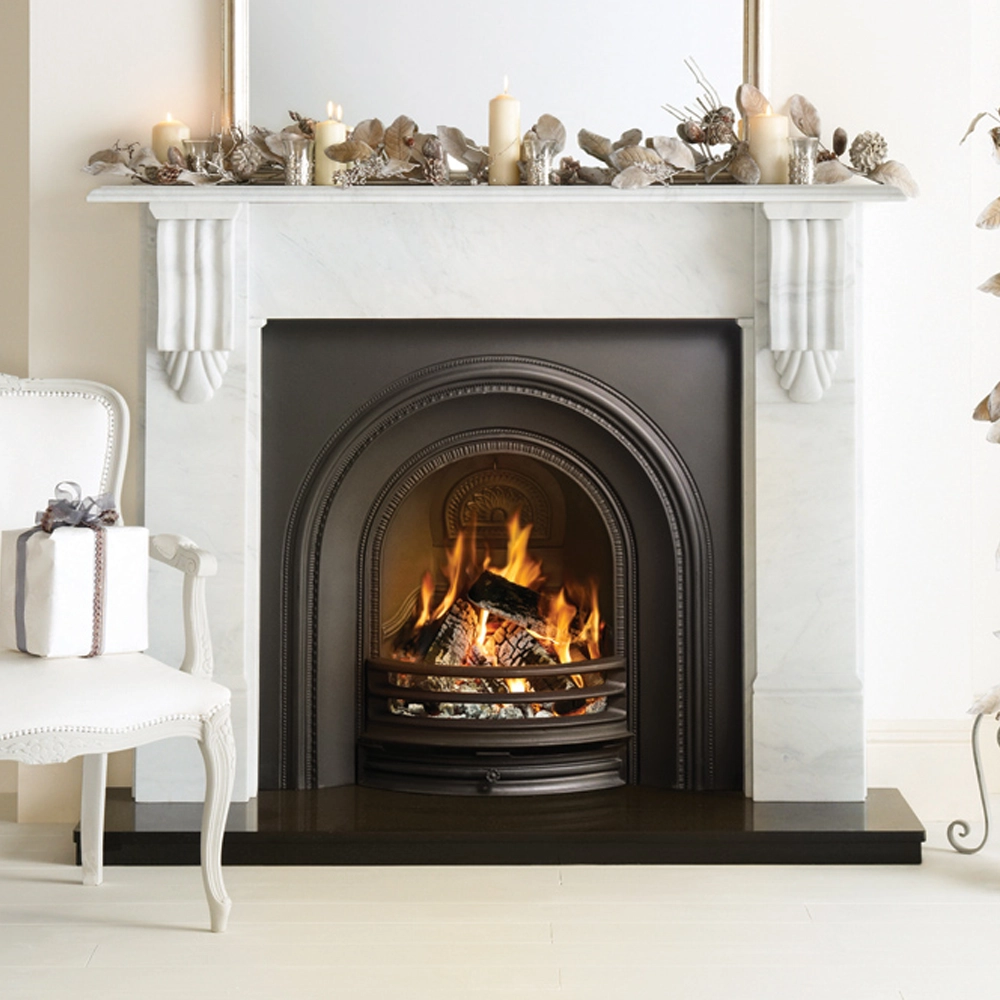
A cast iron fireplace insert is typically the insert body only, designed to be paired with a separate surround such as limestone, marble, wood or slate.
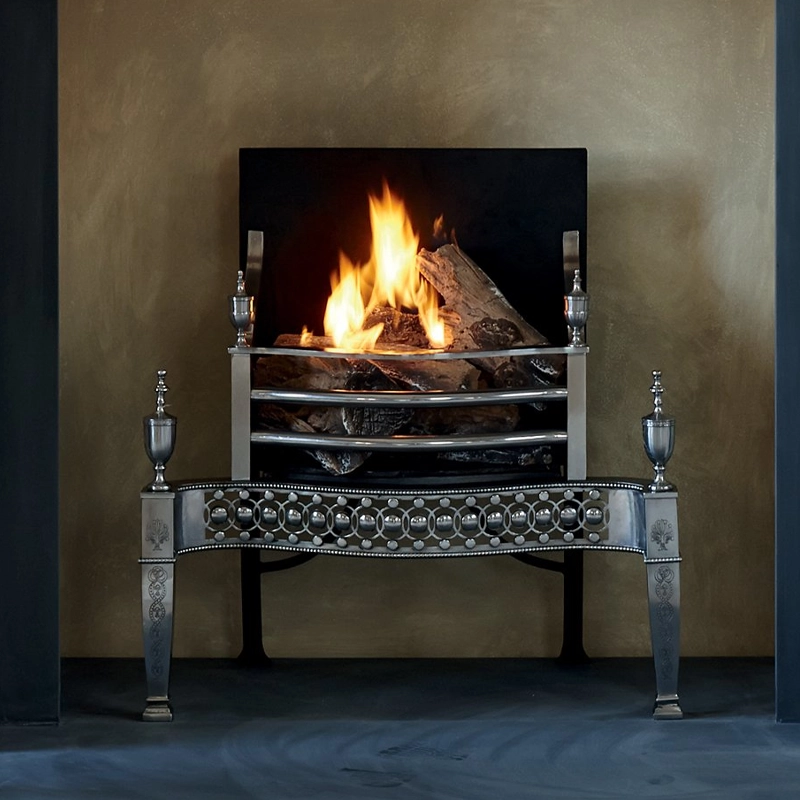
A fire basket is usually a more open fronted fire unit that sits within a chamber or opening and is often chosen for a simpler or more traditional open fire look. They can be wood burning or have a gas or electric fire insert.
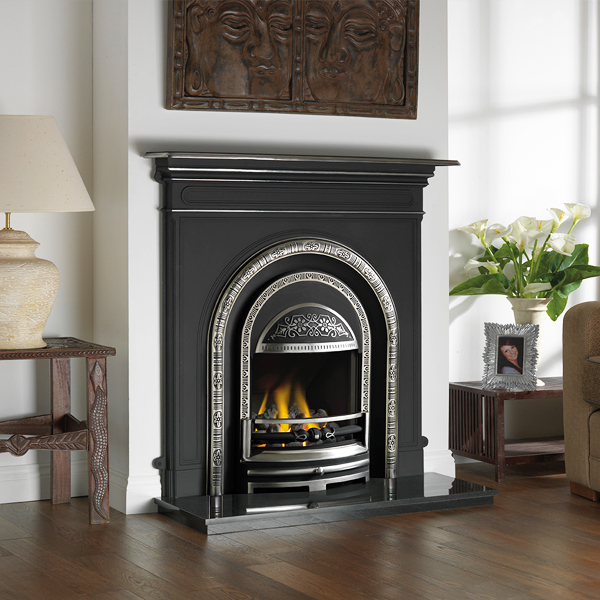
A combination fireplace usually combines the insert and outer frame into one cast iron unit, making it ideal where space is limited or where a complete all-in-one look is preferred.
Why cast iron remains a popular fireplace material
Cast iron has been used in fireplaces for generations because it can be cast into highly decorative forms and holds up well in a hot fireplace environment.
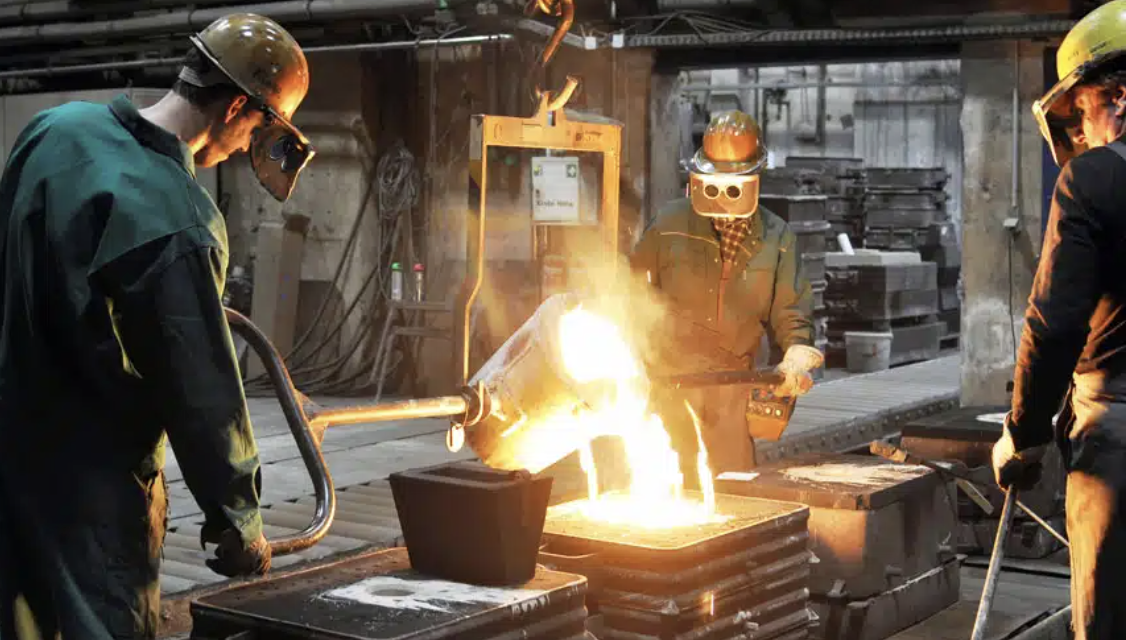
Its material characteristics made it especially well suited to detailed moulding and shaped production, which is part of why so many Victorian and Edwardian fireplace designs were produced in cast iron. (Source: Britannica)
Related Links:
Why Choose a Cast Iron Fireplace Insert?
Timeless period style
Few fireplace materials create a sense of heritage as effectively as cast iron. From ornate floral patterns and elegant arches to simple matt black designs, cast iron inserts can instantly add age, depth and architectural character.
They are especially popular in:
- Victorian homes
- Edwardian houses
- Terraced properties
- Cottages
- Townhouses
- Renovation projects
- Newer homes that want a more traditional focal point
Durability and heat resistance
Cast iron is valued for strength and longevity, making it a natural choice for fireplace products. When properly specified for the intended fuel and installed correctly, it provides a robust solution that can last for many years. (Source: Britannica)
Decorative detail and design flexibility
Because cast iron can be formed into intricate shapes, it allows for:
- Decorative panels
- Arched detailing
- Traditional embossing
- Strong lines and symmetry
- Period authentic styling
- Pairing with patterned fireplace tiles
This makes it one of the most flexible options for homeowners who care as much about appearance as practical use.
Types of Cast Iron Fireplace Inserts
Choosing the right type starts with understanding the main design categories.
Tiled cast iron fireplace inserts
Tiled cast iron fire inserts are among the most popular traditional options. They feature cast iron framing with tile sections on either side of the fire opening, often using tube lined, floral, Art Nouveau or geometric tiles.
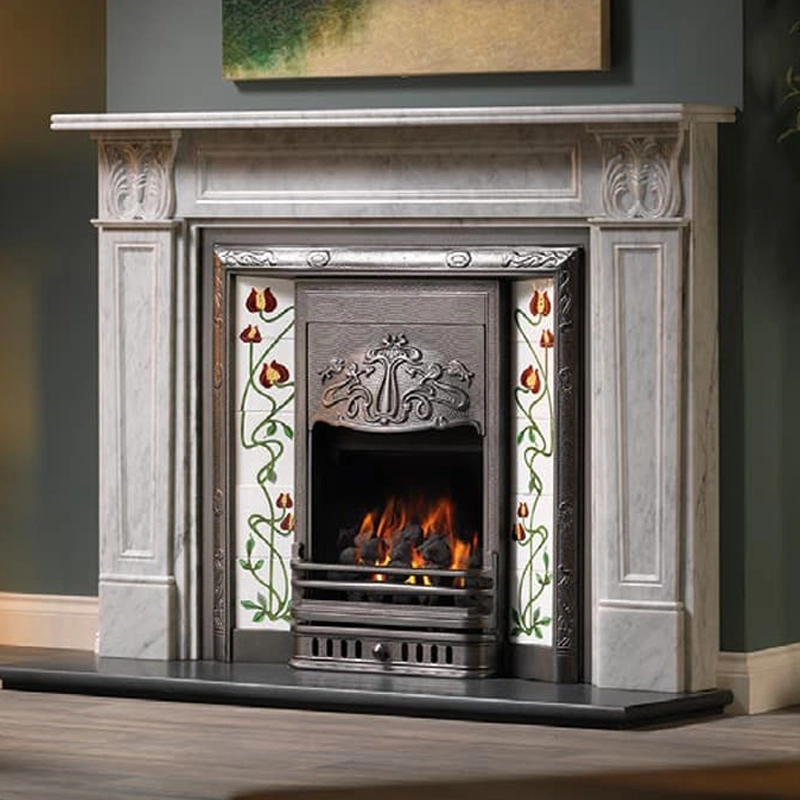
They are ideal for:
- Victorian inspired interiors
- Edwardian rooms
- Homes where the fireplace is intended to feel decorative and authentic
- Buyers who want colour and detail without overwhelming the room
Tiled cast iron inserts are often chosen with stone, wooden or marble surrounds and are one of the most recognisable period fireplace formats. Market examples commonly position them as a traditional Victorian style choice. (Source: TJS Installations)
Arched cast iron inserts
Arched inserts have a softer, more elegant look, with a gentle curve across the top. They are commonly available in black, as well as more modern highlighted or polished finishes.

Traditionally, these inserts were finished in black. This was practical, as they could be maintained using stove or grate polish to keep them looking fresh. The brighter polished and highlighted finishes are more of a modern preference.
They’re often chosen for:
- Period restorations
- Cottage interiors
- Rooms that need decorative interest without heavy detailing
- They can suit both highly traditional and more restrained interiors.
Highlighted and decorative inserts
Some inserts include polished highlights or contrasting detailing that emphasises pattern and shape. These are useful when you want the fireplace to be a statement piece.
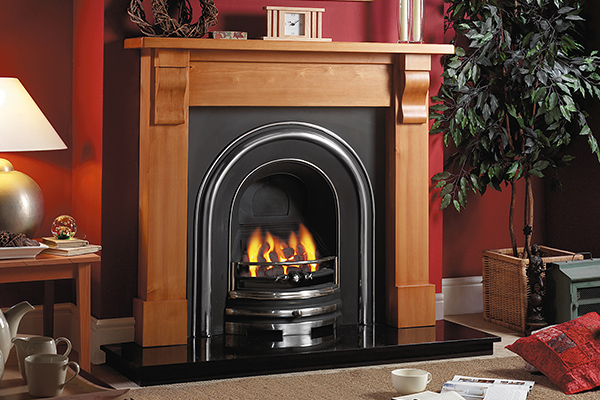
It’s worth noting that the polished or highlighted areas are simply the bare cast iron that has been worked back. Because of this, these parts can develop surface rust over time. This is normal and can be easily cleaned back with a wire wool or similar, then maintained as needed.
They work particularly well in:
- Formal lounges
- Dining rooms
- Heritage properties
- Boutique style interiors
Combination inserts
Combination units are often described as all-in-one cast iron fireplaces.

Historic combination designs were popular in smaller rooms and are still widely sold today because they are compact, attractive and practical.
Retail category pages commonly describe them as historically inspired designs dating back to the late 19th century.
Convector and high efficiency inserts
Some inserts are designed with a built in firebox and glass front, working more like a stove within the cast iron frame. The fire burns inside this enclosed chamber, which allows for much better control of the air and the burn.
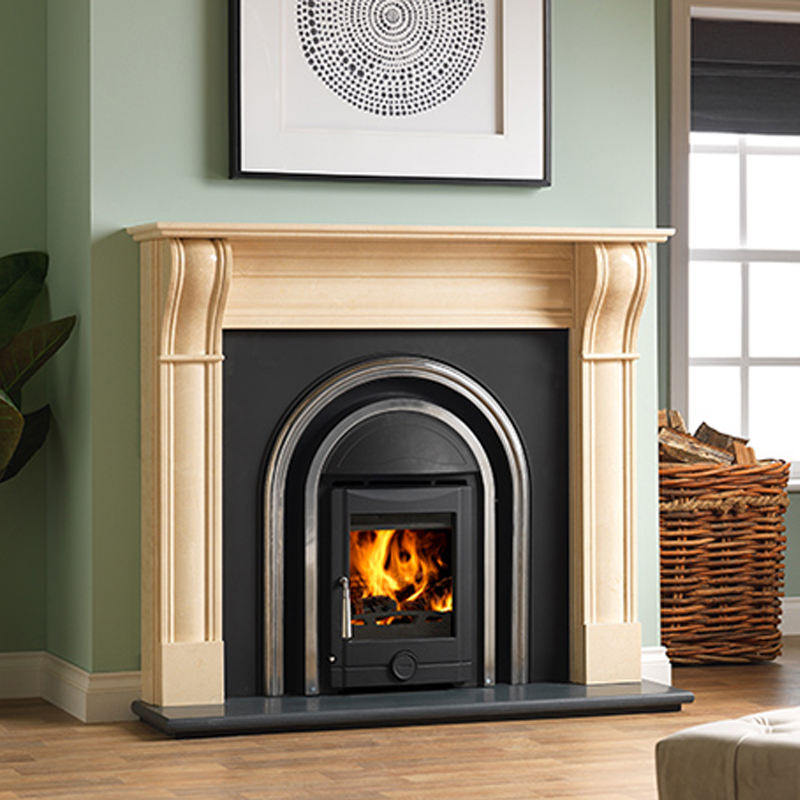
Because of this, they are far more efficient than open fronted inserts. More heat is kept in the room rather than going straight up the chimney, and the glass helps retain and direct that heat forward.
Many of these inserts also have convector style features, drawing cooler air in, heating it within the body of the insert, and pushing it back out into the room. This gives a more consistent and usable heat.
They are a good option for those who like the look of a traditional cast iron insert but want the performance of a stove.
Choosing the Right Cast Iron Insert for Your Home
The best cast iron fireplace insert is not always the most ornate or the most expensive. It is the one that fits your opening, suits your property, works with your chosen fuel, and creates the look you want.
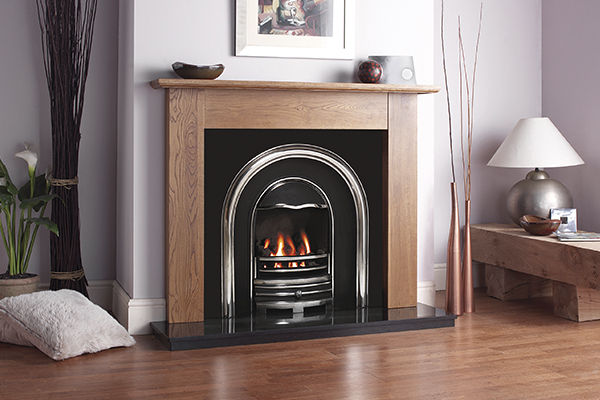
Pro tip: not all cast iron inserts are built for regular use
Not all cast iron inserts are suitable for gas or solid fuel use, particularly for regular or continuous burning. This should always be clearly stated by the manufacturer or retailer.
In general, higher quality inserts are made from thicker cast iron, allowing them to handle sustained heat more effectively and reducing the risk of warping, making them suitable for regular use.
Lower cost inserts are often made from thinner castings and are more suited to decorative use or occasional fires. If used regularly at high temperatures, they can be more prone to movement, cracking, or premature wear.
As a rule, always check the intended use, fuel type, and manufacturer guidance before buying, rather than relying on appearance alone.
Match the insert to your property style
A good rule is to align the insert with the age and character of the room.
- Victorian homes: often suit tiled inserts, decorative arches and more elaborate castings
- Edwardian homes: often work well with slightly cleaner lines and elegant proportions
- Cottages: suit simpler inserts, softer detailing and darker finishes
- Modern homes: often benefit from plainer cast iron inserts paired with stone or minimalist surrounds
Choose the right fuel type
Not every insert is suitable for every fuel setup.
Some are intended for:
- Solid fuel (wood or coal)
- Gas fires
- Electric fires
- Decorative use only
Always check the specification before buying. A cast iron insert may look right visually but still needs to match the intended appliance type and chimney setup.
If you are planning to use the insert for heating, it must be paired with the correct internal parts for that fuel type, the cast alone is not enough. These kits are usually optional extras when purchasing a cast iron insert.
For solid fuel (wood or coal), you will typically need:
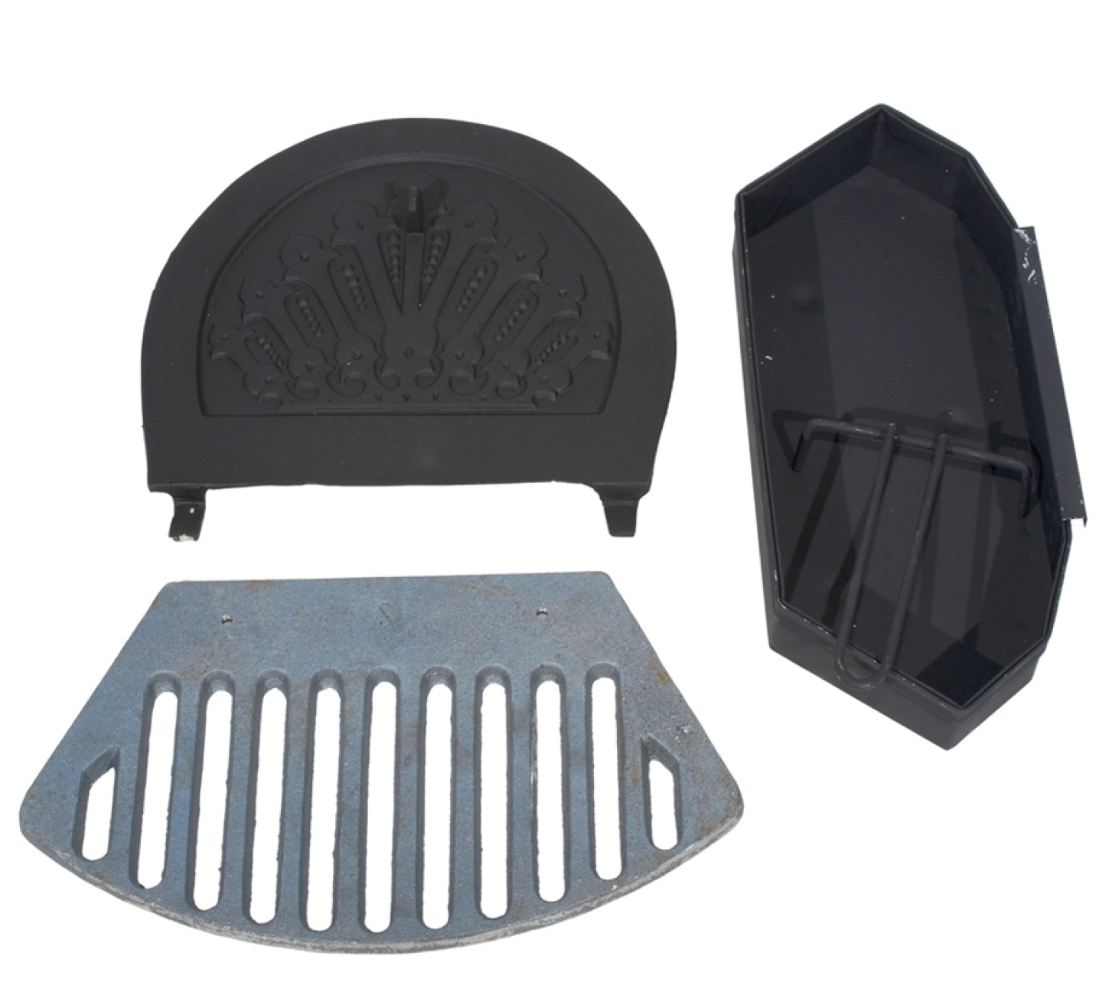
- A grate to support the fuel and allow airflow underneath
- An ash pan to collect waste and keep the fire burning efficiently
- Fire bars (grate bars) which take the direct heat and can be replaced over time
- Fire bricks or liners to protect the inner casting from excessive heat
- A throat plate / baffle to help control airflow and improve efficiency
- A flue connection or register plate to suit the chimney
These parts are essential, as solid fuel burns at high temperatures and needs controlled airflow from below.
For gas fires, you will typically need:
- A gas fire tray or burner (matched to the insert size)
- A proper gas supply with isolation valve
- Decorative media such as coals, logs, or pebbles
- A closure plate or gather to suit the chimney opening
- In some cases, ventilation or a specific flue requirement depending on the fire type
Gas setups must always be installed and checked by a qualified Gas Safe engineer.
It’s also important to understand that not all cast iron inserts are built for the same level of heat. Solid fuel inserts are generally thicker and designed to cope with much higher temperatures. Inserts intended for gas or decorative use are often lighter and not built for that level of heat.
For this reason, you should never assume an insert can be used for a different fuel type unless it is clearly designed and specified for it.
Consider the fireplace opening and chamber depth
This is where many buyers go wrong.
An insert must suit:
- Overall width
- Overall height
- Internal opening
- Rebate or back section
- Chamber depth
- Compatibility with the chosen fire or grate
Think about finish, tiles and surround materials
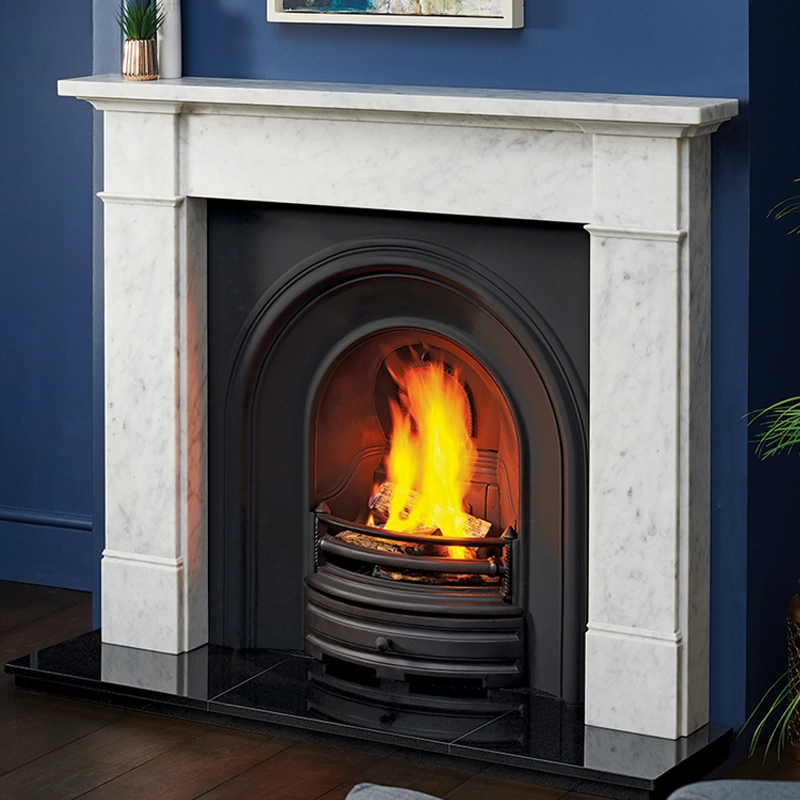
Your insert should also work visually with:
- Limestone surrounds
- Marble surrounds
- Wooden mantels
- Slate hearths
- Tiled hearths
- Chamber colour and texture
A black cast iron insert with bold patterned tiles creates a very different effect from a plain arched insert in a simple stone surround.
If you’re ready to move forward or want help choosing the right option:
At Bonfire, we supply a wide range of cast iron fireplace inserts suitable for solid fuel, gas, electric and decorative use.
View our cast iron fireplace inserts
Our team can help guide you through the options to ensure the insert, fire type and overall setup are all correctly matched from the start.
Sizes and Measurements
Getting the measurements right is one of the most important parts of choosing a cast iron fireplace insert.
How to measure for a cast iron fireplace insert
Before buying, take clear and accurate measurements of your fireplace:
- Opening width (front)
- Opening height (front)
- Internal depth of the chamber
- Back opening width and height (if tapered)
- Hearth projection (distance the hearth comes into the room)
- Available width for the fireplace surround
- Any existing rebate, lintel position, or chamber restriction
It’s also important to check what the listed dimensions refer to. Some sizes are for the visible front, others for the full insert body, and some are based on the opening the insert is designed to fit.
With a traditional cast iron insert and surround, the insert should sit back into the rebate of the surround by around 30mm or more as a guide, although this can vary depending on the design and manufacturer.
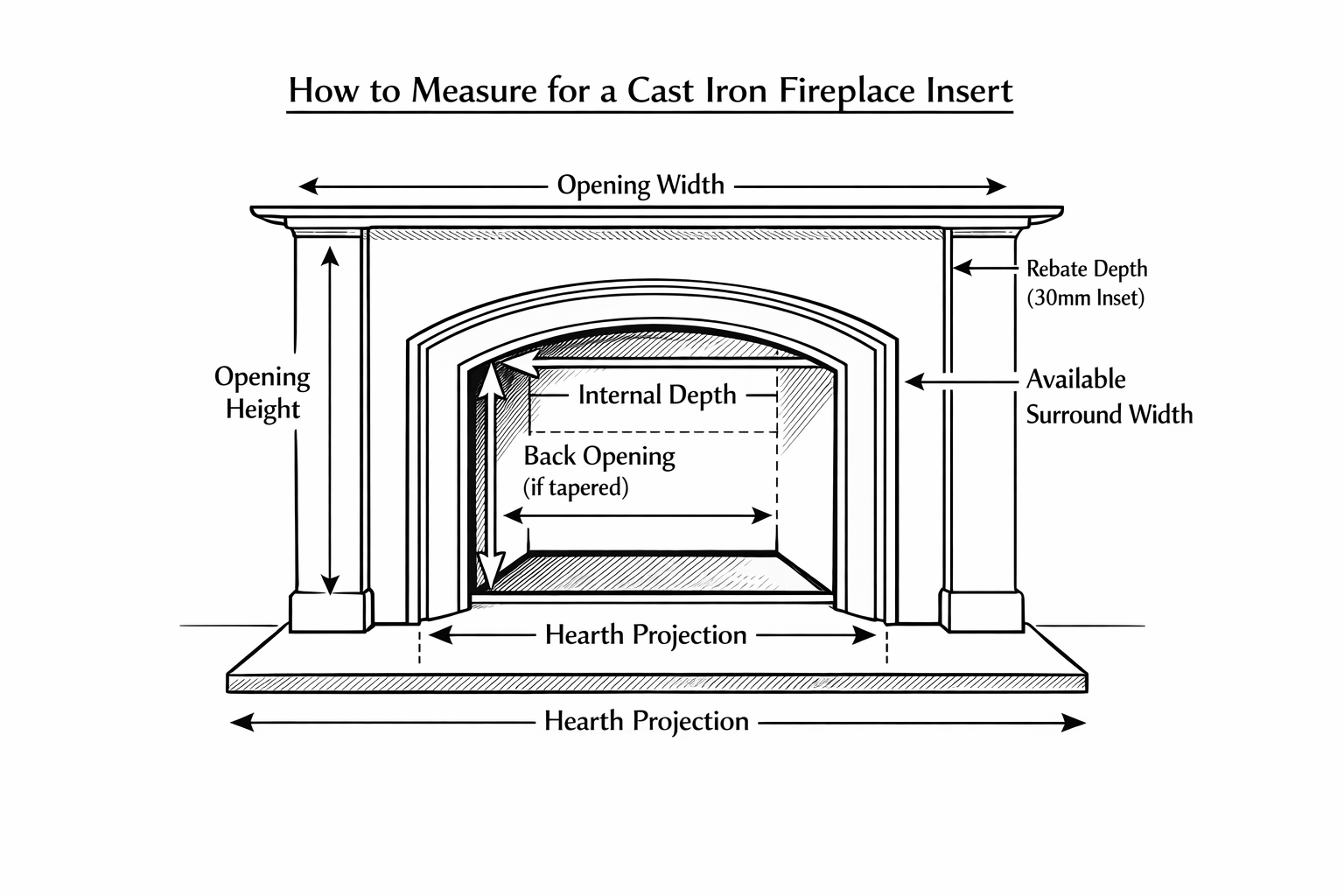
When measuring for the insert itself, the critical size is to the outside of the arch or outer frame. This is the widest point and must fit comfortably within the surround opening. Allow a small tolerance around this so the insert doesn’t appear tight and can be fitted properly.
Also consider practical installation details, such as access for fitting, space for sealing, and how the insert will connect to the chimney or appliance.
If in doubt, it’s always best to check with your installer or retailer. Getting the sizing right at this stage avoids costly adjustments later and ensures the insert, surround, and overall fireplace work well together.
Retail and installation guides commonly stress that accurate dimensions are essential because insert sizing and fireplace opening sizes do not always align neatly. (Source: Direct Fireplaces)
Common sizing considerations
Many buyers focus only on the visible front of the insert, but the depth and rear clearances matter as well.
You may also need to account for:
- Plaster removal
- Opening adjustments
- Chamber preparation
- Surround proportions
- Hearth height
- Fire type compatibility
Hearth considerations for fireplace inserts
The hearth is an important part of the installation, both visually and practically. If the insert is going to be used for solid fuel or gas, it will be exposed to high temperatures, so the hearth needs to be suitable for heat.
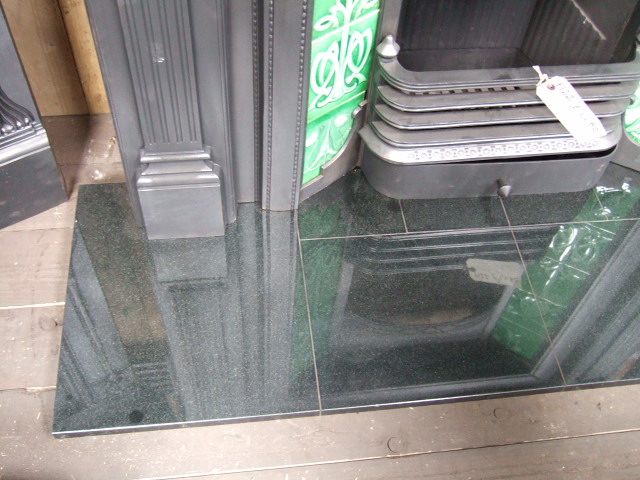
For working fireplaces, a cut and slabbed hearth is crucial. This allows for natural expansion and contraction as the material heats up and cools down, helping to reduce the risk of cracking over time.
If the fireplace is only for occasional or decorative use, this becomes less critical, but there is still a risk of movement or cracking if heat is introduced later.
There are a few common hearth styles to consider:
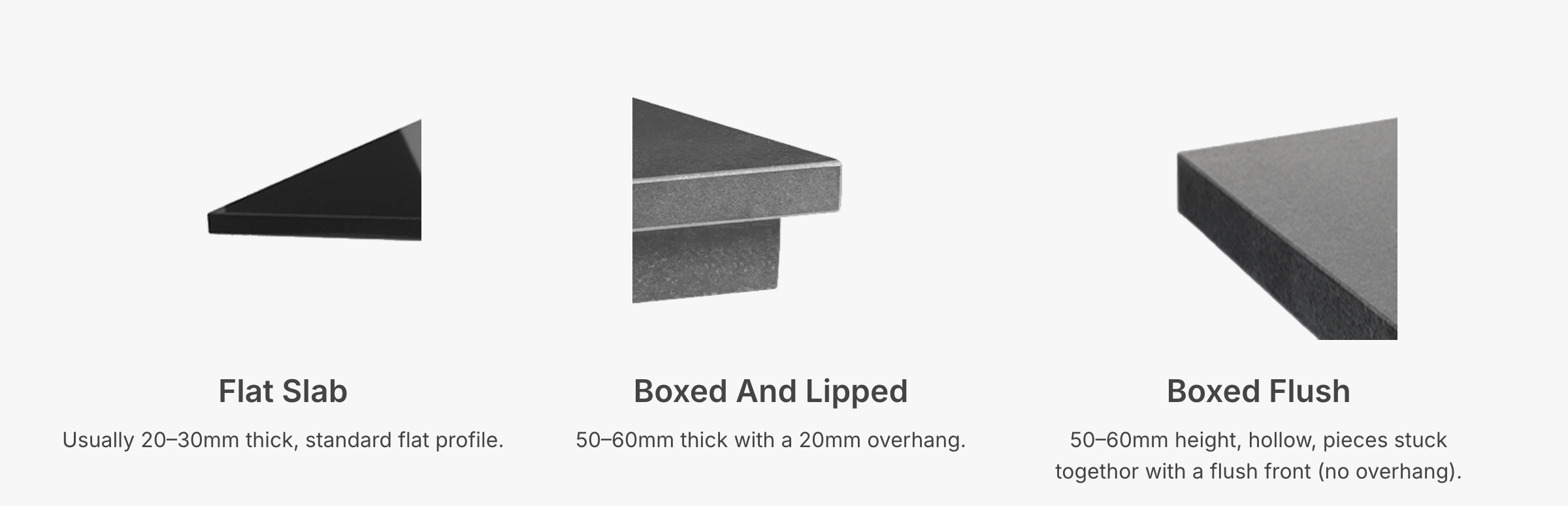
- Flat hearth (20mm): A simple, minimal look. Best suited for decorative use or lighter duty setups.
- Boxed and lipped hearth (typically 50–60mm total height): The most popular option. This uses a 20mm top with a built up edge and slight overhang (usually around 20mm), giving a more substantial, traditional appearance.
- Boxed flush hearth: Creates the look of a solid, thicker slab. The top is usually 20mm with vertical returns added below. You may see a faint join line where the pieces meet, but it gives a clean, weighty finish.
- Split hearth (in sections): Made from two or three pieces joined together on site. This can create a different look and help with handling larger sizes, but it is more involved to install and joints may become slightly visible over time.
Choosing the right hearth comes down to how the fireplace will be used, the look you want to achieve, and ensuring it is suitable for the level of heat it will be exposed to.
Fixing a cast iron fireplace insert
A cast iron insert is not simply pushed into place. It needs to be properly secured to ensure it is safe, stable, and sealed correctly.
In most cases, the insert is fixed back to the fireplace opening or masonry using fixing lugs or brackets on the sides of the cast. These are secured with screws or bolts into suitable plugs or masonry fixings. The insert is then sealed around the edges, usually with fire cement or a suitable high temperature sealant, to prevent movement and stop air leakage.
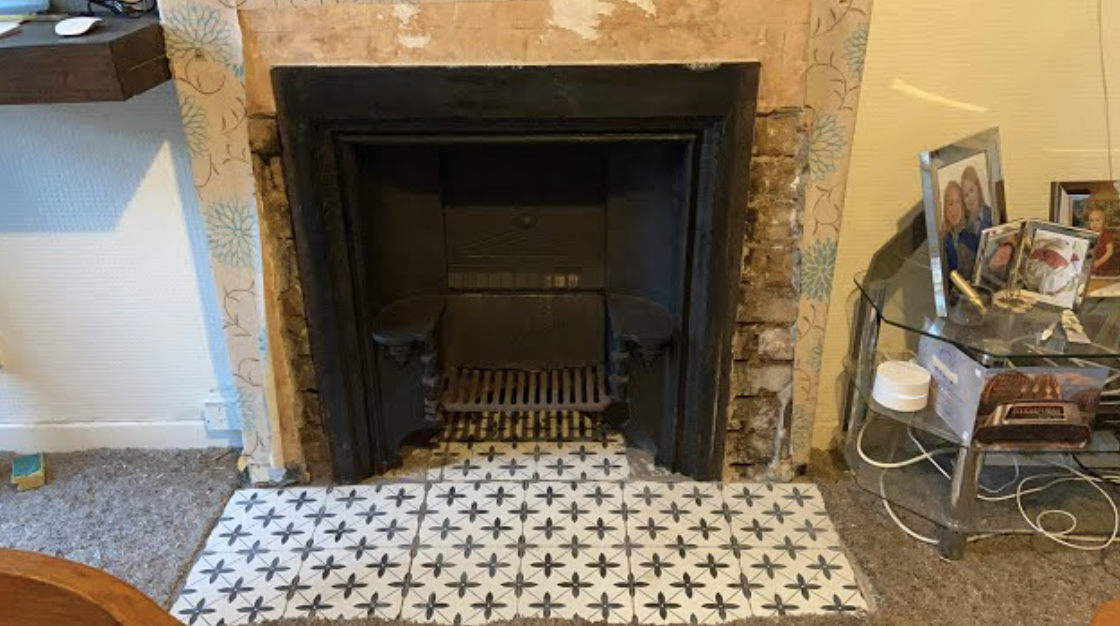
The base of the insert should sit level on the hearth, with adequate support across its weight. Cast iron is heavy, so a solid and even surface is essential.
Once fixed, the internal components (such as grates, ash pans, or fire baskets) are fitted, and the flue connection or closure plate is installed depending on the setup.
It’s always recommended that installation is carried out or checked by a HETAS or Gas Safe qualified installer, especially for solid fuel or gas use, to ensure everything is fitted safely and in line with regulations.

When a chamber opening needs adapting
In older homes, the original opening may be too large, too uneven or previously altered. In these cases, the opening may need to be made good or adapted so the insert sits correctly and looks properly finished.
Cast Iron Fireplace Inserts for Different Fuel Types
Solid fuel inserts
Solid fuel inserts are designed for open fires using the appropriate grate, fireback arrangement and chimney setup. They are often chosen by buyers who want a traditional live fire look.

Because solid fuel installations are subject to building regulations and suitability checks, chimney condition, hearth design, and lining requirements should be certfied properly by a HETAS engineer.
In England and Wales, domestic solid fuel installations are subject to Building Regulations, and HETAS explains that many works are notifiable and may require a Certificate of Compliance. Older chimneys may also need lining depending on age and intended use. (Source: HETAS)
Gas inserts
Some cast iron inserts are designed for gas fires and combine traditional styling with simpler operation and lower maintenance than a solid fuel fire.
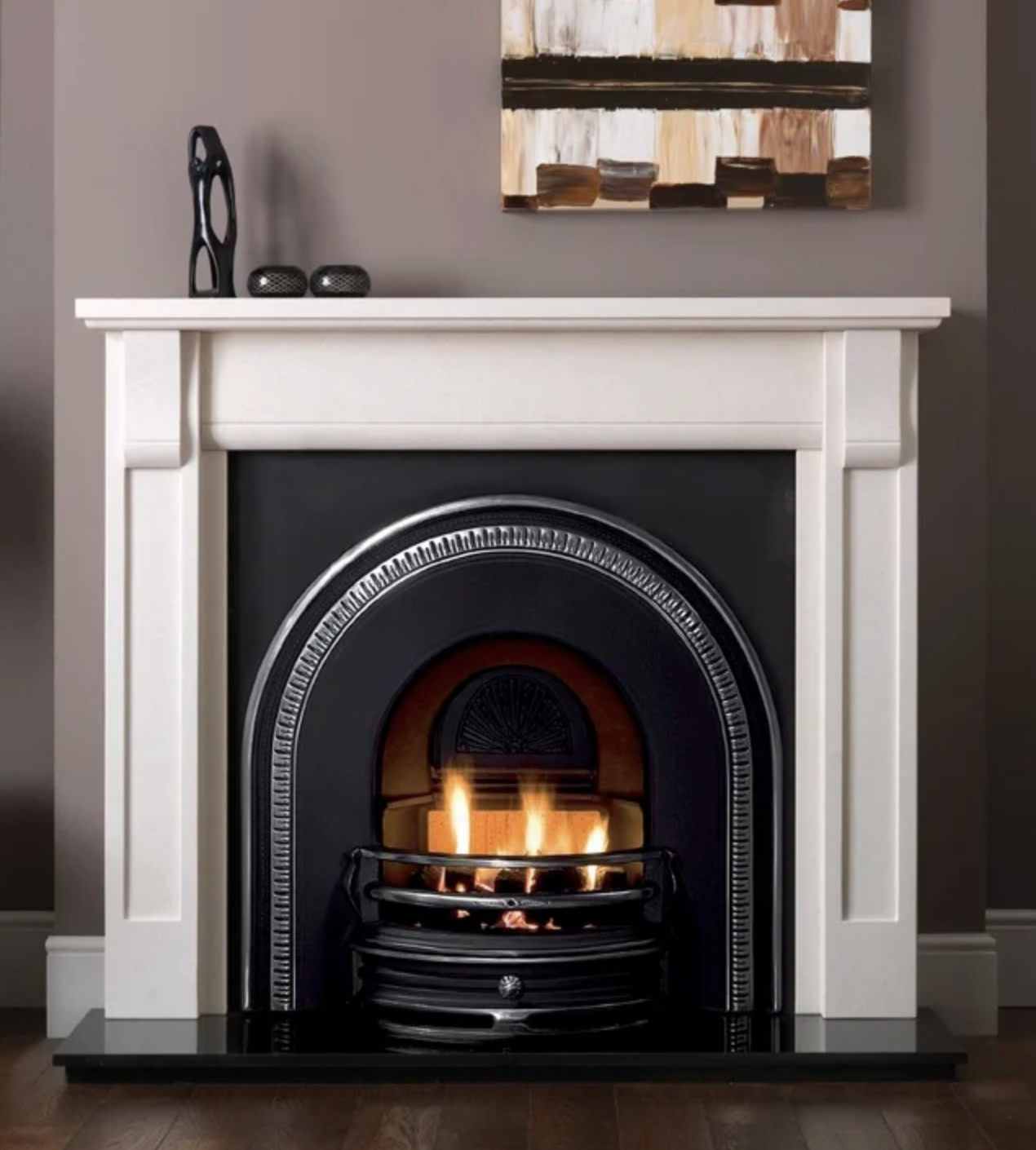
These are ideal for homeowners who want:
- The look of a traditional fireplace
- Easier day to day use
- Less ash and fuel handling
- More predictable operation
Gas fire inserts can be set up for either natural gas or LPG (bottled gas), but they are not interchangeable unless specifically converted.
Each gas fire insert or gas fire tray is designed for one type of gas. The difference is in the burner jets and pressure settings, so using the wrong gas is unsafe.
Electric inserts
Electric inserts are a newer option for cast iron fireplaces, offering the look of a real fire without the need for a chimney or flue.
They sit neatly within the cast iron insert and use LED flame effects, with most models also producing heat through a built in fan heater producing 1 to 2kW heat output. Installation is simple, usually just requiring a standard power socket.
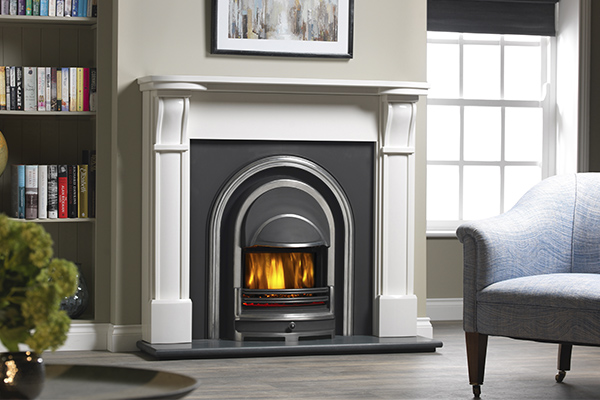
Because there is no real flame, they are low maintenance and easy to control, often with a remote. They are ideal for decorative fireplaces or where solid fuel or gas isn’t practical.
The main benefits are ease of use, minimal installation, and clean operation. The downside is that the heat output is lower and less natural compared to solid fuel or gas, and the flame effect, while improving, is not the same as a real fire.
It’s important to see the flame effect in action. Watch the video below for a clear example.
Decorative or display only inserts
Not every insert is bought as a working heat source. Some are chosen purely for decorative purposes in bedrooms, reception rooms or staged period restorations.
This can be a good option where:
- The chimney is no longer active
- The room is used mainly for display
- The priority is visual character over heat output
Installation Considerations
Installation should never be treated as an afterthought. The insert may be the visible focal point, but the success of the fireplace and safety depends on the hidden elements too.
If you’d like help with installation, chimney checks or ensuring your setup is compliant:
Learn more about our installation services
Chimney, flue and lining
A working fireplace setup may require checks to the chimney, flue path and liner suitability. HETAS notes that older chimneys, particularly those predating 1965, often require relining depending on the intended fuel and condition. (Source: HETAS)
Does a cast iron insert need to be lined?
Not always but in most cases, yes, it is recommended, especially if the fireplace is going to be used and for older properties.
It depends on how the insert is being used:
- Solid fuel (wood or smokeless fuel):
A flue liner is strongly recommended and often required. It improves draw, safety, and efficiency, and helps prevent smoke leakage and tar build up in the chimney. - Gas fires:
Many gas appliances require a suitable flue or liner depending on the type of fire. This will be specified by the manufacturer and must be installed by a Gas Safe engineer. - Open fires (decorative or occasional use):
A liner may not always be required if the chimney is sound and has been properly tested, but it is still considered best practice. - Electric or decorative (non working):
No liner is needed, as there is no combustion.
Important:
The need for a liner is not about the cast iron insert itself, but the chimney and appliance connected to it.
As a rule, the chimney should always be checked (smoke tested) before use, and your installer will advise whether a liner is required to meet current regulations and ensure safe operation.
Hearth and surrounding materials
The hearth and surrounding construction need to be safe and appropriate for the intended appliance and heat exposure.
HETAS guidance highlights the importance of building protection and safe installation, while UK guidance for fireplace recesses and hearth design also emphasises non combustible materials and proper construction. (Source: HETAS)
Why professional installation matters
For buyers in the UK, a professional installer helps ensure:
- Correct fit
- Safe clearances
- Compliant hearth setup
- Suitable flue arrangement
- Proper documentation where required
HETAS also explains that customers using a HETAS Registered Installer receive a Certificate of Compliance on completion of relevant installation work. (Source: HETAS)
Smoke control areas (DEFRA) and cast iron inserts
If you live in a smoke control area, what you can burn depends on how the cast iron insert is being used and what appliance is fitted within it.
- Open cast iron inserts (traditional open fire):
These are classed as open fires. You can still use them, but only with authorised smokeless fuels. Burning wood or standard house coal is not permitted. (Source: Buckinghamshire Gov). Occasional use may not always be enforced, but legally it is still not allowed - Solid fuel with a closed appliance (stove or firebox within the insert):
If the appliance is DEFRA exempt, you can legally burn wood. If it is not exempt, you can only burn authorised smokeless fuels. (Source: Gov UK) - Gas fires or gas baskets within a cast insert:
Gas is not restricted by smoke control rules, but the appliance must be correctly installed and comply with regulations. - Electric inserts:
Not affected, as there is no combustion. - Decorative (non working) inserts:
No restrictions apply unless a fuel type is introduced later.
Important:
The rules apply to the fuel and appliance, not the cast iron insert itself. The insert is simply the outer frame, what sits inside it determines what you can legally burn.
In smoke control areas, it is an offence to emit smoke from a chimney or use unauthorised fuel in a non exempt appliance, and fines can apply. (Source: DEFRA UK AIR)
These rules are enforced by local councils, and using the wrong fuel can lead to fines (up to £1,000).
Need help choosing the right insert for your opening? Speak to a fireplace specialist before you order so the style, size and fuel type are all correct first time.
Cast Iron Inserts in Period and Modern Interiors
Victorian and Edwardian homes
Cast iron inserts are especially at home in Victorian and Edwardian properties, where they reflect the architectural language of the period.
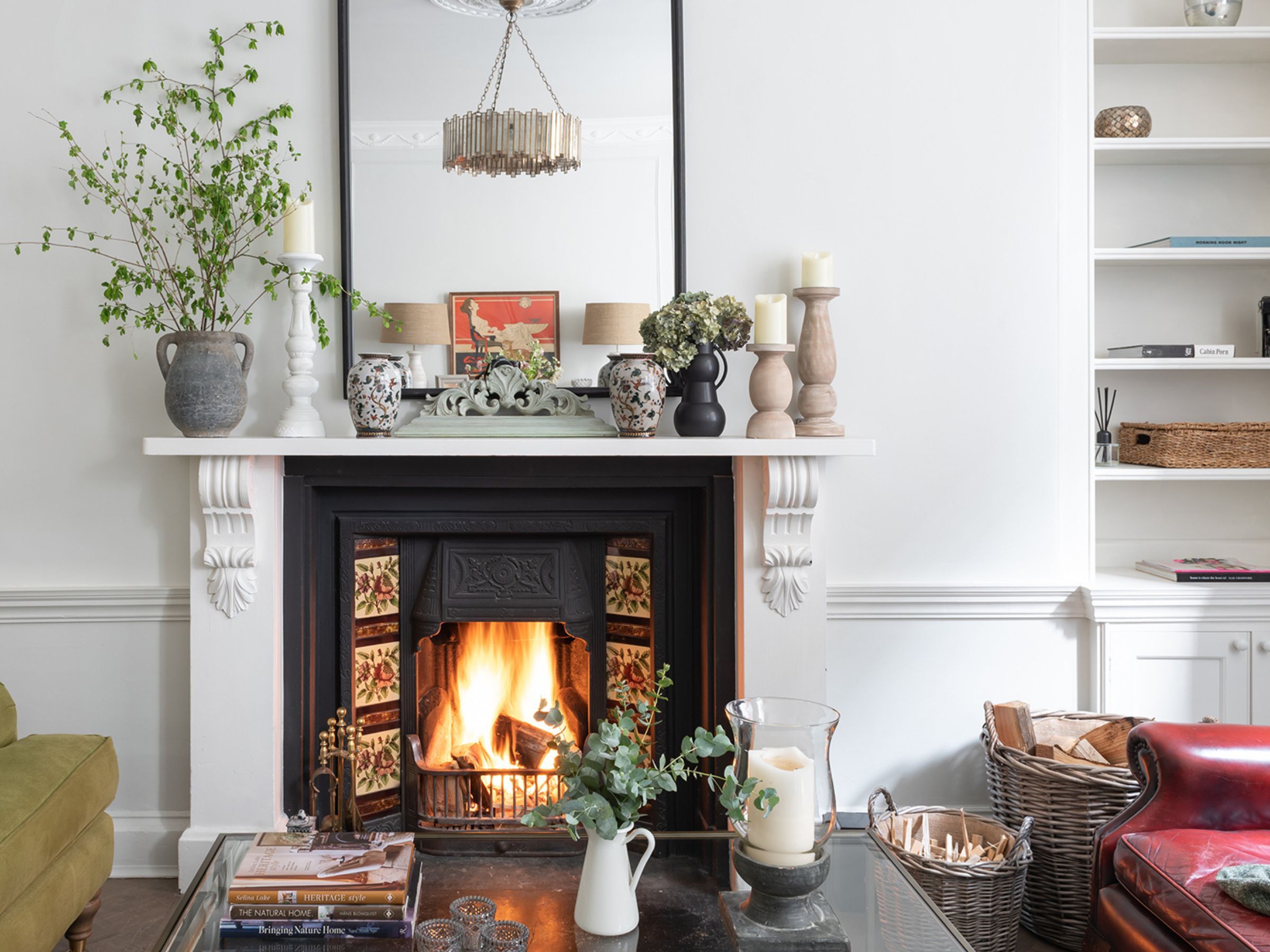
Heritage focused sources note that these homes commonly featured cast iron fireplace forms, often with surrounds in timber, marble or stone and tiled detailing. (Source: Britain’s Heritage)
Cottage and country interiors
In cottages, cast iron inserts add charm without needing elaborate decoration.
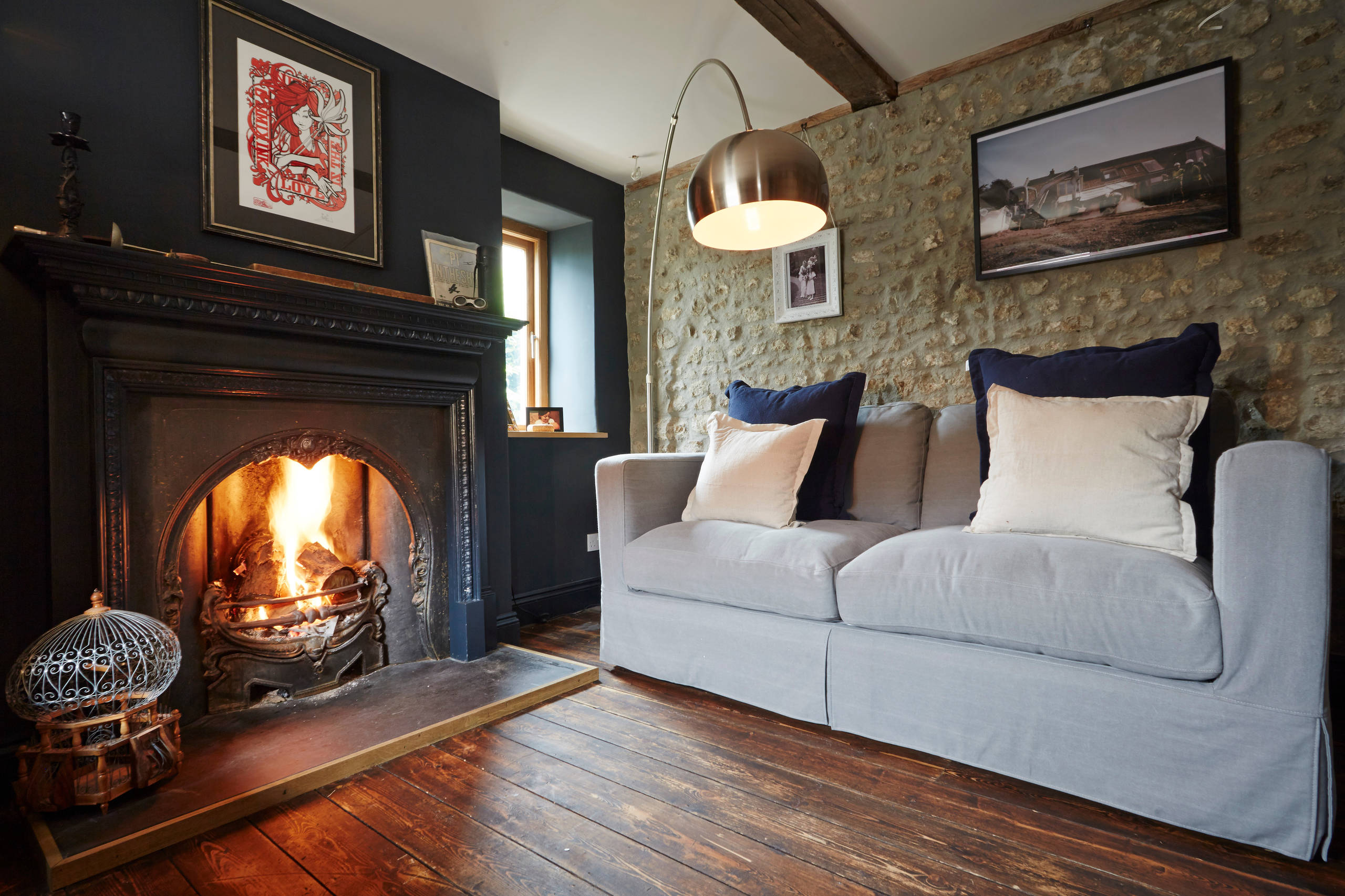
A simple arched insert in black or highlighted finish can look understated, warm and authentic.
Contemporary homes with traditional character
In newer homes, cast iron inserts can soften a room and add depth.
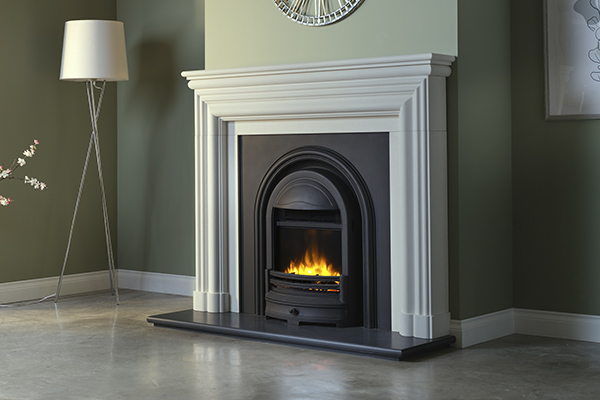
Pairing a clean lined insert with a limestone surround or plain mantel can create a balanced mix of classic and modern style.
Restoration, Cleaning and Maintenance
Cast iron fireplace inserts are relatively straightforward to maintain, but the finish you choose will affect the care routine.
How to keep cast iron looking its best
Good maintenance usually includes:
- Dusting the surface regularly
- Keeping moisture away where possible
- Addressing rust spots early
- Using suitable cast iron care products where appropriate
Painted, polished and highlighted finishes
Different finishes create different looks:
- Matt black: understated and contemporary traditional
- Black polish: classic, richer appearance
- Highlighted finish: more decorative and eye catching
Caring for tiled inserts
If your insert includes decorative tiles:
- Avoid harsh abrasives
- Clean with suitable non damaging products
- Protect patterned or hand finished surfaces from aggressive scrubbing
Restoration guides for period fireplaces commonly note that rust, paint layers and finish care are key issues when bringing older cast iron fireplaces back into use. (Source: Imagin Fires)
Cast Iron Fireplace Inserts vs Other Fireplace Options
Insert vs fire basket
Choose an insert if you want:
- A more complete framed fireplace look
- Stronger decorative impact
- Tiled or arched styling
- A traditional focal point within a surround
Choose a fire basket if you want:
- A more open look
- A chamber led design
- Simpler styling
Insert vs combination fireplace
Choose an insert if you already have or want a separate surround.
Choose a combination fireplace if you want:
- An all-in-one cast iron look
- Easier styling in smaller spaces
- A compact period inspired fireplace
Insert vs stove in a chamber
A stove in a chamber suits buyers focused on heating efficiency and a more rustic appearance.
A cast iron insert suits buyers who prioritise:
- Traditional architecture
- Decorative detail
- Period authenticity
- A classic fireplace composition
Questions to ask before you buy
- Is the insert for solid fuel, gas or decorative use?
- What are the exact opening measurements?
- Do I want a tiled, arched, plain or highlighted design?
- Am I pairing it with stone, wood, marble or another surround?
- Is my property period or modern?
- Do I want the fireplace to be a focal point or a subtle feature?
- Has the chimney and hearth setup been checked?
Frequently Asked Questions
A cast iron fireplace insert is the inner fireplace section that sits within a surround or opening and frames the fire area. It can be decorative, fuel specific, or designed to work with gas or solid fuel depending on the model.
Yes. They remain highly popular for period homes, cottage interiors and modern spaces that want more character.
An insert is usually the inner fire section only, while a combination fireplace is a more complete all-in-one cast iron unit.
Some can, but not all. Always check the product specification and intended fire type.
Yes. They are one of the most suitable fireplace styles for Victorian and Edwardian interiors because they reflect the design language commonly associated with those periods.
Measure the opening width, height, depth and any relevant internal restrictions. It is best to compare these against the manufacturer’s full sizing details, not just the headline product size.
That depends on the chimney condition, age, intended fuel and installation type. HETAS says older chimneys may require relining for safety and suitability.
For working fireplaces, professional installation is strongly recommended so the setup is safe, suitable and compliant where required.
Final Thoughts
A cast iron fireplace insert is one of the best ways to create a fireplace with real presence. It offers timeless character, strong visual detail and the flexibility to suit both heritage and modern interiors. The key is choosing the right style, the right size and the right setup for your room.
If you are buying for a period home, restoring an original fireplace opening, or simply want a more architectural focal point, cast iron inserts remain one of the strongest choices available.