Travertine fireplaces offer something that ordinary manufactured surrounds cannot reproduce: genuine natural variation.
Formed over thousands of years, each piece of travertine contains its own pattern of layers, tonal changes, small cavities and mineral markings. These natural characteristics give a travertine fireplace surround depth and texture while retaining the warm, neutral appearance associated with limestone.
Travertine can be used for traditional fireplace mantels, minimalist contemporary surrounds, bold architectural chimneypieces and bespoke fireplace designs. It works particularly well in interiors where natural materials, restrained colours and strong proportions are more important than decorative excess.
At Bonfire, we supply and professionally install natural stone fireplaces, including a carefully selected collection of travertine fireplaces, fire surrounds and mantels.
This guide covers everything you need to know before choosing one.
Estimated reading time: 23 minutes
Table of contents
- What Is a Travertine Fireplace?
- Is Travertine a Type of Limestone?
- What Is the Difference Between a Fireplace, Fire Surround and Mantel?
- Why Choose a Travertine Fireplace?
- Travertine Fireplace Colours
- Filled and Unfilled Travertine Fireplaces
- Travertine Fireplace Finishes
- Vein Cut and Cross Cut Travertine
- Traditional Travertine Fireplace Surrounds
- Modern Travertine Fireplaces
- Bolection Travertine Fireplaces
- Can Travertine Be Used Around a Wood Burning Stove?
- Can Travertine Be Used with a Gas Fire?
- Can Travertine Be Used with an Electric Fire?
- Can Travertine Be Used with a Bioethanol Fire?
- Can Travertine Be Used for the Hearth?
- Will a Travertine Fireplace Crack?
- How to Measure for a Travertine Fireplace Surround
- Choosing the Right Travertine Fireplace
- How to Clean a Travertine Fireplace
- Does a Travertine Fireplace Need Sealing?
- Can a Damaged Travertine Fireplace Be Repaired?
- Advantages and Disadvantages of Travertine Fireplaces
- How Much Does a Travertine Fireplace Cost?
- Standard or Bespoke Travertine Fireplace?
- Are Travertine Fireplaces Still in Style?
- Frequently Asked Questions About Travertine Fireplaces
- Buy a Travertine Fireplace from Bonfire
What Is a Travertine Fireplace?
A travertine fireplace is a fireplace surround, mantel or chimneypiece made from natural travertine stone.
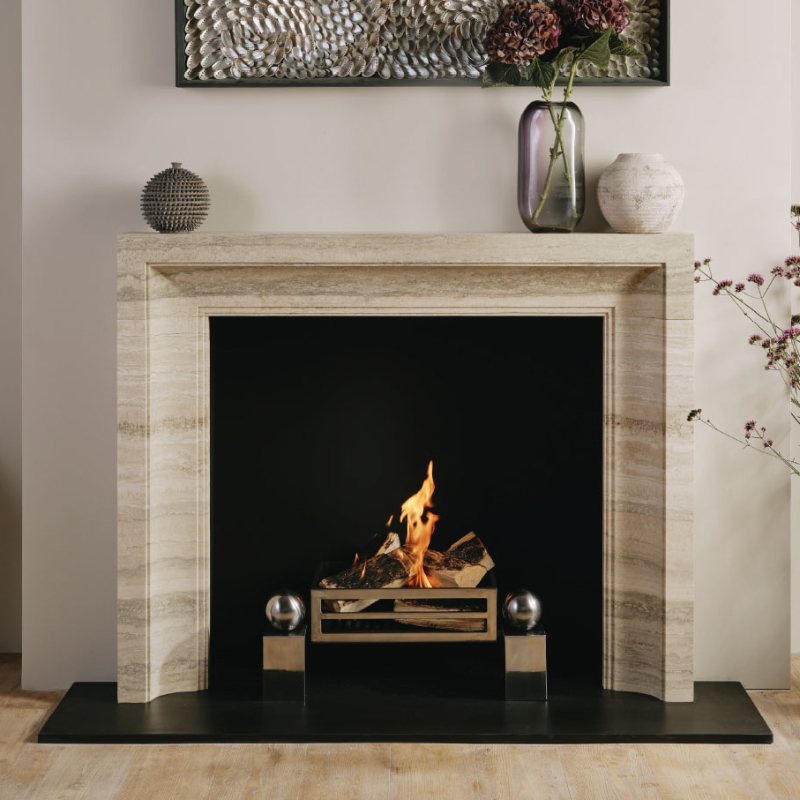
The term may describe the decorative stone frame around a fireplace opening or, more broadly, a complete fireplace arrangement incorporating a surround, slips, back panel, hearth and fire.
A traditional stone fireplace surround will commonly include:
- A mantel shelf across the top
- Two vertical legs or jambs
- A central frieze or header
- Inner returns around the fireplace opening
- Separate slips, back panels or hearth sections where required
The exact construction depends on the design and the type of fire being installed.
Travertine can be cut into clean, simple sections for a modern fire surround or shaped into mouldings, curves, steps and carved architectural details for a more traditional mantelpiece.
Is Travertine a Type of Limestone?
Yes. Travertine is a form of limestone.
Both travertine and conventional limestone are sedimentary stones composed predominantly of calcium carbonate. The principal difference is how they are formed.
Many familiar limestones were created from compacted marine sediments. Travertine is deposited from mineral rich freshwater, commonly around springs and geothermal areas. As the water releases carbon dioxide, layers of calcium carbonate gradually accumulate and form stone.

This method of formation produces travertine’s recognisable bands, cavities and open pores. These features often make it appear more textured and visibly layered than a conventional fine grained limestone.
Travertine is sometimes incorrectly described as “travertine marble”. Although this phrase is occasionally used commercially, travertine is geologically classified as limestone rather than marble.
For a broader explanation of different limestone materials, finishes and fireplace designs, read our complete buyer’s guide to limestone fireplaces.
What Is the Difference Between a Fireplace, Fire Surround and Mantel?
These terms are often used interchangeably, but they can have slightly different meanings.
Fireplace
The fireplace is the complete feature. It may include the fire or stove, fireplace opening, hearth, chimney, flue, chamber, slips and decorative surround.
Fireplace surround or fire surround
The surround is the decorative frame positioned around the fireplace opening. A travertine fire surround will normally consist of a shelf, header and two legs, although contemporary designs can use much simpler forms.
Mantel or mantelpiece
A mantel can refer specifically to the shelf above the fire. However, “fireplace mantel” and “mantelpiece” are also frequently used to describe the entire decorative surround.
The correct spelling for the architectural fireplace feature is mantel. “Mantle” is a common alternative search term, but it technically refers to a cloak, covering or layer.
Why Choose a Travertine Fireplace?
Travertine offers a combination of natural warmth, visible texture and architectural presence.
Every fireplace is naturally individual
No two sections of travertine are completely identical. Variations in colour, veining, pore structure and mineral deposits make every fire surround unique.
These differences should not be treated as manufacturing inconsistencies. They are part of the character of genuine natural stone.
Warm, versatile colours
Travertine is usually associated with warm ivory, cream, beige and honey tones, but it is also available in gold, silver grey, walnut, brown and reddish shades.
Its palette works well with:
- Painted walls
- Natural oak and darker timbers
- Polished or honed granite
- Limestone and sandstone
- Brass, bronze and black metal
- Neutral fabrics and textured finishes
- Traditional and contemporary interiors
Suitable for different architectural styles
Travertine can appear classical, rustic, minimalist or highly contemporary depending on its colour, cut and finish.
A simple rectangular travertine surround can suit a modern property, while a moulded or stepped mantel can complement Georgian, Victorian, Edwardian and country house interiors.
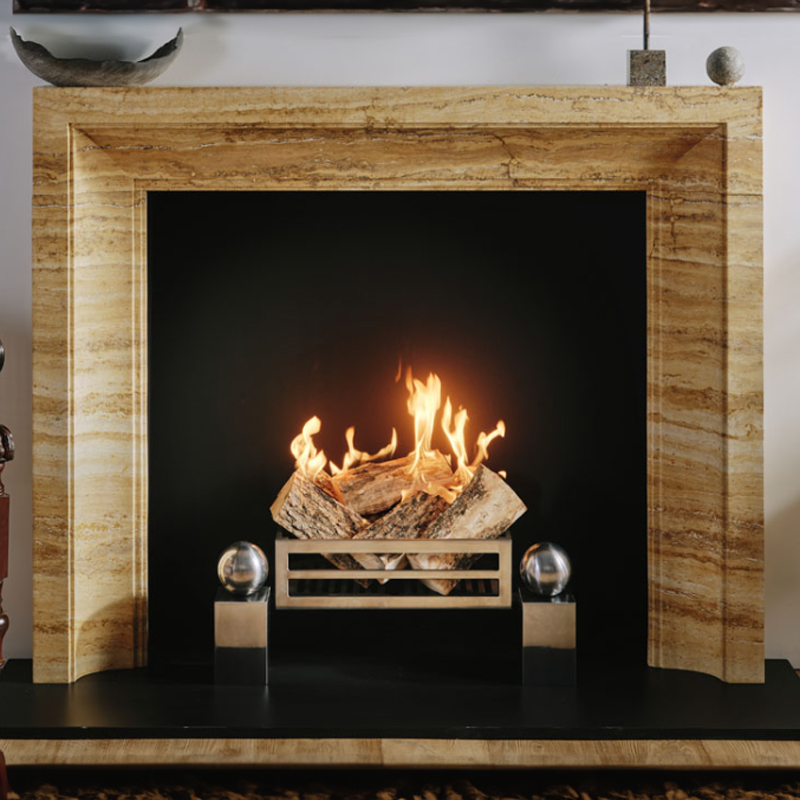
Visible depth and texture
The natural cavities and bands found in travertine create more surface movement than many uniform cream limestones.
This makes it especially effective in rooms that use a restrained colour palette but still require an interesting focal point.
A long lasting natural material
A properly specified, manufactured and installed travertine fireplace can remain part of a property for many years.
Natural stone fireplace surrounds are not tied to short term interior trends. They can often be retained while wall colours, furniture and decorative schemes change around them.
Travertine Fireplace Colours
The appearance of travertine varies according to its mineral content, quarry and geological formation.
Ivory and cream travertine
Ivory travertine is one of the most versatile choices for a fireplace surround.
It provides the warmth of natural stone without appearing strongly yellow or beige. It works particularly well in traditional sitting rooms, neutral interiors and properties with limestone flooring.
Beige and classic travertine
Classic beige travertine normally contains warm cream, sand and light brown tones.
It can feature gentle clouding, visible pores and flowing mineral patterns, making it a good choice for relaxed and natural interiors.
Gold travertine
Gold travertine contains richer honey, amber and rust coloured markings.
It can create a more dramatic fireplace, particularly when combined with dark metal fires, bronze details or rich timber flooring.
Silver and grey travertine
Silver travertine contains cooler grey, taupe and charcoal bands.
It is particularly effective in contemporary interiors where conventional cream limestone might feel too traditional. Silver travertine can work well with black steel, polished concrete, pale oak and muted wall colours.
Walnut and brown travertine
Darker brown travertines can produce a strong, earthy appearance. They are often suited to substantial architectural surrounds, rustic schemes and interiors containing darker woods.
Red travertine
Red and rust coloured travertines create a much bolder statement. Their colour is influenced by iron and other minerals within the stone.
Because these varieties are visually dominant, careful coordination with the flooring, wall colours and adjoining materials is particularly important.
Bonfire’s travertine fireplace collection includes warm ivory and gold stones alongside cooler silver toned designs, allowing the stone to be selected around the wider interior rather than treating every travertine as the same material.
Filled and Unfilled Travertine Fireplaces
One of the most important decisions is whether to choose filled or unfilled travertine.

Unfilled travertine
Unfilled travertine retains the naturally occurring cavities and open pores in the stone.
This produces a highly textured, organic appearance and makes the material’s geological formation particularly visible.
An unfilled travertine fire surround can work well in:
- Rustic interiors
- Country properties
- Mediterranean inspired rooms
- Contemporary interiors using raw natural materials
- Large architectural fireplaces
The open texture can collect more dust than a smooth surface, so cleaning requires additional care.
Filled travertine
Filled travertine has its larger surface cavities filled with a compatible resin, grout or stone filler.
The filling is normally selected to complement the colour of the travertine, resulting in a smoother and more consistent face.
Filled travertine may be preferable when:
- A cleaner, more refined appearance is required
- The fireplace has fine mouldings or crisp detailing
- Easier routine cleaning is important
- The room has a more formal or polished design
- The stone will be used close to areas where soot may accumulate
The presence of filled cavities does not mean the stone is artificial. The travertine itself remains entirely natural; only the naturally occurring pores have been finished to create a smoother surface.
Travertine’s texture can legitimately be left open or filled to create different visual and practical results.
Travertine Fireplace Finishes
The finish changes how the colour, texture and markings of the stone appear.
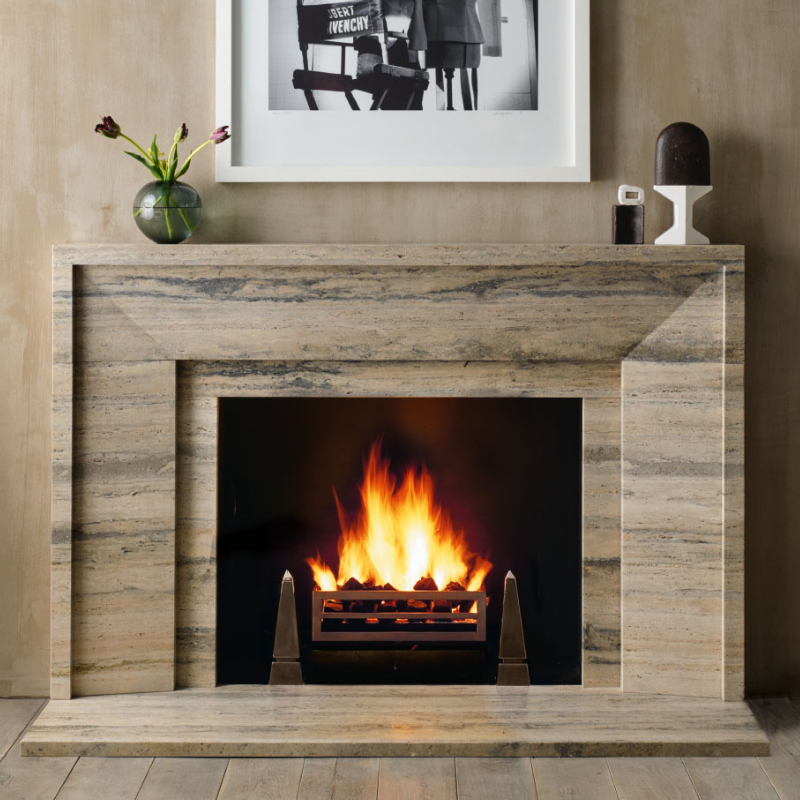
Honed travertine
A honed finish is smooth and matt or softly satin.
It provides a refined appearance without the high shine associated with polished stone. Honed travertine is particularly well suited to fireplace surrounds because it allows the stone’s natural markings to remain visible without creating excessive reflection.
Polished travertine
Polished travertine has a smoother, more reflective surface.
Polishing can deepen the apparent colour of the stone and create a more formal appearance. However, scratches, etching and surface marks can be more noticeable on a polished finish.
Brushed travertine
A brushed finish creates a lightly textured, aged surface.
It can work well for rustic, traditional and intentionally weathered fireplace designs.
Tumbled travertine
Tumbling softens the edges and produces a worn, aged appearance.
This finish is more commonly seen on tiles, but it can also be used as part of rustic fireplace details, inlays and chamber treatments.
Unfilled natural finish
Some fireplace surrounds deliberately retain an open, tactile surface to emphasise the material’s natural cavities.
This can produce a dramatic result, although the practical implications of cleaning and soot exposure should be considered before selection.
Vein Cut and Cross Cut Travertine
Travertine can look substantially different depending on how the original block is sliced.
Vein cut travertine
Vein cut stone is cut perpendicular to the natural layers.
This reveals long, linear bands running across the face of the stone. The result can feel architectural, directional and contemporary.
Vein cut travertine works particularly well for:
- Minimalist fireplace surrounds
- Wide horizontal mantel shelves
- Fluted or linear designs
- Contemporary fireplace walls
- Matching panels where continuous banding is desired
Cross cut travertine
Cross cut travertine is cut parallel to the natural layers.
Instead of pronounced straight bands, it generally displays softer clouds, swirls and flowing mineral patterns.
Cross cut travertine can provide a quieter, more uniform appearance and may be preferred for traditional fireplace mantels or designs where strong horizontal lines would be distracting.
Traditional Travertine Fireplace Surrounds
Travertine is well suited to traditional fireplace architecture.
It can be shaped into:
- Stepped mantel shelves
- Moulded bolection surrounds
- Classical columns and pilasters
- Carved corbels
- Arched openings
- Substantial jambs
- Layered friezes
- Period inspired chimneypieces
The stone’s warm colour prevents large traditional surrounds from appearing too cold or formal.
A lightly filled or honed ivory travertine can be particularly effective in Georgian, Victorian and Edwardian properties where the fireplace needs to feel established without looking like a reproduction in bright white stone.
Modern Travertine Fireplaces
Travertine has also become an increasingly important material in contemporary interior design.
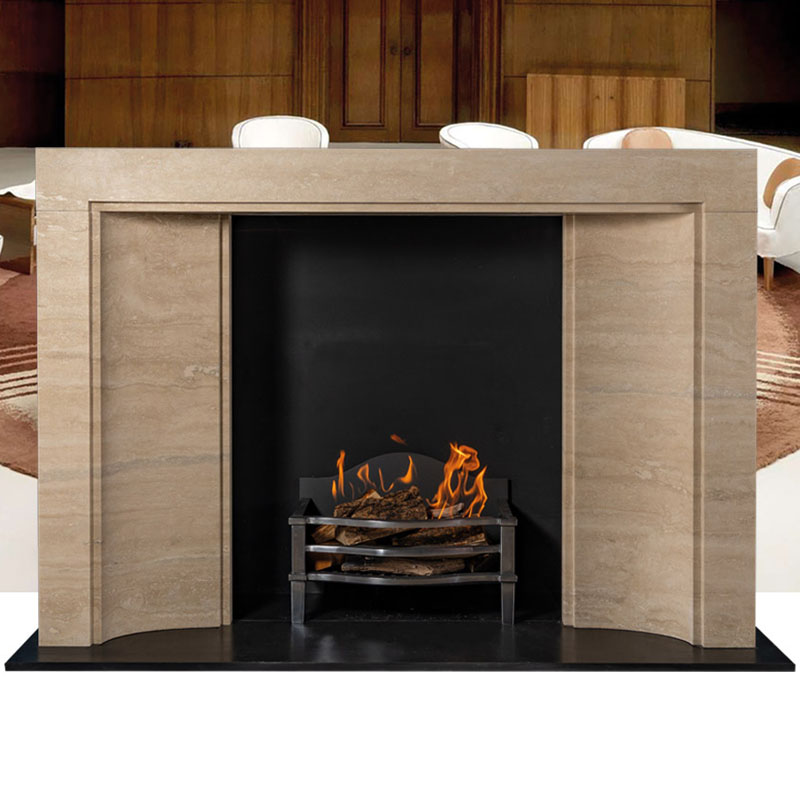
Modern travertine fireplaces often use:
- Simple rectangular openings
- Thick monolithic sections
- Wide mantel shelves
- Minimal joints
- Fluted stone details
- Projecting geometric forms
- Floor to ceiling stone features
- Asymmetrical shelves
- Integrated storage or seating
- Vein matched slabs
Silver and vein cut travertines work especially well in modern properties, while warm ivory stone can soften minimalist rooms that might otherwise feel severe.
The natural variation provides visual interest without requiring decorative carving or complicated mouldings.
Bolection Travertine Fireplaces
A bolection surround uses a continuous moulded profile that projects around the fireplace opening.
Although the bolection form is rooted in traditional architecture, its clean and balanced shape can work in both period and contemporary interiors.

Travertine is well suited to bolection designs because its bands and mineral variations follow the moulding around the opening, highlighting the depth of the stone.
A simple bolection in silver travertine can appear highly contemporary, while an ivory or gold travertine version can complement a more classical room.
Can Travertine Be Used Around a Wood Burning Stove?
Travertine can be used as part of a fireplace arrangement containing a wood burning or multi fuel stove, provided the entire installation is correctly designed.

The suitability of the surround cannot be considered in isolation.
The installer must also account for:
- The stove manufacturer’s required clearances
- The construction of the fireplace chamber
- The hearth specification
- Heat exposure around the opening
- Flue and chimney requirements
- Ventilation
- The dimensions of the recess
- The position of combustible materials
- Expansion and movement between different materials
The hearth, slips, chamber lining and surround may need to be manufactured from different materials depending on the appliance and expected temperatures.
Solid fuel installations in England and Wales are controlled under the Building Regulations. A HETAS registered installer working within the appropriate category can self certify compliant work through the competent person scheme.
A professional survey should therefore take place before finalising the fireplace dimensions.
Can Travertine Be Used with a Gas Fire?
Travertine surrounds can be paired with many conventional flue and balanced flue gas fires.

The fire, opening, back panel, slips, ventilation and surrounding materials must be specified as one complete arrangement.
Installation and alteration of gas appliances must be carried out by an appropriately qualified Gas Safe registered engineer.
Particular attention should be paid to:
- The fire manufacturer’s installation instructions
- Required ventilation
- The size of the opening
- Heat exposure around the appliance
- The depth of the fireplace rebate
- The design of the back panel or slips
- Access for servicing and maintenance
Can Travertine Be Used with an Electric Fire?
Electric fires can be combined with both traditional and contemporary travertine surrounds.
Possible arrangements include:
- Inset electric fires
- Hearth mounted electric fires
- Built-in electric fires
- Electric fire baskets
- Freestanding electric stoves
- Decorative flame effect installations
Although an electric fire does not require a chimney in the same way as a solid fuel or conventional flue gas appliance, the manufacturer’s ventilation, heat clearance and installation instructions must still be followed.
The weight of the stone surround and the suitability of the wall and floor also require proper assessment.
Can Travertine Be Used with a Bioethanol Fire?
Travertine may be incorporated into a bioethanol fireplace design, but the burner and surrounding construction must be specifically designed for that purpose.
Bioethanol fires create real flames and heat. They should not be treated in the same way as decorative electric fires.
The required distances, ventilation, burner enclosure and non-combustible materials must follow the bioethanol fire manufacturer’s instructions.
Can Travertine Be Used for the Hearth?
Travertine can sometimes form part of a hearth design, but its suitability depends on the appliance, stone specification, thickness, construction and likely operating temperature.
A material being natural and non-combustible does not automatically make every slab suitable for every hearth application.
Natural stone can be vulnerable to thermal shock where it experiences rapid or uneven temperature changes. Hearth sections may therefore need to be manufactured, jointed, bedded or reinforced in a particular way.
The hearth should always be specified as part of the complete fireplace and appliance installation rather than selected only for its appearance.
Will a Travertine Fireplace Crack?
Travertine is durable, but no natural stone fireplace is completely immune to damage.
Possible causes of cracking include:
- Incorrect installation
- Inadequate support
- Movement within the building
- Impact damage
- Excessive or uneven heat exposure
- Thermal shock
- Incorrect jointing
- An unsuitable adhesive or bedding material
- Using a single stone section where movement joints are required
- Placing excessive weight on the mantel shelf
Natural lines, veins and filled cavities should not automatically be mistaken for cracks. A specialist can determine whether a line is part of the stone’s natural structure or evidence of movement or damage.
Correct surveying, manufacturing and installation significantly reduce the risk of problems.
How to Measure for a Travertine Fireplace Surround
A fireplace should not be selected solely by measuring the width of the chimney breast.
Important measurements include:
- Overall chimney breast width
- Floor-to-ceiling height
- Existing fireplace opening width and height
- Required finished opening
- Overall surround width and height
- Mantel shelf length
- Shelf depth and projection
- Jamb width
- Rebate depth
- Hearth width, depth and thickness
- Skirting board projection
- Position of nearby sockets and controls
- Appliance dimensions
- Required clearances
- Flue or chimney position
The visual proportions are as important as the physical fit.
A surround that is technically small enough to fit can still appear undersized, while an excessively wide shelf may dominate the chimney breast or interfere with adjoining cabinetry.
A professional home survey allows the fireplace, fire, hearth and chimney to be considered together before materials are ordered.
Choosing the Right Travertine Fireplace
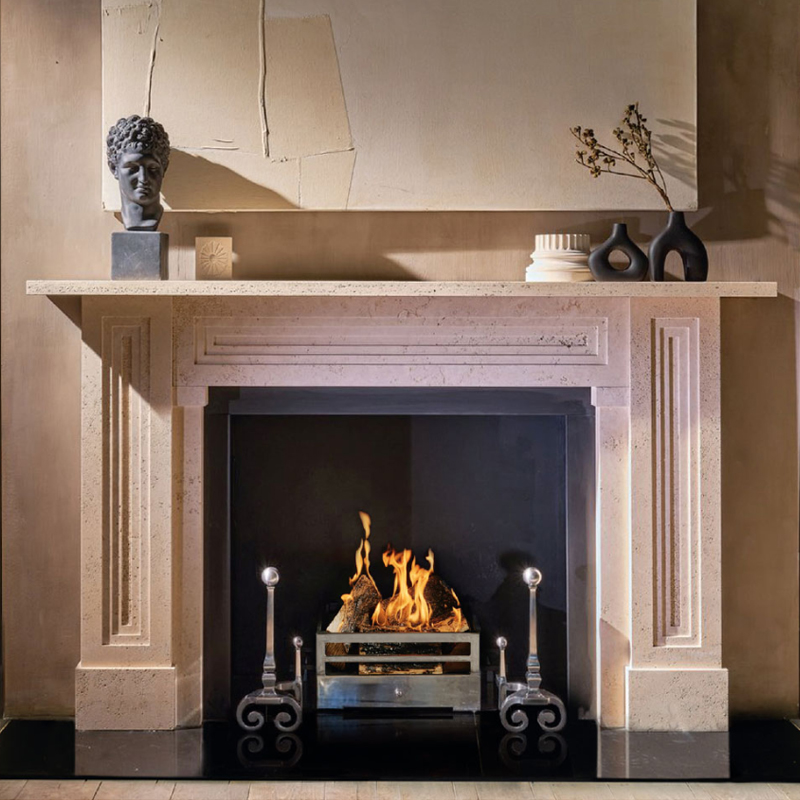
Consider the scale of the room
A large room or wide chimney breast can accommodate a substantial mantel with deep mouldings and a projecting shelf.
Smaller rooms often benefit from slimmer jambs, a shallower shelf and a simpler profile.
Compare samples in the room
Travertine can look different under natural daylight, warm lamps and cooler LED lighting.
Paint colours, flooring and nearby timber can also affect whether the stone appears cream, grey, pink, gold or brown.
Decide how much variation you want
Some customers want pronounced veins, open pores and strong mineral movement. Others prefer quieter, more consistent sections.
Because travertine is natural, photographs should be treated as a guide rather than an exact representation of every finished fireplace.
Choose filled or unfilled stone
An unfilled stone creates greater texture and geological character. A filled and honed surface provides a smoother, more controlled appearance.
The right option depends on the design of the room and the practical level of cleaning expected.
Coordinate the hearth and slips
The surround does not always need to match the hearth.
Travertine can be combined with:
- Honed black granite
- Polished black granite
- Slate
- Matching limestone
- Contrasting natural stone
- Vitreous enamel
- Suitable non-combustible chamber materials
A contrasting hearth can define the base of the fireplace and make a pale surround appear more prominent.
Consider the fire at the same time
The fire opening and fireplace should be designed together.
Selecting the surround first without considering the appliance can result in unsuitable proportions, insufficient clearances or the need for unnecessary alterations.
How to Clean a Travertine Fireplace
Travertine should be cleaned gently.
For routine maintenance:
- Remove loose dust with a clean, soft brush or microfibre cloth.
- Use a pH-neutral cleaner specifically intended for natural limestone or travertine.
- Apply only a small amount of moisture.
- Wipe the surface gently rather than scrubbing it.
- Dry the stone with a clean, soft cloth.
- Treat soot marks promptly before they become deeply ingrained.
Avoid using:
- Vinegar
- Lemon juice
- Acidic bathroom cleaners
- Descaling products
- Abrasive powders
- Wire brushes
- Harsh scouring pads
- Unknown general purpose chemicals
- Excessive quantities of water
Travertine is a calcium based stone. Acidic products can react with the surface, causing dull areas, etching and permanent changes to the finish. Abrasive products may also scratch polished or finely honed stone.
Always test a cleaning product on a discreet area first and follow the stone supplier’s instructions.
Does a Travertine Fireplace Need Sealing?
Some travertine fireplaces benefit from sealing, particularly where the stone is porous or likely to encounter soot, oils, drinks, candle wax or frequent handling.
However, sealing requirements depend on:
- The density of the stone
- Whether it is filled or unfilled
- The surface finish
- The original factory treatment
- The type of sealer
- The location of the fireplace
- The level of use
A sealer can reduce absorption and make staining less likely, but it does not make the stone completely stainproof.
Avoid applying an unsuitable glossy coating simply to make cleaning easier. Some products can alter the colour, reflectivity and vapour behaviour of the stone.
Ask the fireplace or stone supplier which product is compatible with the specific travertine.
Can a Damaged Travertine Fireplace Be Repaired?
Minor damage can often be repaired by a natural stone specialist.
Possible restoration work includes:
- Replacing failed filler
- Repairing small chips
- Refilling open cavities
- Removing certain stains
- Rehoning dull areas
- Rebuilding damaged joints
- Carefully repairing cracks
- Replacing individual sections where necessary
The success of a repair depends on the type and location of the damage.
Colour matching can be challenging because travertine varies naturally. A well executed repair should be visually sympathetic, but it may not be completely invisible.
Structural cracking or movement should be investigated before cosmetic repairs are attempted.
Advantages and Disadvantages of Travertine Fireplaces
Advantages
- Genuine natural stone
- Every fireplace is unique
- Warm and versatile colour range
- Available in traditional and modern designs
- Can be filled, unfilled, honed or polished
- Suitable for simple and highly architectural surrounds
- Complements timber, metal and other natural stones
- Creates texture without relying on strong colour
- Can form a long lasting focal point
- Available in standard and bespoke designs
Considerations
- Natural variation cannot be fully controlled
- Open pores can collect dust and soot
- Acidic cleaners can etch the surface
- Some finishes may require sealing
- Natural stone is heavy
- Professional handling and installation are recommended
- Hearth and appliance suitability require technical assessment
- Repairs may be visible because exact colour matching is difficult
- Strongly veined sections require careful piece matching
How Much Does a Travertine Fireplace Cost?
In the UK, a travertine fireplace surround typically costs approximately £2,500 to £5,000 including VAT, depending on its size, design and the grade of stone selected. Current made-to-order examples range from around £2,695 for a standard surround to approximately £4,500 for larger versions, before installation.
As an approximate 2026 budgeting guide:
- Standard travertine fireplace surround: £2,500–£3,500
- Large or more detailed surround: £3,500–£5,000
- Bespoke or hand carved travertine mantel: £4,000–£8,000+
- Matching stone hearth: approximately £300–£600
- Matching slip set: approximately £240–£500
- Specialist stone fireplace installation: from around £500
- Opening or altering an existing fireplace: approximately £500–£1,500
- Complete fireplace project with a fire, hearth and installation: commonly £3,500–£8,000+
- Complete wood burning stove and chimney project: often £5,000–£10,000+, depending on the stove, flue and building work required
These figures are indicative rather than fixed prices. For example, one current UK travertine surround weighing approximately 250kg is priced between £2,695 and £4,495, with a matching hearth priced at £300 and a three piece slip set at £240. This demonstrates why delivery, access and professional installation must also be considered when budgeting for a natural stone fireplace.
What Affects the Price of a Travertine Fireplace?
The greatest cost factors are usually:
- Size: A 54-inch surround requires more stone than a 48-inch model and will normally cost more.
- Stone selection: Rare colours, consistent blocks and strongly patterned slabs can command a premium.
- Standard or bespoke manufacture: Altering the height, shelf length, opening or rebate requires additional design and cutting.
- Complexity: Plain rectangular surrounds cost less to manufacture than fluted, stepped, carved or deeply moulded mantels.
- Stone matching: Arranging the natural bands and veins so they continue neatly across adjoining sections requires additional material selection and labour.
- Finish: Filling, honing, polishing and hand finishing affect both the appearance and manufacturing cost.
- Number and thickness of sections: Large, thick or monolithic pieces require more material and can be considerably heavier.
- Hearth and slips: These may be supplied in matching travertine or a contrasting material such as honed granite or slate.
- Delivery and access: Natural stone fireplaces can weigh well over 100kg, with substantial designs reaching approximately 250kg, so specialist handling may be required.
- Installation: The condition of the wall, floor and existing fireplace opening will influence the amount of preparation required.
- Fire and chimney work: Adding a gas fire, electric fire, wood burning stove, flue liner or new chimney system can increase the total project cost substantially.
Published UK fitting prices for a stone fireplace surround start at around £500 including VAT, although this may not include alterations, making good, hearth installation or appliance work. Opening a blocked or unsuitable fireplace commonly costs a further £500 to £1,500, depending on its construction and condition.
For projects involving a wood burning stove, the installation alone averages around £2,000, but costs can rise where a new hearth, chimney liner or substantial building work is required.
The most accurate approach is therefore to price the travertine surround, hearth, slips, fire, chimney work, delivery and installation as one complete project. At Bonfire, we can survey the property and provide an itemised quotation based on the selected fireplace and the work actually required.
Standard or Bespoke Travertine Fireplace?
A standard size surround can be suitable where the proportions work with the room and the chosen fire.
A bespoke travertine fireplace may be preferable when:
- The chimney breast is unusually wide or narrow
- The existing opening must be retained
- A particular mantel height is required
- The room has fitted cabinetry
- The customer wants a distinctive stone variety
- Continuous vein matching is important
- The design includes unusual mouldings
- The fireplace must reproduce an existing period detail
- A minimal monolithic appearance is required
- The hearth or slips need special dimensions
Bespoke design also allows the fireplace proportions to be adjusted around the architecture rather than forcing the room to accommodate a predetermined surround.
Are Travertine Fireplaces Still in Style?
Travertine is not dependent on a single decorative trend.
Traditional travertine mantels have been used for many years, while contemporary designers continue to use the material for simple geometric fireplaces, fluted details and floor-to-ceiling stone features.
Its popularity is supported by several wider interior preferences:
- Warm neutral colours
- Natural and tactile materials
- Visible geological variation
- Soft minimalism
- Earthy modern interiors
- Architectural focal points
- Long lasting materials rather than disposable finishes
A simple fireplace with well balanced proportions is less likely to date than a design chosen only because it reflects a temporary trend.
Frequently Asked Questions About Travertine Fireplaces
Yes. Travertine can make an attractive and durable fireplace surround when the stone, fire, hearth and installation are correctly specified.
Travertine is a form of limestone. It is sometimes called travertine marble commercially, but it is not geologically classified as marble.
Travertine is a natural, non-combustible stone, but this does not mean every slab or fireplace design is suitable for unrestricted heat exposure. The complete installation must follow the appliance manufacturer’s instructions and relevant regulations.
Yes, subject to correct design, stove clearances, hearth construction, chamber materials and installation. A HETAS-registered installer should assess the complete arrangement.
Yes. Travertine surrounds can be used with many inset, built-in and freestanding electric fires, provided the manufacturer’s ventilation and clearance requirements are followed.
Travertine is porous and can absorb liquids or soot if left untreated. The level of absorption varies according to the stone and finish. Appropriate sealing and prompt cleaning can reduce the risk.
Some fireplaces benefit from sealing, but not every stone requires the same treatment. Use a product recommended for the specific travertine and finish.
No. Vinegar is acidic and can etch calcium-based stones such as travertine and limestone.
No. Cavities and pores are natural characteristics of travertine. They can be left open or filled depending on the desired finish.
Neither is universally better. Filled travertine is smoother and generally easier to clean, while unfilled travertine displays more natural texture and character.
The best colour depends on the room. Ivory and beige are versatile, gold creates warmth, and silver travertine works particularly well in cooler or contemporary interiors.
Yes. Bespoke travertine surrounds can be manufactured to suit a particular opening, chimney breast, room or architectural design.
“Fireplace mantel” is the correct architectural term. “Mantle” is a common misspelling.
Buy a Travertine Fireplace from Bonfire
Bonfire supplies and installs high quality natural stone fireplaces for traditional and contemporary homes.
Our travertine fireplace collection includes carefully selected fire surrounds and mantels in warm ivory, gold and cooler silver toned stones.
From our showroom near Reading, Berkshire, our team can assist with:
- Fireplace and interior design
- Product selection
- Home surveys
- Appliance specification
- Made-to-measure hearths
- Fireplace installation
- Wood burning and multi fuel stoves
- Gas fires
- Electric fires
- Bioethanol fires
- Flues and chimneys
- Complete project management
Our in-house team includes experienced surveyors, designers, HETAS installers and Gas Safe registered engineers, allowing the fireplace, appliance and chimney system to be considered as one complete project.
Explore our travertine fireplaces and fire surrounds, visit our Reading showroom or contact Bonfire to arrange a free, no-obligation quotation.
For further information about related stone options, finishes and fireplace styles, read our complete guide to limestone fireplaces.