Log burners have been a popular choice for heating and adding cosiness to homes across the UK.
However, with increasing concerns about air pollution and climate change, there has been speculation about the future of log burners and whether they might be banned.
In this comprehensive article, we will explore the topic “Will Log burners Be Banned in the UK?” from various angles, providing expert insights and credible information.
Estimated reading time: 12 minutes
Table of contents
- Will Log burners Be Banned in the UK? – An Overview
- The Environmental Impact of Log Burners
- Current Regulations
- The Debate on Banning Log Burners
- The Future Outlook
- Current Regulations and Emission Standards
- Advantages of Using Log Burners
- Myth-busting: Are Log Burners Always Harmful to the Environment?
- Reduce Carbon Emissions
- Good Air Flow
- Maintenance and Upkeep
- Conclusion
- FAQs – Frequently Asked Questions
Will Log burners Be Banned in the UK? – An Overview
The short answer – No, log burners will not be banned in the UK. However, since 2022 any new log burners have to comply to Eco Design Ready regulations and environmental standards.
Quick Overview:
- Wood burners are not going to be banned in the UK.
- An old stove can be used but would recommend updating.
- New eco design regulations came into effect in early 2022.
- Eco design and defra approved stoves are available to buy now.
- Dry wood fuel, good air flow and maintenance for efficient burning.
Certain regions or local authorities might implement restrictions to control emissions and air quality.
You must check with your local council for your specific areas regulations. Check here

Other locations around the world such as Italy have banned the use of low efficiency log burners in an attempt to move everybody onto highly efficient and clean burning sustainable wood burning stoves.
For instance, DEFRA (Department for Environment, Food & Rural Affairs) have implemented a restriction on wood burning stoves in built up areas including London, Manchester and more. All stoves should be DEFRA approved wood burning stoves as they comply with the latest air control requirements, otherwise you could be fined up to £1,000.
The full list of approved DEFRA log burners can be viewed here
It is essential to keep yourself updated with the latest regulations and guidelines issued by the UK government and respective local authorities.
New log burner technologies are in an effort to comply with the UK governments new Clean Air Strategy.
The Environmental Impact of Log Burners
The environmental impact of log burners has been a subject of concern. While they provide a renewable and carbon-neutral source of heating when sustainably managed, inefficient or improper use can lead to harmful air pollution.
Particulate matter, carbon monoxide, and other pollutants are emitted with inefficient log burners during wood burning, contributing to poor air quality.
Over the past 10 years, we have seen a huge progression in log burner advancements and would recommend updating your log burner to benefit from the latest technology.

From eu approvals to defra stoves, log burners are highly efficient sustainable heating sources.
Manufacturers have made significant advancements in the transition from traditional open fires, which are gradually being phased out, to the development of highly efficient Eco Design Stoves.
These modern stoves are designed to emit substantially lower levels of particulate matter (PM), with reductions of up to 80%.
Shop efficient eco design wood burning stoves here
Current Regulations
Clean Air Act and Smoke Control Areas
The UK already has legislation in place to tackle air pollution caused by domestic burning.
The Clean Air Act and Smoke Control Areas regulate the use of certain fuels and appliances in designated zones to reduce particulate emissions and improve air quality.
An efficient wood burning stove should have an efficiency rating above 80%, carry an SiA Eco Design Ready 2022 stamp or comply with DEFRA regulations in smoke controlled areas.
Related Links
What is DEFRA?
As previously mentioned, DEFRA (Department for Environment, Food & Rural Affairs) exempt wood burning stoves represent a significant advancement in environmentally conscious heating technology.
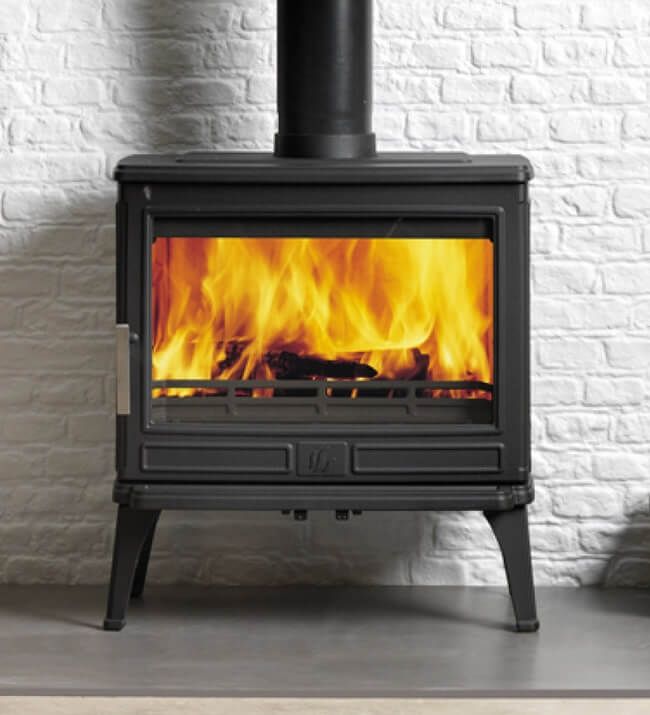
These stoves have undergone rigorous evaluation and have gained official approval to operate within areas under stringent smoke control regulations. This endorsement highlights their exceptional capability to burn specific fuels while producing minimal smoke emissions.
It is not recommend a DEFRA approved log burner in a non smoke controlled area.
By meticulously controlling the combustion process, DEFRA exempt stoves showcase an innovative design that significantly reduces the release of harmful particulates and pollutants into the air. This heightened efficiency not only ensures a cleaner and healthier environment for both urban and rural settings but also contributes to the overall improvement of air quality standards.
The combustion efficiency of DEFRA exempt stoves not only minimises smoke but also maximises the utilisation of the fuel, resulting in a more sustained and cost-effective heat output. This not only benefits the environment but also provides homeowners with an economical and sustainable heating solution.
Shop Defra approved wood burning stoves here
The Debate on Banning Log Burners
Environmental Advocates
Environmental advocates argue for stricter regulations and even an outright ban on log burners. They believe that phasing out these traditional heating methods is necessary to combat climate change and protect public health.
Supporters of Log Burners
On the other hand, supporters of log burners argue that the focus should be on promoting sustainable wood-burning practices, educating users about responsible burning, and encouraging the use of cleaner wood-burning technologies.
The Future Outlook
Advancements in Technology
The future of log burners in the UK is likely to be shaped by technological advancements. Manufacturers are developing more efficient and eco-friendly wood-burning stoves that produce fewer emissions and use less wood.
Policy Changes
Government policies and environmental targets will play a crucial role in determining the future of log burners. Stricter regulations may be imposed to limit emissions from domestic wood-burning, which could lead to the phasing out of older, less efficient stoves.
Current Regulations and Emission Standards
In an effort to mitigate the environmental impact, the UK has introduced stringent regulations and emission standards for log burners.
The primary goal is to reduce emissions and encourage the adoption of cleaner fuels and technologies. Manufacturers are obligated to meet specific criteria to ensure that their log burners are environmentally friendly and comply with emission limits.
These regulations are a part of the UK government’s Clean Air Strategy, which was implemented on January 1st, 2022. The overarching objective of this strategy is to combat air pollution and work towards achieving net-zero carbon dioxide emissions by 2050.
A significant aspect of these regulations is the requirement that wood burning stoves must adhere to Ecodesign standards. This mandates that all newly manufactured wood burners must meet these stringent rules and carry official certification as an Ecodesign Ready Stove, indicating their compliance with eco-friendly criteria.
SIA Eco Design Ready
Importantly, wood burning stoves that were installed prior to January 1st, 2022 are exempt from these new regulations.
If you acquired a wood burner before this date, you can continue to use it. However, it’s crucial to burn only dry wood, as wet logs produce higher levels of harmful emissions.
To ensure you’re using suitable wood, look for a ‘Ready to Burn’ label, which indicates a moisture content of less than 20%.
SiA Eco Design is a scheme recognised by the government to recognise the commitment to the cleaner burning modern log burners.
It can be recognised by the following logo:
These measures collectively aim to enhance air quality, reduce pollution, and contribute to the UK’s broader sustainability objectives.
Advantages of Using Log Burners
Despite the concerns, log burners offer several advantages. They provide a cosy and inviting atmosphere, making homes feel warm and comfortable.
Additionally, when used correctly with sustainably sourced wood, log burners can be an energy-efficient and cost-effective heating option.
Log burners offer a financially efficient alternative to conventional heating methods, granting exceptional control over the fuel consumption and source.
Myth-busting: Are Log Burners Always Harmful to the Environment?
There is a common misconception that all log burners are harmful to the environment. However, it’s essential to differentiate between sustainably managed wood-burning and irresponsible practices.
Using certified wood from well-managed forests and employing modern, efficient log burners can make a positive environmental impact.
The Future of Log Burners in the UK
As the UK continues its efforts to combat climate change, the future of log burners might evolve.
Innovations in technology and the growing interest in sustainable heating options may lead to even cleaner and greener log burners in the future.
The Role of Biomass and Bioenergy
Biomass, such as wood pellets, can serve as an alternative to traditional logs in burners. Bioenergy solutions, when sourced responsibly, have the potential to offer carbon-neutral heating, reducing the environmental impact of heating homes.
Reduce Carbon Emissions
Burn Dry Logs Only
Burning dry logs with a moisture content of 20% or less is of paramount importance when it comes to efficient and effective wood burning. The moisture content in logs directly influences the combustion process, affecting both the heat output and the environmental impact.
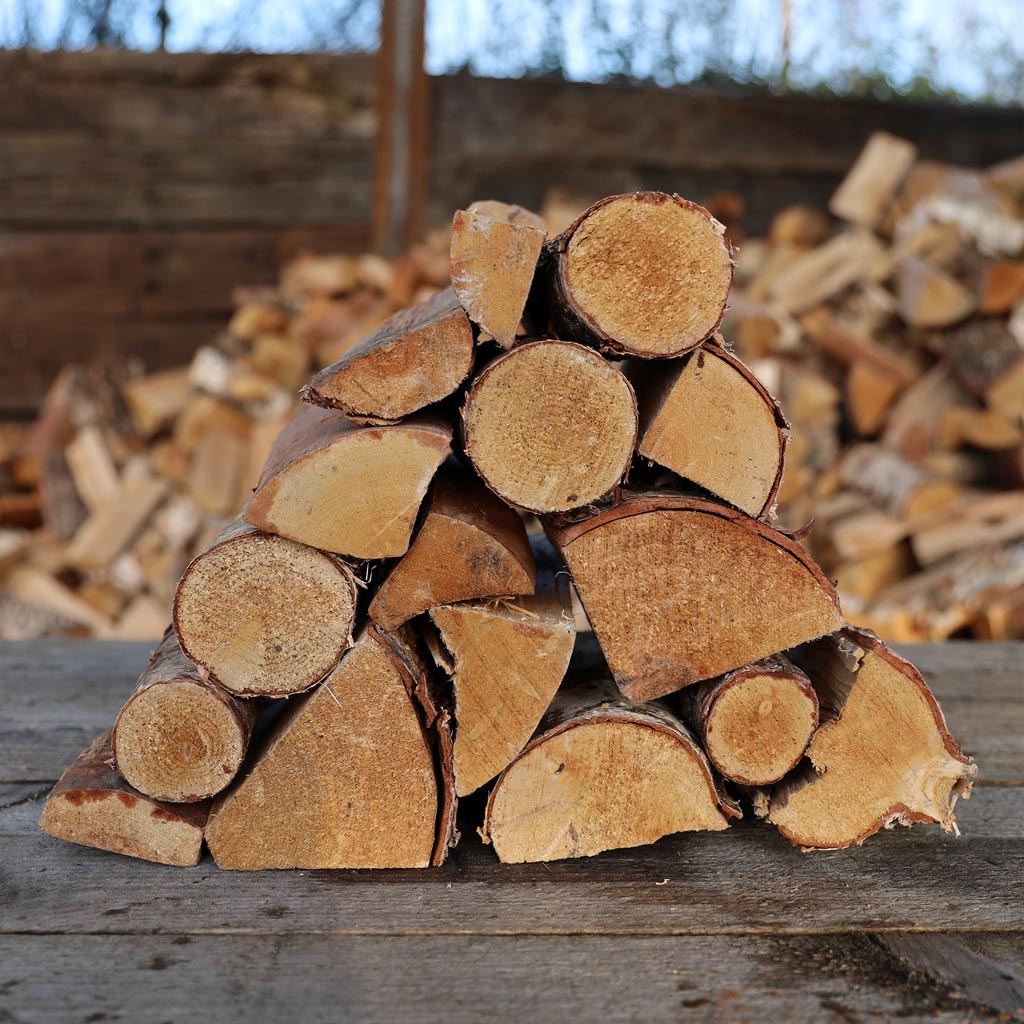
Dry logs ignite more readily and produce a higher heat output, ensuring a more efficient and consistent burn. This not only maximizes the warmth generated but also minimizes the production of harmful emissions and creosote buildup in the chimney.
By using properly seasoned logs with lower moisture content, one can contribute to a cleaner environment while enjoying the full benefits of a well-maintained and optimally functioning wood-burning system.
The WoodSure Scheme
The WoodSure logo serves as a clear and reliable indicator for consumers seeking high-quality firewood and wood fuel products in the United Kingdom.
This logo signifies that the firewood has been properly seasoned and has a moisture content of 20% or less, ensuring optimal performance and environmental sustainability.

Wood fuel displaying the WoodSure logo guarantees efficient and clean burning, resulting in higher heat output and reduced emissions. This certification provides reassurance to consumers that they are making a responsible and informed choice for their wood-burning needs.
The WoodSure logo stands as a mark of quality and integrity within the wood fuel industry, promoting the use of well-prepared, dry logs that enhance both heating efficiency and eco-friendliness.
Learn more about the WoodSure scheme here
Good Air Flow
When igniting your wood-burning stove, it is essential to fully open the air control to enhance the oxygen supply. Adequate oxygen is crucial for the combustion process to proceed effectively.
Sustaining a healthy airflow level will guarantee proficient burning and reduce the emission of pollutants, promoting both efficient operation and reduced environmental impact.
Maintenance and Upkeep
After each use of your wood-burning stove, a cerosote accumulates in both the stove and the chimney. Gradually, this accumulation can obstruct the chimney and diminish the stove’s effectiveness, leading to increased emission of pollutants.
To ensure optimal efficiency and minimal adverse impact, it is advisable to conduct regular cleaning of both your stove and chimney.
At Bonfire, we would recommend a yearly wood burning stove service and chimney sweep, dependant on how often you use your appliance, to ensure it is operating a full efficiency.
Find a full list of chimney sweeps here
Conclusion
Log burners are not banned in the UK. However, the environmental impact of wood burning has prompted the establishment of regulations and emission standards.
To ensure a sustainable and environmentally friendly approach, it is crucial to use responsibly sourced wood and opt for efficient log burners that comply with emission guidelines.
In the future, with advancements in green technology and renewable energy solutions, log burners will continue to play a role in providing sustainable warmth and comfort to homes while minimising their environmental impact.
Remember to stay informed about the latest regulations and guidelines to make environmentally conscious choices when it comes to using log burners or any heating appliances.
FAQs – Frequently Asked Questions
Log burners can be harmful to the environment if not used responsibly. Using sustainably sourced wood and opting for efficient, eco-friendly log burners can minimise their impact.
Yes, log burners are still available for purchase in the UK. However, it is essential to choose models that comply with emission standards.
The carbon footprint of a log burner largely depends on the type of wood used and the burner’s efficiency. Using sustainable wood and an efficient burner can help reduce the carbon footprint.
It is recommended to use dry and seasoned wood, preferably from certified sources. Wet or treated wood can lead to higher emissions and reduced efficiency.
Some regions might offer financial incentives or grants to encourage the use of eco-friendly heating appliances. Check with local authorities for available schemes.
Some log burners are approved for use in Smoke Control Areas if they meet specific emission standards.
Yes, there are several alternatives, such as biomass boilers, heat pumps, and solar heating systems, which offer sustainable and energy-efficient heating options.
There is currently no ban on log burners, but future policies may introduce stricter regulations or incentives for cleaner alternatives.
Feel free to share our blog post and comment if you have any additional guidance or questions. If you require any advise, please contact our specialist log burner team on 0118 970 1717 or email info@bonfire.co.uk and we’ll be more than happy to help.