If you’ve got a wood burning stove, you’ve probably seen those small fans sitting on top, quietly spinning away without being plugged in. But do stove fans actually work, or are they just another fireplace accessory that looks good but doesn’t do much?

It’s something we’re often asked at Bonfire, and the short answer is yes, stove fans do work, but perhaps not quite how you might expect.
Let’s look at how they work, whether they really make a difference and if they’re worth buying.
How Does a Stove Fan Work?
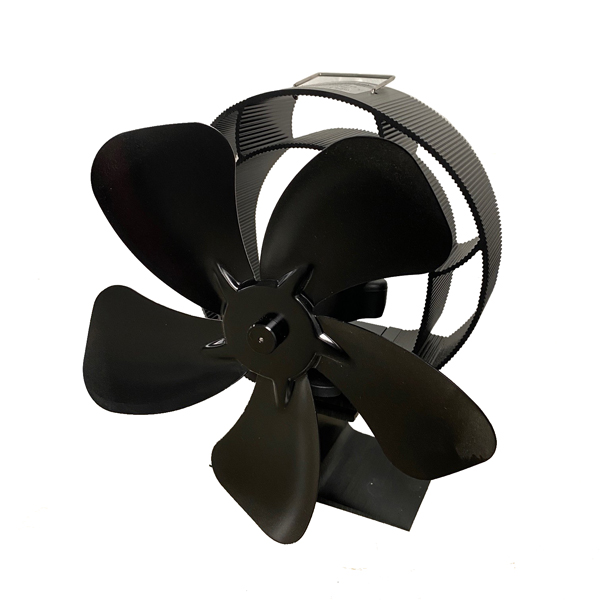
Most heat-powered stove fans use a thermoelectric generator, which converts the temperature difference between the hot base of the fan and its cooler upper section into a small amount of electricity.
This powers the fan’s motor and blades without needing batteries or mains electricity.
As your wood burner heats up, the fan begins spinning, helping move warm air away from the stove and around the room. Once the stove cools down, the fan gradually slows and stops.
You can browse our range of heat-powered stove fans, including models from Ecofan and other manufacturers.
Are Stove Fans Just a Gimmick?
No, stove fans aren’t just a gimmick, but they’re not miracle workers either.
The main misconception is that a stove fan somehow produces additional heat or makes your wood burner more powerful. It doesn’t.
A stove fan simply helps redistribute the heat your stove is already generating.
Without a fan, much of the warm air rises naturally towards the ceiling before circulating around the room. A stove fan helps push some of that warm air horizontally, potentially reducing the temperature difference between areas close to the stove and those further away.
Whether you’ll notice a difference depends on your room size, ceiling height, stove position and overall layout.
For example, if your stove is installed in a large, open-plan living space, a fan may help move warmth further into the room. In a small, well-insulated room that already heats evenly, the improvement may be less noticeable.
So, while the science behind stove fans is perfectly sound, the benefits aren’t always as dramatic as some advertising suggests.
Do Stove Fans Actually Make a Room Warmer?
Not in the sense of generating more heat.
A stove fan doesn’t increase your stove’s rated kilowatt output. Instead, it can help improve how effectively that warmth is distributed around your living space.

This may make parts of the room feel more comfortable, particularly those further away from the appliance.
However, a stove fan isn’t designed to push heat throughout an entire house or into distant rooms. They’re relatively small fans, and their airflow is limited compared with a conventional electric fan.
What Does the Research Say About Stove Fans?
There is research supporting their effectiveness.
In 2010, Canadian manufacturer Caframo worked with researchers from the University of Waterloo to investigate whether using an Ecofan could reduce firewood consumption.
Under controlled testing conditions, the researchers reported an average reduction in firewood consumption of 14%, while maintaining comparable thermal comfort levels.
The results suggest that improved heat distribution may allow a stove to operate at a lower burn rate without sacrificing comfort.
However, it’s important to point out that this was a manufacturer-involved study, carried out under controlled conditions.
It doesn’t mean every household will use 14% less firewood simply by purchasing a fan.
You can read the original Caframo and University of Waterloo research here.
Can a Stove Fan Save You Money on Firewood?
Potentially, although savings aren’t guaranteed.
If a stove fan makes your room feel more comfortable at a lower heat output, you may be able to reduce the amount of firewood you’re burning.
Some manufacturers, including Ecofan, advertise potential fuel savings of up to 18% on selected models, based on their testing.
For example, our Ecofan AirMax 812 Wood Burning Stove Fan is designed to improve warm air circulation without requiring external electricity.
However, fuel consumption also depends on the type of stove, the moisture content of your logs, how you operate the appliance and your property’s insulation.
A stove fan should be seen as a useful addition rather than a guaranteed way to reduce your heating bills.
Where Should You Position a Stove Fan?
Positioning is important if you want to get the most out of your fan.
Most heat-powered fans are designed to sit on a suitable flat stove top, typically towards the rear or side, where cooler air can circulate around the fan’s upper section.
You should always follow the fan manufacturer’s placement and operating temperature instructions.
Some fans aren’t suitable for particularly hot stove surfaces, while others are specifically designed for lower-temperature appliances.
For example, Ecofan produces different models for wood burning stoves and lower-temperature gas or pellet stoves.
If you’re considering one of our 4 Blade Wood Burning Stove Fans or another model, check that it’s compatible with your appliance before purchasing.
Remember that stove fans become extremely hot during operation and should never be touched while the stove is in use.
Are Expensive Stove Fans Better Than Cheap Ones?
Not necessarily, although there are differences worth considering.
More expensive stove fans may offer greater airflow, improved build quality, replaceable components or longer manufacturer warranties.
Established manufacturers such as Ecofan also provide published operating temperature ranges and airflow specifications, which can make choosing a suitable fan easier.
However, the number of blades alone doesn’t determine performance. A five-blade fan isn’t automatically better than a four-blade model.
When choosing a stove fan, we’d recommend looking at the operating temperature, airflow performance, build quality and suitability for your particular stove rather than simply choosing the cheapest or most expensive option.
You can compare our full range of log burner fans online.
So, Are Stove Fans Worth Buying?
Our view at Bonfire is that stove fans can be a worthwhile accessory, provided you have realistic expectations.
They can improve warm air circulation, require no mains electricity and may help make certain rooms feel more comfortable.
But they won’t turn an undersized stove into a more powerful heating appliance, and they’re unlikely to transform a room that already heats evenly.
If you’re looking for a relatively simple way to improve heat distribution from an existing wood burner, a suitable stove fan is certainly worth considering.
Ultimately, choosing the correct stove for your property, burning properly seasoned logs and ensuring professional installation will make a far greater difference to your heating experience.
At Bonfire, we stock a selection of wood burning stove fans alongside our wider range of wood burning and multi-fuel stoves.
We’ve been supplying and installing fireplaces and stoves since 2003, with an in-house team of experienced HETAS registered installers.
Visit our showroom near Reading, Berkshire, shop online or request a free, no-obligation quotation for your next stove installation.