Wood burning stoves and air source heat pumps are often compared as alternative ways to heat a home, but they do very different jobs.
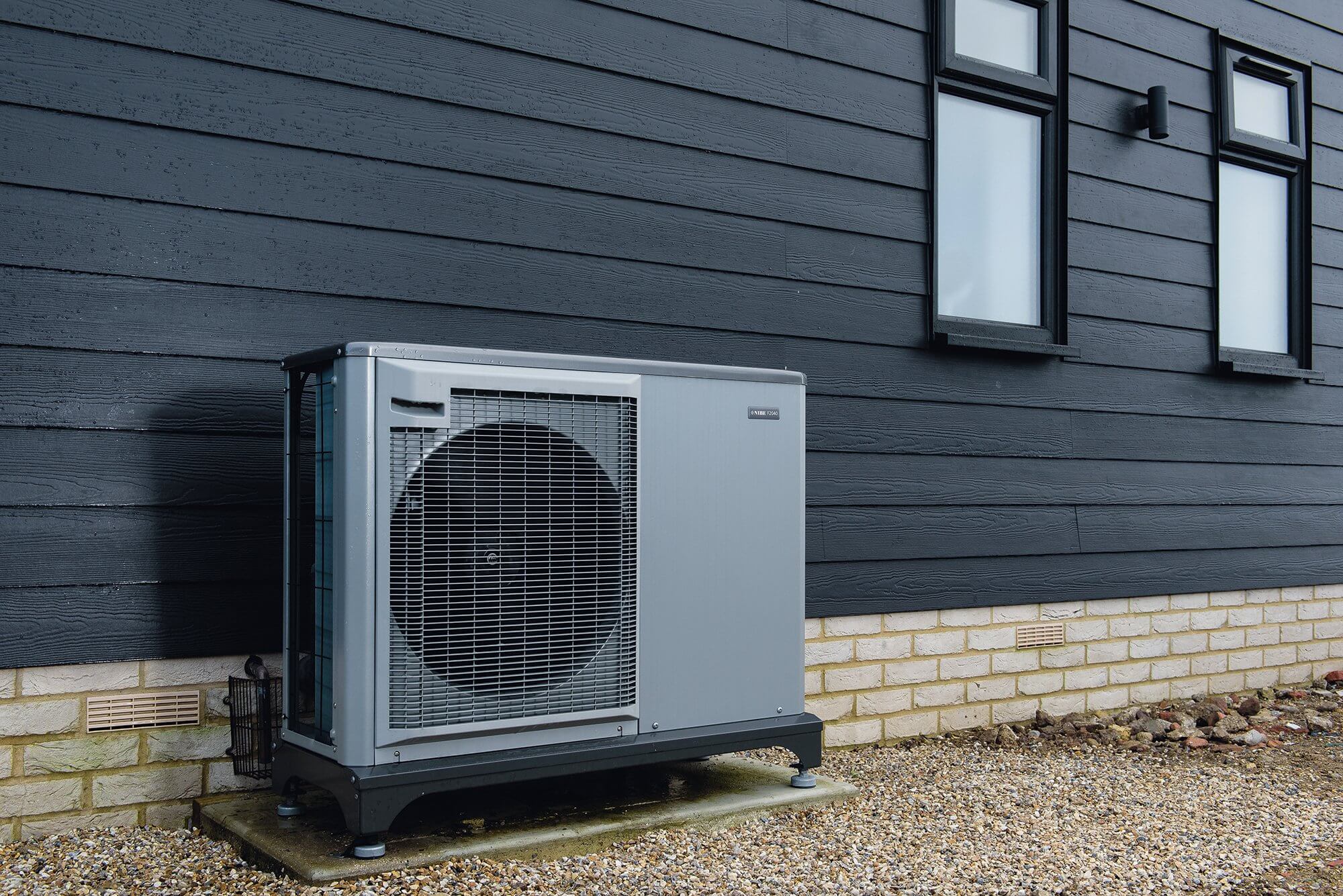
An air source heat pump is usually designed to provide central heating throughout a property and, in an air-to-water system, can also provide domestic hot water. A wood burning stove normally provides direct heat to the room or area in which it is installed.
So, for most homes, this is not simply a choice between one or the other.
If you want low carbon, automated whole house heating, an air source heat pump has significant advantages. If you want powerful localised heat, a real flame and a secondary source of heating for a particular room, a modern wood burning stove can make more sense.
In some properties, the two can work alongside each other.
Estimated reading time: 13 minutes
Table of contents
- Wood burning stove vs air-source heat pump: quick comparison
- How does an air source heat pump work?
- How does a wood burning stove work?
- Which is more efficient: a heat pump or a wood burning stove?
- Which costs less to run?
- Installation costs
- Which is better in an older property?
- Which produces more heat?
- Wood burners, heat pumps and air quality
- Can I install a wood burning stove in a Smoke Control Area?
- What happens during a power cut?
- Does a wood burner heat the whole house?
- Can you have a wood burning stove and a heat pump together?
- Wood burning stove or air source heat pump: which should you choose?
- Frequently asked questions
Wood burning stove vs air-source heat pump: quick comparison
| Wood burning stove | Air source heat pump | |
|---|---|---|
| Main purpose | Localised room or space heating | Whole house central heating |
| Energy source | Logs | Electricity and heat from outside air |
| Hot water | Normally no | Usually yes with an air to water system |
| Heat delivery | Strong radiant and convected heat | Lower temperature, continuous heat |
| Controls | Manual operation | Automated thermostatic control |
| Installation | Stove, hearth and suitable chimney or flue | Outdoor unit, heating system and usually hot water cylinder |
| Existing radiators | Not relevant | Some homes may need radiator upgrades |
| Air pollution at the property | Produces combustion emissions | No combustion emissions at the property |
| Power required | Most conventional stoves do not require mains electricity | Requires electricity |
| Fuel storage | Logs need dry storage | None |
| Maintenance | Stove maintenance and chimney sweeping | System servicing and maintenance |
| Best suited to | Heating individual living spaces | Heating an entire property |
The important point is that a heat pump is normally a primary heating system, whereas a wood burning stove is normally a secondary or supplementary heat source.
How does an air source heat pump work?
An air source heat pump takes heat from the outside air and transfers it into the home.
It uses electricity to operate a refrigeration cycle rather than converting electricity directly into heat. This allows a heat pump to deliver several units of heat for each unit of electricity consumed, although actual performance depends on the system design, outside temperature, heating flow temperature and how the system is operated.
Most domestic UK installations are air to water heat pumps. These supply warm water to radiators or underfloor heating and can heat water stored in a hot water cylinder.
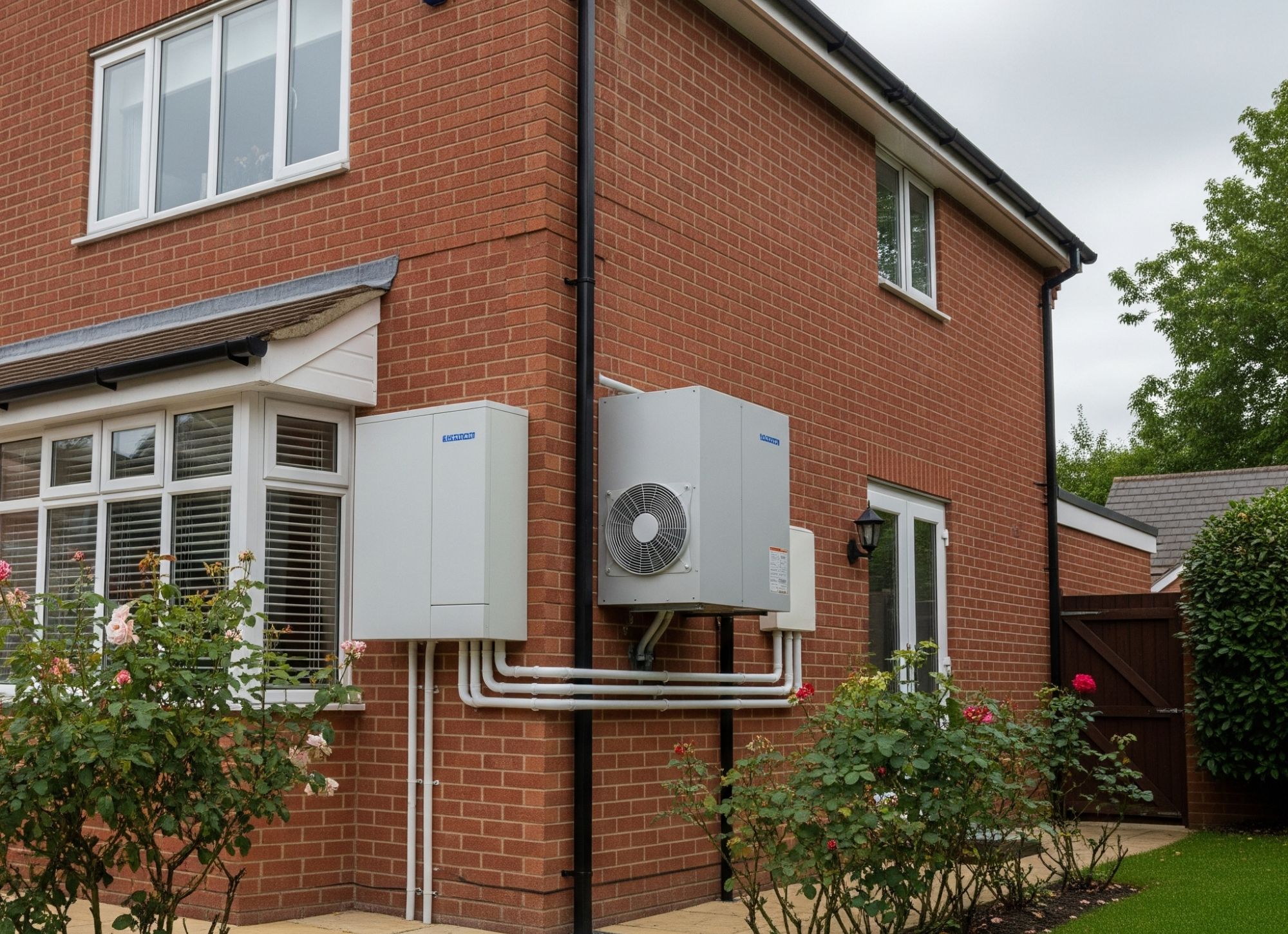
Heat pumps generally operate with lower water temperatures than traditional gas or oil boilers. Energy Saving Trust states that heat pumps commonly supply radiators at around 35–45°C, which is why larger radiators, underfloor heating or other changes may sometimes be recommended.
This does not mean every home needs all its radiators replaced. A heat loss calculation should determine what is actually required.
How does a wood burning stove work?
A wood burning stove burns logs inside a controlled combustion chamber, producing heat directly within the room.
Unlike a central heating system, a conventional stove does not normally distribute heat evenly around an entire property. The greatest benefit is felt in and around the room where it is installed.
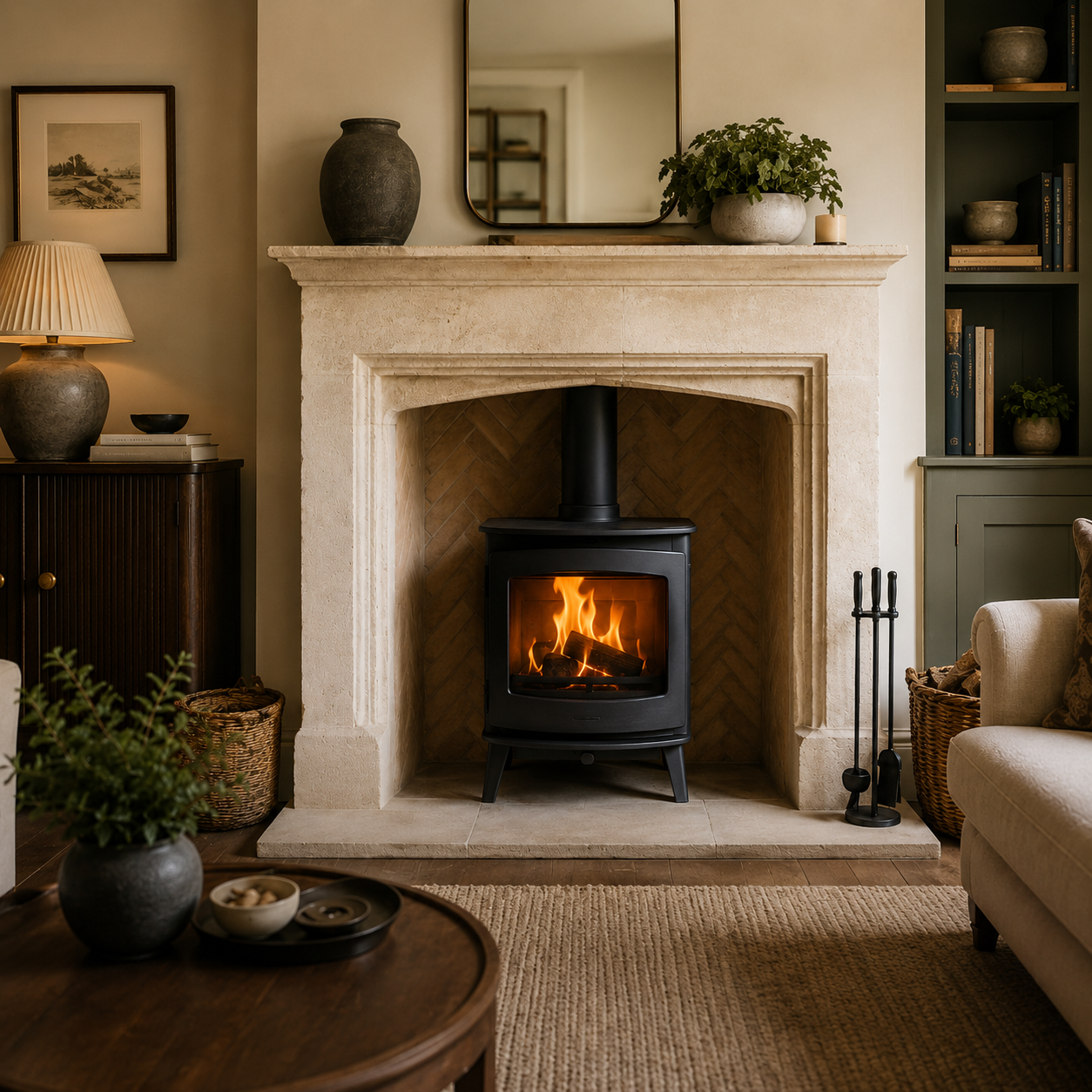
This can make a stove particularly useful in a living room, open plan kitchen or another frequently occupied space where direct heat is wanted.
The stove must be correctly sized for the room. Installing an oversized stove and repeatedly running it at a very low output is not necessarily efficient or desirable.
You can use our wood burning stove kW calculator to estimate the heat output suitable for your room, although final sizing should take account of the building, insulation, glazing and heat loss.
Which is more efficient: a heat pump or a wood burning stove?
This comparison needs some explanation because stove efficiency and heat pump efficiency are measured differently.
A stove creates heat by burning fuel. Its efficiency describes how much of the energy contained in that fuel is converted into useful heat.
A heat pump moves existing heat from outside the property into the home. Its performance is normally described using measures such as COP, SCOP or Seasonal Performance Factor.
For example, a heat pump operating at a COP of 3 would deliver approximately 3kWh of heat for every 1kWh of electricity consumed.
That does not mean that a heat pump is “300% efficient” in exactly the same sense that a stove might be described as 80% efficient. They are different technologies using different methods of producing or transferring heat.
Heat pump efficiency also changes throughout the year. Lower heating flow temperatures generally improve performance, which is one reason correct system design is so important.
For whole house heating, a correctly designed heat pump can therefore use energy very efficiently.
For heating one occupied room rather than an entire property, however, the calculation changes. A wood burning stove allows heat to be produced directly where it is wanted rather than necessarily heating every room.
Which costs less to run?
There is no single answer.
Air source heat pump running costs
A heat pump’s running cost depends on:
the electricity tariff, the seasonal efficiency of the heat pump, the property’s heat loss, required indoor temperature, radiator or underfloor heating design, hot water demand and how the system is controlled.
Electricity prices also change regularly.
For context, Ofgem’s average electricity rate under the Direct Debit price cap is 26.11p/kWh from 1 July to 30 September 2026, changing to 26.32p/kWh from 1 October to 31 December 2026. Actual tariffs vary by household, region and supplier.
A heat pump that averaged 3 units of heat for each unit of electricity would therefore have a theoretical electricity cost of roughly one third of the electricity unit rate per kWh of heat produced. Real world costs will differ because system performance varies.
Wood burning stove running costs
The cost of running a stove depends mainly on the cost and energy content of the logs, the moisture content of the wood, stove efficiency and how frequently it is used.
There is no national regulated price for firewood, so comparing a bag of logs directly with an electricity tariff can be misleading.
Someone who has access to appropriately seasoned wood may have very different costs from someone buying small retail bags of kiln dried logs.
In England, wood sold in quantities below 2m³ for domestic burning must be certified Ready to Burn, confirming a moisture content of 20% or less.
Dry wood matters for both efficiency and emissions. Wet logs waste energy evaporating moisture and produce more smoke.
For that reason, claims that either a stove or a heat pump is universally “cheaper to run” should be treated cautiously.
Installation costs
An air source heat pump is normally a considerably larger heating project because it is intended to become part of the property’s central heating system.
Energy Saving Trust currently gives an approximate typical air source heat pump installation cost of £12,000, although actual quotations can be higher or lower depending on the property and any associated heating system changes.
Eligible homeowners in England and Wales can currently receive £7,500 towards an air-to-water heat pump through the Boiler Upgrade Scheme. Certain off gas grid properties replacing oil or LPG heating can qualify for £9,000 under the current enhanced grant arrangements.
A wood burning stove installation is different. The cost depends heavily on whether the property already has a suitable chimney and fireplace.
A typical project may involve the stove itself, hearth, chimney liner or twin wall flue, chamber alterations, ventilation and other installation materials.
A property without a conventional chimney can still potentially have a stove installed using a suitable twin wall insulated flue system.
Because the systems perform different jobs, comparing their installation prices alone is not particularly useful.
Which is better in an older property?
Both can work in older properties.
It is sometimes claimed that heat pumps only work in highly insulated modern houses. That is too simplistic.
Improving insulation reduces heat loss and benefits almost any heating system, but Energy Saving Trust confirms that heat pumps can be installed in older and historic properties. The system simply needs to be designed around the building’s actual heat loss.
An older property may require larger radiators, changes to pipework or other improvements for a heat pump to operate efficiently at lower flow temperatures.
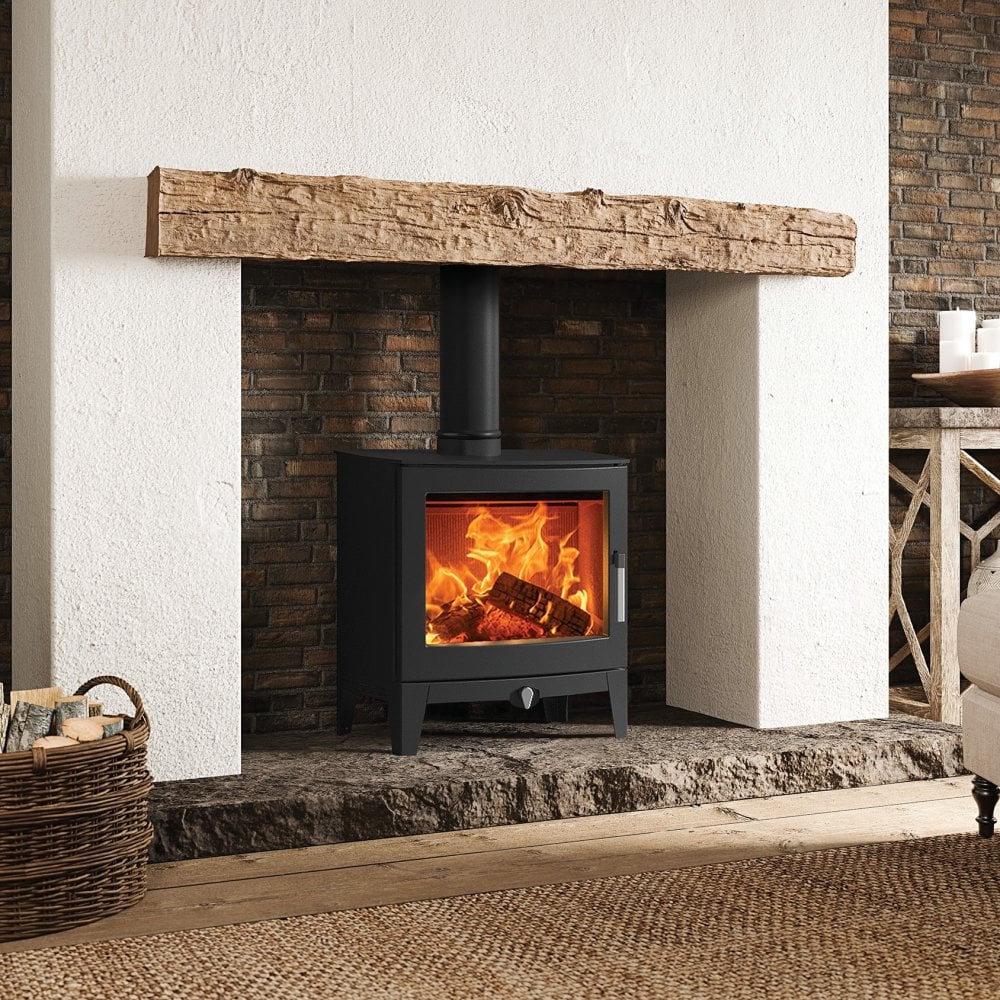
Wood burning stoves are also commonly suited to older properties, particularly where a suitable chimney already exists.
Traditional cottages and period homes can, however, present their own installation challenges. Chimney condition, fireplace construction, ventilation, combustible materials and the size of the stove all need to be considered.
Neither technology should be selected solely because a house is old.
Which produces more heat?
This depends on what you mean by more heat.
A stove can produce a noticeable concentration of heat within a relatively small area. A typical 5kW stove, for example, can make a substantial difference to a living room.
A heat pump is designed differently. Rather than creating an intense source of heat in one room, it usually runs for longer periods and maintains a more consistent temperature throughout the house.
This is why people moving from a boiler to a heat pump sometimes notice that their radiators feel cooler. The objective is not necessarily to make the radiator extremely hot, but to deliver the required amount of heat steadily.
Neither approach is inherently better. They provide different types of comfort.
Wood burners, heat pumps and air quality
This is one area where the difference is clear.
A heat pump has no combustion at the property, so it does not produce chimney smoke or particulate emissions at the home.
Burning wood does produce particulate matter.
UK government statistics estimate that households burning wood indoors accounted for around 12% of total UK PM2.5 emissions in 2024. That figure covers the overall contribution from domestic wood burning rather than suggesting every stove produces the same level of emissions.
Modern stove design, correct installation, appropriate fuel and correct operation can reduce emissions, but they cannot eliminate combustion emissions completely.
If you use a wood burning stove, burn dry wood with a moisture content of 20% or less, maintain the appliance and chimney, and operate the stove according to the manufacturer’s instructions.
Can I install a wood burning stove in a Smoke Control Area?
Potentially, yes.
Many towns and cities in England contain Smoke Control Areas.
Within one, wood can generally only be burned in an appliance that has been specifically exempted for the purpose and in accordance with its permitted fuel and operating conditions.
You should check the status of your address with the relevant local authority rather than assuming that wood burning is either automatically allowed or completely prohibited.
When choosing a stove for a property within a Smoke Control Area, look for a suitable DEFRA exempt wood burning stove.
What happens during a power cut?
An air source heat pump requires electricity to operate.
Most conventional freestanding wood burning stoves do not require an electrical supply to produce heat. That means a suitable stove can provide a useful independent source of room heating during an electricity outage.
This can be relevant for rural properties or homes where additional heating resilience is important.
It should not, however, be the sole reason for selecting one heating technology over another.
Does a wood burner heat the whole house?
Usually not.
Heat will naturally move into adjoining spaces, particularly in an open plan property, but a standard wood burning stove should primarily be treated as a room heater.
Trying to size a stove large enough to heat distant areas of a property can leave the room containing the stove uncomfortably hot.
If your objective is controlled, even heating throughout every room, a properly designed central heating system such as an air source heat pump is generally better suited to that job.
Can you have a wood burning stove and a heat pump together?
Yes, and for some homes this is arguably a more useful comparison than asking which one should replace the other.
A heat pump can provide the property’s everyday central heating and hot water, while a wood burning stove can provide additional direct heat and a real flame focal point in a main living area.
For example, the heat pump might maintain the background temperature throughout the house while the stove is used occasionally in the living room on colder evenings.
The important point is not to oversize either system on the assumption that the other will always be running.
Each should be designed correctly for its intended purpose.
Wood burning stove or air source heat pump: which should you choose?
Choose based on what you actually want the heating system to do.
If you are replacing a boiler and want automated, low carbon whole house heating and hot water, an air source heat pump is the closer equivalent.
If you want direct heat in a particular room, a real flame, an architectural focal point or an additional source of heating, a wood burning stove provides something a heat pump does not.
And if you want both consistent whole house heating and the experience of a real fire, the technologies do not necessarily have to compete.
A correctly specified wood burning stove can work alongside a heat pump or another central heating system rather than replacing it.
The right answer depends on the property, its heat loss, your existing heating system, how you use the rooms and what you actually want from your heating.
Frequently asked questions
Not necessarily. Heat pump costs depend on electricity prices and system efficiency, while stove costs depend on the price, moisture content and source of firewood. A direct national cost comparison is difficult because firewood prices vary significantly.
Heat pumps can deliver several units of heat for each unit of electricity consumed because they transfer heat rather than create it directly. Stove efficiency measures the conversion of energy contained in wood into useful heat, so the percentages should not be compared directly.
A heat pump can replace the heating function if the objective is to heat the property, but it will not provide the flame, radiant heat or focal point of a real wood burning stove.
A normal room heating stove is not a direct replacement for an air-to-water heat pump. The heat pump is designed to provide central heating throughout a property and potentially domestic hot water, whereas a conventional stove normally heats the area around it.
Yes. Older properties can use heat pumps, but correct heat loss calculations and system design are important. Some homes may benefit from improved insulation, larger radiators or heating system alterations.
Yes. Air source heat pumps are designed to extract heat from outside air at temperatures below freezing. Their efficiency varies with operating conditions, which should be allowed for when the system is designed.
There is no general UK wide ban on owning or installing wood burning stoves. There are, however, regulations covering appliance standards, fuels and the use of solid fuel appliances in Smoke Control Areas. Local rules should also be checked before installation.
For whole house heating and hot water, an appropriately designed air source heat pump is the more directly suitable system. For localised heat and a real fire in a particular room, a wood burning stove serves a different purpose. Some properties can benefit from having both.
Air source heat pumps don’t work well in older properties, they may require insulation improvements, larger radiators, upgraded pipework or other changes to perform efficiently. This can make installation more complex and costly than in a well insulated modern home.