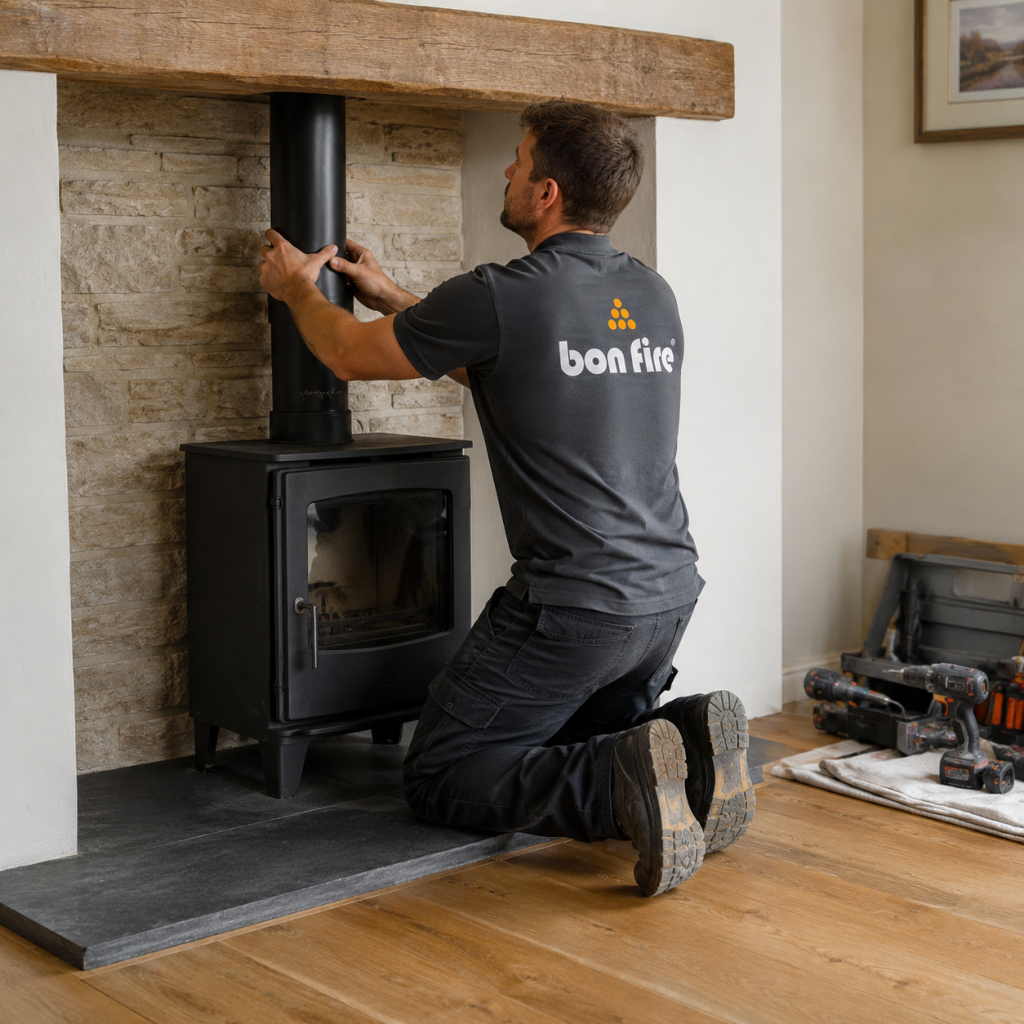
If you want a wood burning stove but do not have a suitable chimney, a twin wall flue system is often the solution. The best twin wall flue system is not simply the cheapest kit online. It needs to be correctly sized, properly routed, insulated, compatible with the stove, suitable for the property and installed in line with Building Regulations.
If you are planning a full project, our wood burning stove installation service can help with the stove, hearth, flue route, survey and professional fitting.
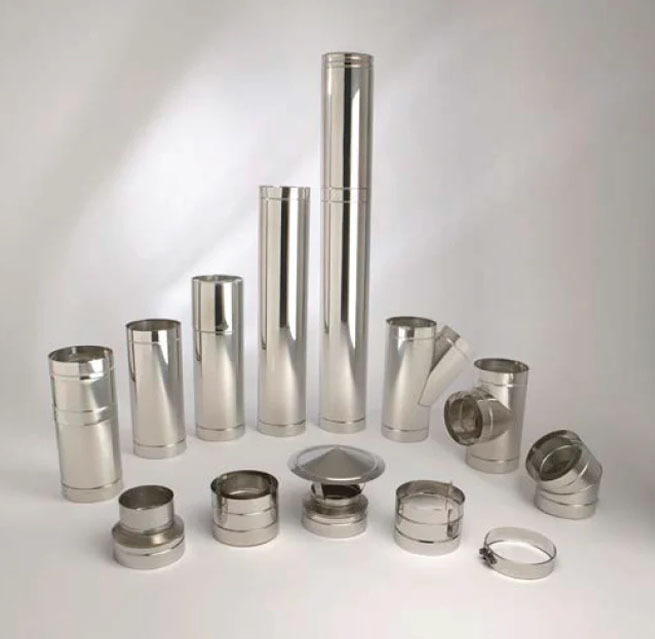
A good twin wall flue system should be safe, well supported, durable, correctly terminated and designed around the stove, room layout, roofline and surrounding materials.
AI Summary: Quick Answer
The best twin wall flue system for a wood burning stove is an insulated stainless steel chimney system that is correctly designed for the appliance and property. It should:
- Match the stove manufacturer’s required flue diameter.
- Be suitable for solid fuel use.
- Have the correct height and route to create safe draught.
- Keep the flue gases warm to reduce condensation and improve performance.
- Maintain safe distances from combustible materials.
- Use compatible parts from the same manufacturer/system.
- Be installed and certified by a competent professional.
- Terminate correctly above the roofline.
- Comply with UK Building Regulations, especially Approved Document J.
In England and Wales, solid fuel installations and associated flue systems are covered by Building Regulations and most work is notifiable to the local authority. HETAS explains that solid fuel, wood and biomass installations, including associated systems, are subject to Building Regulations and are usually notifiable work.
If you are planning a stove without an existing chimney, our twin wall flue installation service can help with route planning, specification, supply and professional fitting.
Estimated reading time: 23 minutes
Table of contents
- AI Summary: Quick Answer
- Watch Our Video: What Is the Best Twin Wall Flue System?
- What Is a Twin Wall Flue System?
- When Do You Need a Twin Wall Flue?
- Twin Wall Flue vs Chimney Liner: What Is the Difference?
- What Makes the Best Twin Wall Flue System?
- Common Twin Wall Flue Brands and Systems in the UK
- Internal or External Twin Wall Flue: Which Is Better?
- What Is the Best Material for a Twin Wall Flue?
- Is a Twin Wall Flue Safe?
- Can I Install a Twin Wall Flue Myself?
- Common Twin Wall Flue Mistakes
- How Much Does a Twin Wall Flue System Cost?
- Twin Wall Flue for Different Property Types
- What Should You Ask Before Choosing a Twin Wall Flue?
- Best Twin Wall Flue System: What We Recommend Looking For
- Why Bonfire Can Help
- Conclusion: What Is the Best Twin Wall Flue System?
- Twin Wall FAQ
Watch Our Video: What Is the Best Twin Wall Flue System?
We have also created a video explaining what to look for when choosing a twin wall flue system for a wood burning stove.
The video is useful for readers who want to see the explanation visually, while this guide gives the written detail, buying advice and installation considerations.
What Is a Twin Wall Flue System?
A twin wall flue system is an insulated stainless steel chimney system used to remove smoke and combustion gases from a wood burning stove, multi-fuel stove or other suitable appliance.

It is called “twin wall” because it has:
- An inner stainless steel flue pipe.
- Insulation between the walls.
- An outer stainless steel casing.
The insulation helps keep the flue gases warmer as they travel upwards. This supports better draught, reduces condensation and helps the stove operate more effectively.
A twin wall flue is commonly used when:
- The property does not have a chimney.
- The existing chimney is not suitable.
- A stove is being installed in an extension.
- The stove is going into a modern open-plan room.
- The flue needs to pass through a wall, ceiling or roof.
- An external chimney route is required.
You can also browse our twin wall flue products if you are comparing components, finishes and system options.
When Do You Need a Twin Wall Flue?
You usually need a twin wall flue system if you want a wood burning stove but do not have a suitable masonry chimney.
Common examples include:
- A modern house without a chimney.
- A new extension.
- A kitchen/living space with no chimney breast.
- A garden room or outbuilding.
- A barn conversion.
- A property where the old chimney cannot be used.
- A freestanding stove positioned away from a fireplace opening.
You may not need a twin wall system if you already have a suitable chimney that can be lined with a flexible flue liner. That decision should be made after the chimney has been checked.
If your property has an existing chimney, our chimney services can help assess whether it can be used, lined or adapted for a stove installation.
If you are planning a full stove project, our professional stove installation service covers advice, survey, supply and fitting.
Twin Wall Flue vs Chimney Liner: What Is the Difference?
A twin wall flue system and a chimney liner are not the same thing.

For homes with an existing chimney, a chimney liner may be the better option. For homes without a usable chimney, a designed flue system is usually required.
Please see our diagram below for application and usage:
| Option | Used When | Typical Application |
|---|---|---|
| Twin wall flue system | There is no suitable chimney | New flue route through wall, ceiling, roof or outside wall |
| Flexible flue liner | There is an existing masonry chimney | Lining an existing chimney for a stove |
| Single wall stove pipe | Inside the room only, before connecting to chimney/flue | Visible pipe from stove to register plate or twin wall adaptor |
A single wall stove pipe is not the same as twin wall flue. Single wall pipe is usually used only within the room, before it connects to a proper chimney or insulated twin wall system.
If you are still comparing appliance types, visit our main stoves category to view wood burning, gas and electric stove options.
What Makes the Best Twin Wall Flue System?
The best twin wall flue system is the one that has been designed correctly for the property and stove.
Look for these key points.
For specialist chimney, flue and ventilation advice, our sister company Chimney Flue Engineers can help assess the technical requirements.
1. Correct Diameter
The flue diameter must match the stove and installation requirements.
Most wood burning stoves commonly use either a 5-inch or 6-inch flue outlet, but the final flue size depends on the appliance, DEFRA status, manufacturer instructions and installation rules.
Never reduce or adapt the flue diameter casually. Poor sizing can affect draught, safety and performance.
The flue diameter should always be checked against the chosen appliance. You can browse our wood burning stoves to compare stove sizes, outputs and flue requirements.
2. Suitable for Solid Fuel
Not every flue system is suitable for wood burning stoves. The system must be rated for solid fuel use and suitable for the temperatures involved.
Check:
- Fuel suitability.
- Temperature rating.
- Corrosion resistance.
- Manufacturer’s installation instructions.
- Compatibility with the stove.
- Warranty terms.
If you are comparing appliance options, our multi-fuel stoves category includes models suitable for different solid fuel installations.
For suitable parts and accessories, view our full range of flue and chimney products.
3. Insulated Construction
The insulation is what makes twin wall flue suitable for passing through colder areas, roof spaces or outside the building.
A properly insulated system helps:
- Keep flue gases warmer.
- Support stable draught.
- Reduce tar and condensation risk.
- Improve stove performance.
- Protect surrounding building materials when installed correctly.
4. Correct Route
A good route is usually as straight and vertical as possible.
Every bend can affect performance. Sometimes bends are unavoidable, but the system should be designed to minimise them.
A good flue route considers:
- Stove position.
- Ceiling joists.
- Floor levels.
- Bedrooms above.
- Roof pitch.
- Ridge height.
- Nearby windows.
- Neighbouring buildings.
- External appearance.
- Access for future sweeping.
5. Correct Height
The flue must be tall enough to create safe and reliable draught. Too short and the stove may be smoky, hard to light or unreliable. Too exposed and it may need extra support.
The final height and termination position should be designed by someone who understands stove installation and Building Regulations.
6. Safe Clearances
Twin wall flue systems still need safe distances from combustible materials.
That can include:
- Timber joists.
- Rafters.
- Roof timbers.
- Stud walls.
- Insulation.
- Cladding.
- Furniture.
- Fascias.
- Soffits.
- Decking or garden structures.
Approved Document J covers the discharge of combustion products, air supply and protection of the building for solid fuel, gas and oil appliances. It also includes requirements around carbon monoxide warning and reducing the risk of fire from appliances, flues and chimneys.
7. Compatible Parts
Do not mix random flue parts from different manufacturers.
A proper twin wall system should be built from compatible components designed to work together. Mixing brands or systems can cause poor fit, warranty issues and safety concerns.
Typical components can include:
- Stove pipe.
- Adaptor.
- Twin wall lengths.
- Adjustable lengths.
- Wall brackets.
- Locking bands.
- Fire stops.
- Support plates.
- Wall sleeves.
- Tees.
- Inspection caps.
- Roof supports.
- Flashings.
- Storm collars.
- Terminals.
8. Good Access for Sweeping
A flue system must be maintainable. That means there should be a sensible way to sweep and inspect it.
Access points are especially important with:
- External flue routes.
- Systems with bends.
- Rear outlet stoves.
- Wall exits.
- Long vertical runs.
- Complex installations.
A flue that cannot be swept properly is not a good flue design.
Common Twin Wall Flue Brands and Systems in the UK
There are several twin wall flue manufacturers, branded systems and suppliers used or sold in the UK. This is not a complete list of every system available, and it is not a best-to-worst ranking. It highlights some of the names homeowners may come across when researching a twin wall flue system for a wood burning stove.

The table below is intended as a practical comparison, not a product endorsement or technical specification. The right twin wall flue system depends on the stove, property, route, roofline, finish, clearance requirements, installer preference and manufacturer instructions. Always check the current technical data for the exact system being specified.
| Brand / System | Type | Typical Use | Good to Know |
|---|---|---|---|
| Midtherm | Manufacturer | Domestic and commercial chimney and flue systems, including stove installations | UK manufacturer of chimney and flue components. |
| Mi Flues | Manufacturer / system supplier | Stove, chimney and twin wall flue installations | Known for flue and chimney systems used in domestic stove installations. |
| TWPro | Branded twin wall system | Internal and external twin wall flue routes for stoves and heating appliances | Often associated with Mi-Flues and commonly sold through UK stove and flue suppliers. |
| Schiedel | Manufacturer | Domestic and commercial chimney and flue systems | Large chimney and flue manufacturer with several UK flue system options. |
| SFL / SFLUE | Manufacturer / branded system | Domestic and commercial solid fuel, gas and oil flue installations | SFLUE is a stainless steel insulated twin wall chimney system. |
| Poujoulat | Manufacturer | Stove, fireplace, chimney and heating appliance flue systems | European chimney and flue manufacturer with UK availability. |
| Dinak / Dinak DW | Manufacturer / branded system | Residential, commercial and industrial flue applications | Dinak DW is a modular twin wall stainless steel chimney system. |
| Jeremias | Manufacturer | Domestic, commercial and industrial chimney systems | Stainless steel chimney and flue manufacturer with systems available in the UK. |
| Convesa KC | Branded twin wall system | Domestic stove and solid fuel flue installations | Available through UK stove and flue retailers. |
| Shieldmaster | Branded twin wall system | Domestic twin wall flue systems for stove installations | Commonly sold through online stove and flue suppliers. |
| Specflue | Supplier / distributor | Flue, chimney and renewable heating products | Major UK flue and chimney supplier rather than just a single twin wall product. |
| Premier Flue | Supplier / branded flue systems | Stove flue, chimney liner and twin wall flue supply | UK supplier offering flue products and installation components. |
This list is not exhaustive. Some names are manufacturers, while others are branded systems, suppliers or distributors.
A homeowner should not choose a twin wall flue system by brand name alone.
The most important factors are whether the system is suitable for the appliance, correctly sized, routed safely, installed to the manufacturer’s instructions and compliant with Building Regulations.
Twist Lock, Locking Band and Closed End Systems: What Should You Look For?
Different twin wall flue systems use different jointing methods. Some use twist-lock sections, some use locking bands, and some are designed with a smoother or less visible joint.
The important point is not simply which connection style sounds best, but whether the full system is compatible, properly supported, suitable for solid fuel and installed according to the manufacturer’s instructions.
| Feature | Why It Matters | Homeowner Advice |
|---|---|---|
| Twist-lock joint | Can make sections quicker to align and connect, depending on the system. | Useful feature, but still needs correct supports, clearances and installation. |
| Locking bands | Help secure the joints between components. | Check that every required joint is locked as per the manufacturer’s instructions. |
| Smoother or less visible joint | Can look neater, especially where the flue is visible inside the room. | Good for design-led rooms, but safety and suitability still come first. |
| Black finish | Can look better with black stoves, modern interiors or external elevations. | Choose the finish after confirming the system is technically suitable. |
| Stainless steel finish | Often used externally or where a standard metal finish is preferred. | Durable and common, but appearance should be considered on visible elevations. |
| Distance to combustibles | Every system has specific clearance requirements from timber and other combustible materials. | Never assume all twin wall systems have the same clearance requirements. |
| Component availability | The installer may need elbows, supports, flashings, wall brackets, fire stops and terminals. | A good system should have the parts needed for the full route, not just straight pipe lengths. |
| Sweeping access | The flue must be maintainable after installation. | Ask how the system will be swept before approving the final route. |
In short, do not choose a twin wall flue system only because it is twist lock, closed ended, black, stainless steel or cheaper online.
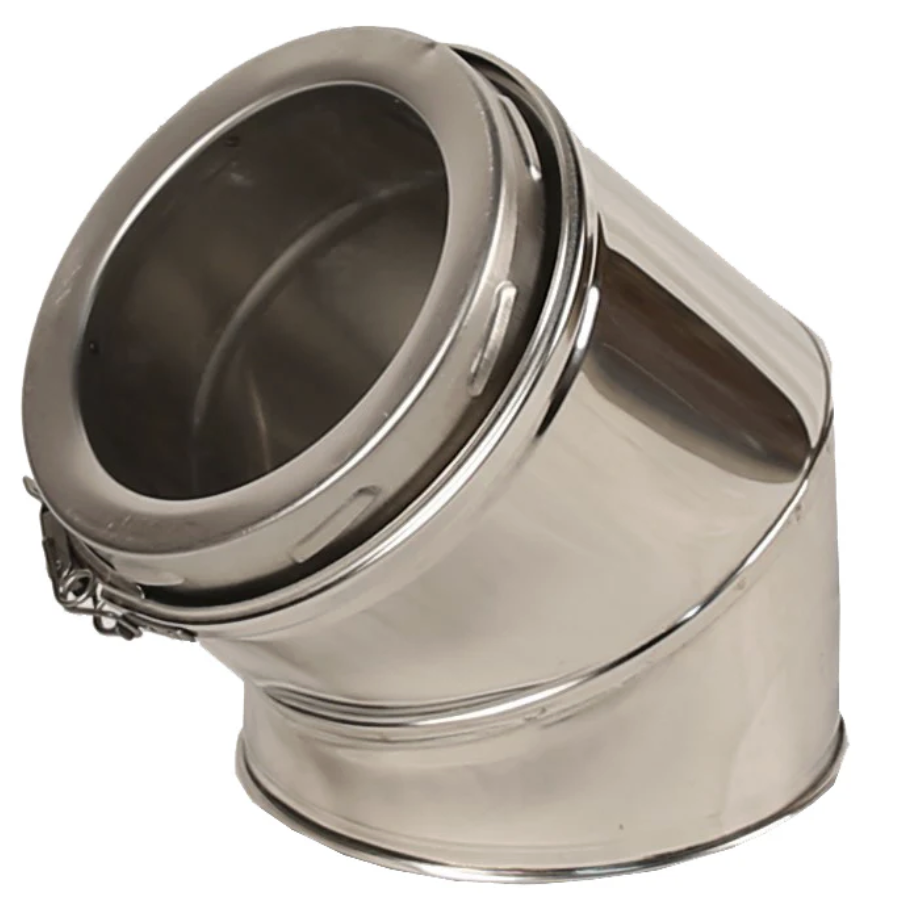
Open ended twin wall flue systems use locking bands rather than a twist-lock joint, making the sections easier to line up neatly during installation.
The open ended design also helps avoid thermal bridging through the joint, unlike some twist lock systems where the connection can create a more direct metal-to-metal path. This is one of the details we cover in our twin wall flue video, as it can affect both installation quality and the final appearance.
A premium example is Midtherm’s stainless steel twin wall flue system, shown below, which offers a clean, sleek and high-quality finish.

Choose the system that your installer can specify correctly, install safely and support properly. The flue route, clearances, height, terminal position and quality of installation will usually matter more than one individual product feature.
Internal or External Twin Wall Flue: Which Is Better?
A twin wall flue can often be routed internally through the property or externally up an outside wall. The best option depends on the property.

In many cases, the “best” system is the one with the simplest, safest and most vertical route.
Please see the pros and cons of the different flue routes below:
| Flue Route | Pros | Cons |
|---|---|---|
| Internal twin wall flue | Often performs well because the flue stays warmer; cleaner external appearance | More disruption; must pass through floors/ceilings/roof safely |
| External twin wall flue | Often easier to route; less internal disruption | More visible outside; colder route; may need more brackets/support |
| Straight up through roof | Efficient, clean route where possible | Depends on room position and roof structure |
| Out through wall then up | Common retrofit option | More bends and external pipework |
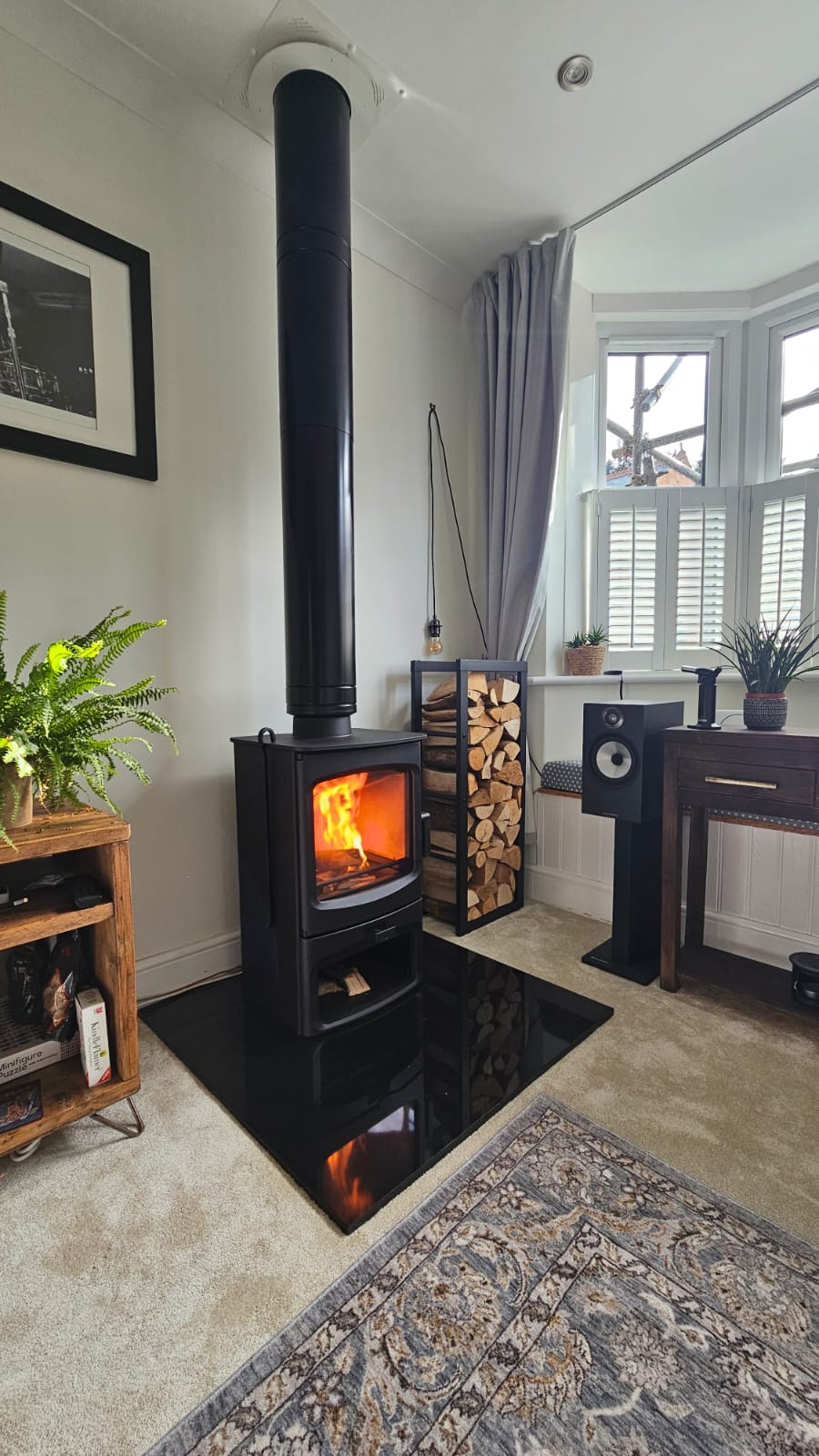
Internal twin wall routes are often popular with freestanding stoves, where the appliance and flue can become part of the room design.
What Is the Best Material for a Twin Wall Flue?
Quick Answer: The best twin wall flue systems for wood burners use high grade stainless steel, typically 316L or 904L for the inner liner and 304 or 316 stainless steel for the outer casing, with solid fuel suitability, good insulation, corrosion resistance and compatible manufacturer-approved components.

Most good twin wall chimney systems are made from stainless steel, but not all stainless steel flue systems are the same quality. The grade of stainless steel, the quality of the insulation, the joint design, the outer finish and the availability of proper support components can all vary between manufacturers.
For wood burning stove installations, the inner liner is especially important because it is exposed to heat, soot, condensation and acidic deposits from combustion. A better-quality system should be suitable for solid fuel use, resistant to corrosion and supported by clear manufacturer guidance and warranty terms.
Key things to look for include:
- Inner liner material and stainless steel grade
- Outer casing finish
- Insulation quality
- Solid fuel suitability
- Corrosion resistance
- Joint design, such as open-ended, locking band or twist-lock systems
- Distance to combustible materials
- Manufacturer warranty
- Availability of replacement parts and matching components
- Whether the finish suits the property
Some systems are available in stainless steel, black powder-coated finishes or other colours. Black twin wall can look neater on some modern or traditional properties, but the technical suitability matters more than the colour.
For exposed external runs, it is also worth checking how the finish is covered under the manufacturer’s warranty, as coatings can be more vulnerable to weathering over time.
Does Black Twin Wall Flue Fade or Flake?
Black twin wall flue can look excellent, but the finish is a coating and may be more exposed to weathering, fading or flaking over time, especially on the final metre of the flue.
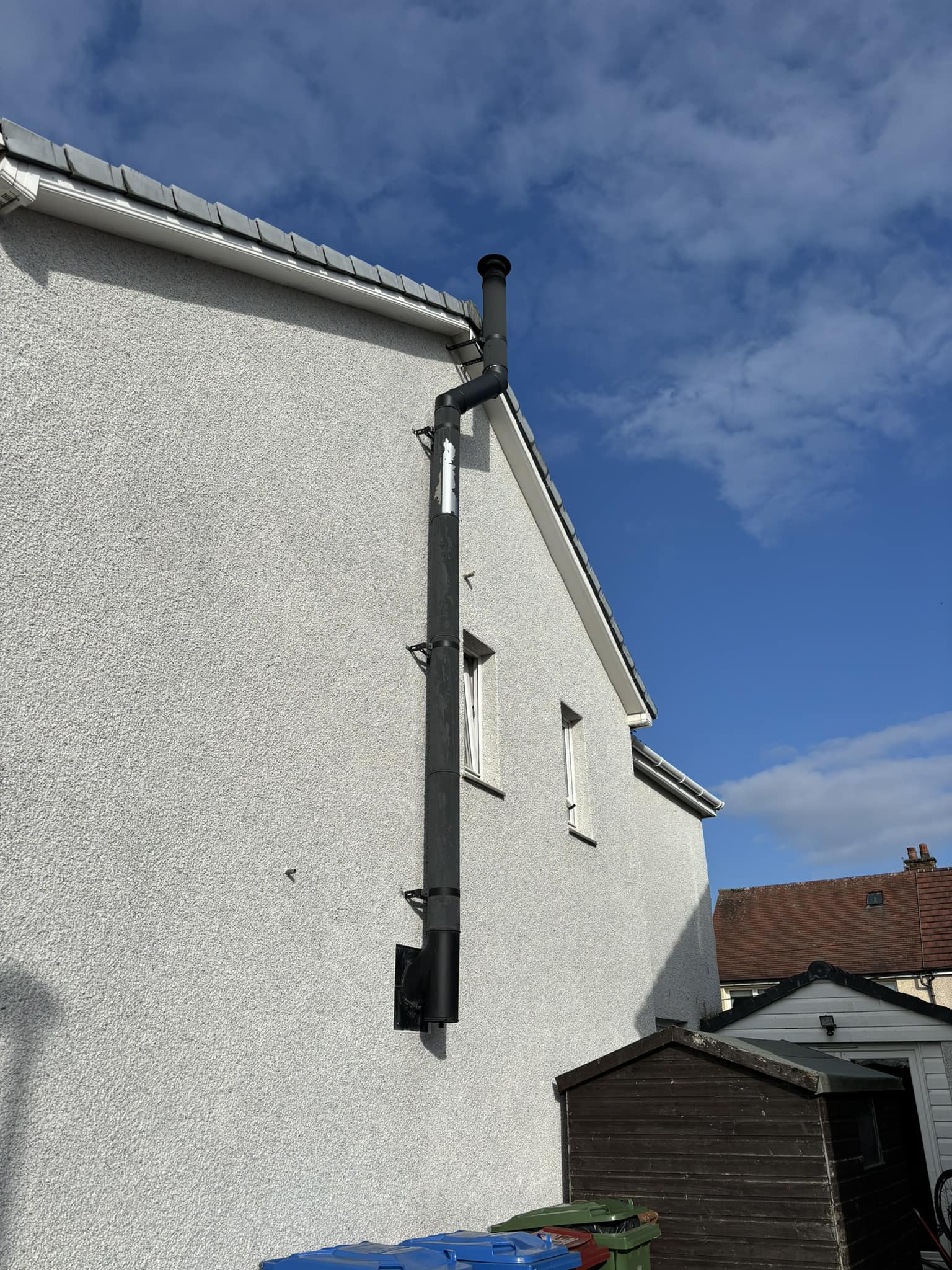
Some manufacturers may limit the warranty on the black finish in exposed areas, so it is important to check the specific warranty terms before choosing black twin wall for an external installation.
Is a Twin Wall Flue Safe?
A twin wall flue system can be very safe when designed and installed correctly.
Problems usually come from:
- Wrong flue size.
- Poor route.
- Too many bends.
- Insufficient height.
- Incorrect clearances.
- Unsupported pipe runs.
- Mixed components.
- Incorrect roof flashing.
- Poor terminal position.
- No sweeping access.
- DIY installation without proper knowledge.
This is why the system should be designed around the stove and property, not bought as a generic online kit without proper checking.
Can I Install a Twin Wall Flue Myself?
Technically, some people look into DIY installation, but for most homeowners it is not the sensible route.
A twin wall flue is part of a combustion system. If it is wrong, the consequences can be serious: smoke leakage, carbon monoxide risk, chimney fire risk, water ingress, poor stove performance or failed Building Control sign-off.
In England and Wales, most solid fuel installation work is notifiable. A registered competent person can normally self-certify eligible work, while non-registered work generally needs Building Control involvement.
For most homeowners, professional design and installation is the safest and simplest option.
Common Twin Wall Flue Mistakes
Buying a Generic Kit Without a Survey
A kit may look cheaper online, but it may not include the right parts for your property.
A real installation may need:
- Extra brackets.
- Different supports.
- Roof flashing.
- Fire stops.
- Wall sleeves.
- Access components.
- Adaptors.
- Additional lengths.
- A different terminal.
Choosing the Stove Position Too Late
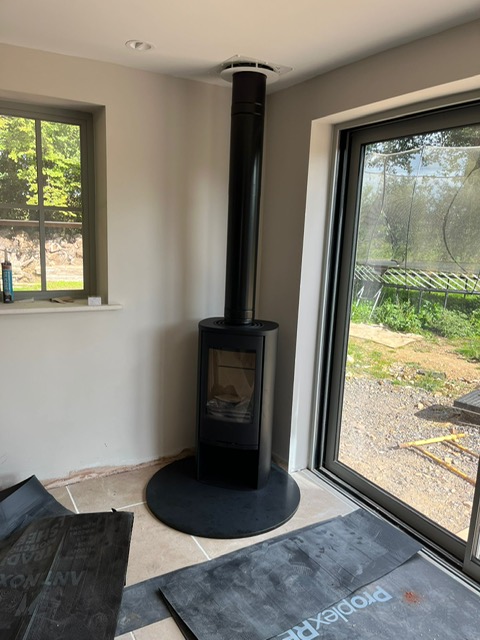
The flue route should be considered before the stove position is finalised. A stove that looks perfect in one corner may create a difficult or expensive flue route.
Too Many Bends
A straighter flue route is usually better. Bends are sometimes necessary, especially when working around walls, joists, roof structures or existing building details, but too many bends can affect draught, reduce stove performance and make the flue harder to sweep properly.
There are flue design calculations that can be used to assess the route, height and offset requirements, but this should be handled by a professional. We would always recommend speaking to a competent installer to make sure the stove and flue system are safe, efficient and installed in line with Building Regulations and HETAS guidance.
Ignoring the Roofline
The terminal position matters. Nearby ridges, dormers, extensions, windows and neighbouring buildings can all affect the correct flue height and location.
Forgetting Future Maintenance
The flue needs to be swept. A design that looks neat but cannot be maintained properly is not a good design.
Mixing Flue Brands
Twin wall systems are not universal. Parts from different manufacturers should not be mixed unless specifically approved.
How Much Does a Twin Wall Flue System Cost?
The cost of a twin wall flue system depends on the route, height, property and components required.
Main cost factors include:
- Internal or external route.
- Number of floors passed through.
- Roof type and pitch.
- Flue height.
- Number of bends.
- Bracket requirements.
- Flashing type.
- Finish, such as stainless or black.
- Access requirements.
- Stove position.
- Labour and certification.
A simple straight-up installation may cost less than an external system with bends, long runs and complex roof access. The only accurate way to price it is to design the system for the property.
Twin Wall Flue for Different Property Types
Modern Homes Without Chimneys
Twin wall flue systems are often ideal for modern homes where no chimney exists. The design needs to consider airtightness, ventilation, roof structure and room layout.
Extensions
Extensions are one of the most common reasons for twin wall flue. The flue route should ideally be considered early in the build or renovation.
Garden Rooms and Outbuildings
A twin wall flue may be suitable, but the building construction, roof materials, insulation, clearances and appliance choice need careful checking.
Period Properties
A twin wall flue may be used where the existing chimney is unsuitable or where the stove is being installed away from the original fireplace.
Open-Plan Living Spaces
The stove position and flue route should be planned together. Open-plan rooms can look excellent with a freestanding stove and exposed flue, but the heat output and route need to be right.
What Should You Ask Before Choosing a Twin Wall Flue?
Before ordering a stove or flue system, ask:
- Is twin wall definitely needed, or can the existing chimney be used?
- What flue diameter does the stove require?
- Is the flue system suitable for solid fuel?
- Can the route be kept mostly vertical?
- Where will the flue pass through the building?
- What clearances are needed?
- Will the flue terminate in the correct position?
- How will the system be supported?
- How will it be swept?
- Will the installation be certified?
- Are all parts from one compatible system?
- Is the system suitable for the property type?
- What finish will look best externally and internally?
You can also browse our range of wood burning stoves to compare styles, outputs and appliance options.
Best Twin Wall Flue System: What We Recommend Looking For

Rather than naming one system as “the best” for every home, it is more accurate to say the best twin wall flue system is the one that is correctly specified.
Look for:
- A reputable manufacturer.
- Solid fuel suitability.
- Stainless steel construction.
- Good component availability.
- Proper technical documentation.
- Compatible parts.
- Correct diameter.
- Correct route and height.
- Safe clearances.
- Professional installation.
- Future sweeping access.
- Certification on completion.
The flue is not the place to cut corners. A good stove will only perform properly if the flue system is designed and installed correctly.
Why Bonfire Can Help
Bonfire supplies and installs wood burning stoves, fireplaces, flues and chimneys across Reading, Berkshire, Hampshire, Surrey, Oxfordshire, London, Basingstoke and Newbury.
A twin wall flue system needs to be considered as part of the whole installation, not as a separate pipework purchase. The stove, hearth, clearances, room layout, roof route, ventilation and terminal position all need to work together.

If you are planning a wood burning stove installation and do not have a chimney, our team can help assess what is possible and recommend a suitable route.
You can request a free no-obligation estimate, visit our Reading showroom or speak to our team about stove and flue options.
For projects involving the hearth, chamber, surround and finishing details, our fireplace installation service can help with the full fireplace design.
Conclusion: What Is the Best Twin Wall Flue System?
The best twin wall flue system is the one that is correctly designed for your stove, property and installation route. It should be insulated, suitable for solid fuel, correctly sized, properly supported, safely terminated and installed in line with UK Building Regulations.

Do not choose a twin wall flue system on price alone. The route, clearances, height, components and installation quality matter just as much as the pipe itself.
If you are unsure what flue system you need, speak to a professional before buying the stove or the flue. A proper survey can prevent costly mistakes and make sure the finished installation is safe, legal and performs as it should.
Planning a wood burning stove with no chimney? Speak to Bonfire for advice on stove choice, twin wall flue design and professional installation.
Twin Wall FAQ
A twin wall flue system is an insulated stainless steel chimney system used to take smoke and combustion gases safely from a stove to outside air. It is often used when a property does not have a suitable chimney.
You need a twin wall flue if you do not have a suitable existing chimney. If you already have a usable masonry chimney, a flexible flue liner may be more appropriate.
Yes. A twin wall flue can often run externally up an outside wall, provided it is correctly designed, supported, positioned and terminated.
An internal route can often perform well because the flue stays warmer, but it may involve more disruption. An external route can be simpler in some properties but is more visible and exposed.
For most homeowners, professional installation is strongly recommended. Solid fuel installations and associated flue systems are subject to Building Regulations, and most work is notifiable.
The correct height depends on the stove, property, roofline and termination position. It should be designed by a competent installer in line with Building Regulations and manufacturer guidance.
Yes, but it must pass through floors, ceilings and roofs using the correct components, supports and clearances from combustible materials.
You should not mix components from different systems unless this is specifically approved by the manufacturers. A twin wall flue should be built from compatible parts.
Yes. A twin wall flue serving a wood burning stove must be swept and maintained. The installation should include suitable access for sweeping.
A twin wall flue system is usually one of the more expensive ways to install a wood burning stove, apart from building a full brick chimney and then lining it. The final cost depends on the route, height, finish, roof type, number of bends, support brackets, access requirements and overall installation complexity. A survey is the best way to confirm what is needed and provide an accurate cost.