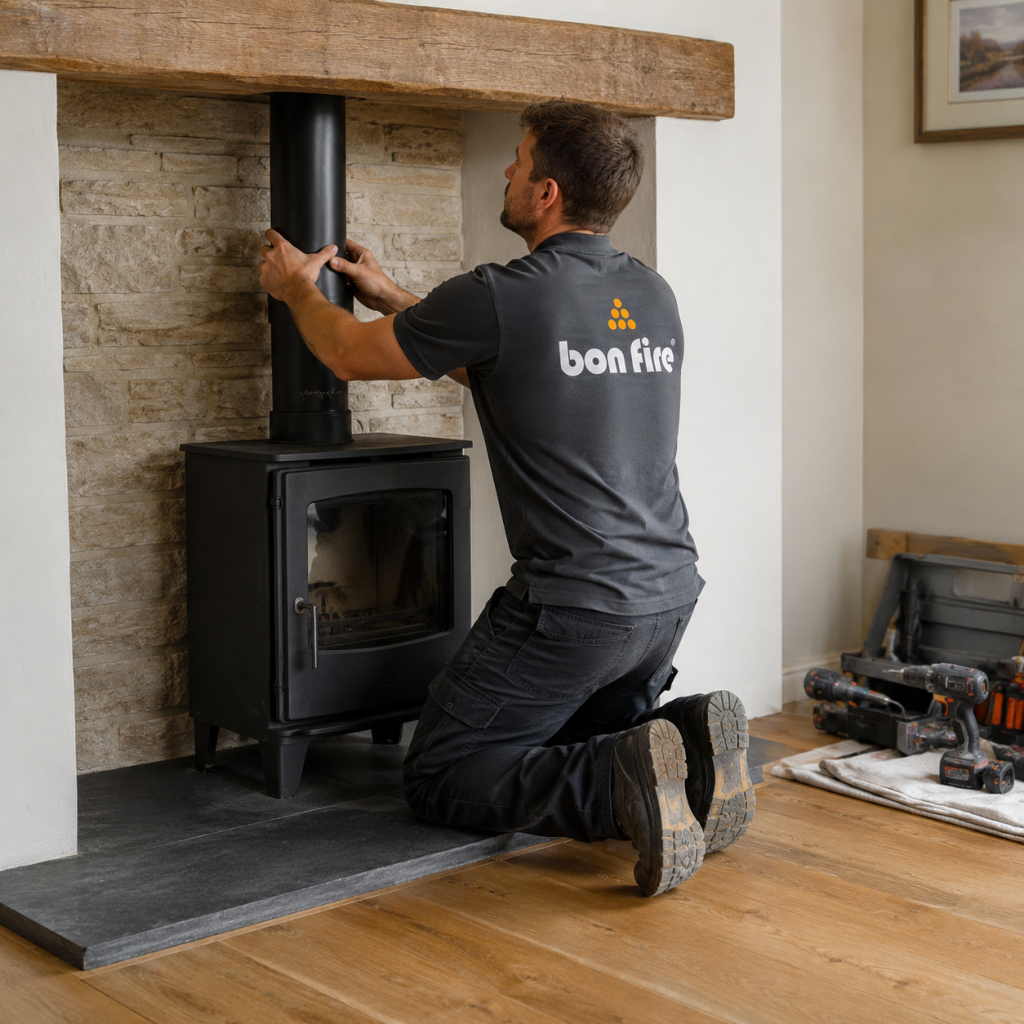
Installing a wood burning stove is not just about choosing the right look. You also need to make sure the stove, hearth and flue system have the correct clearances around them. This is one of the most important parts of a safe and compliant installation.
If you have seen the term distance to combustibles on a stove product page or in an installation manual, it refers to the minimum safe gap that must be left between the stove or flue and any material that could catch fire. There is also a separate consideration for non-combustible materials, which can usually be closer, but still need to follow the manufacturer’s instructions and Building Regulations.
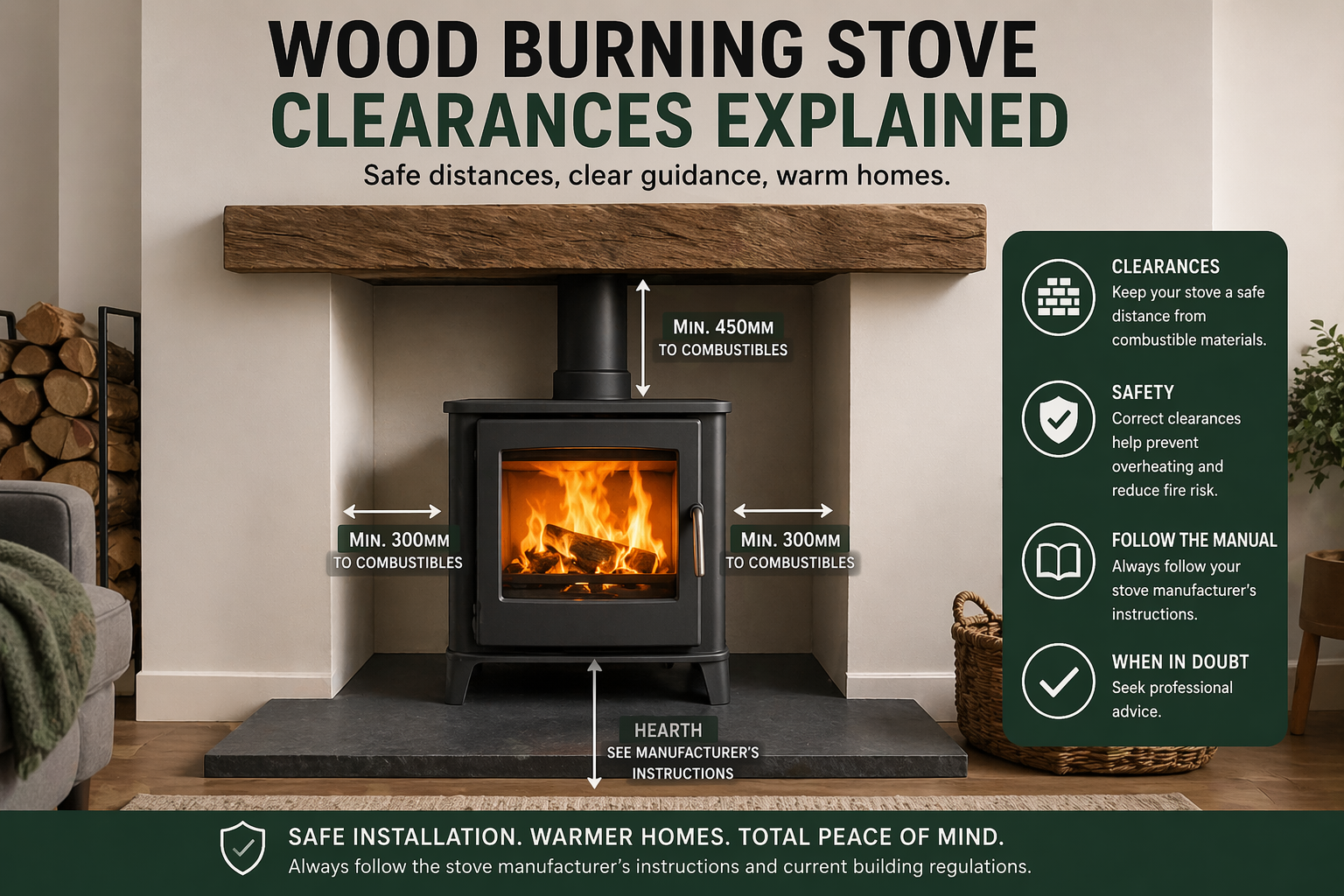
Disclaimer: Minimum distance from top of stove to underside of beam is now 750mm (30″)
This guide explains what combustible and non-combustible materials are, why clearances matter, and what to consider before installing a wood burning stove in your home.
Estimated reading time: 16 minutes
Table of contents
- What Does Distance to Combustibles Mean?
- What Is a Combustible Material?
- What Is a Non-Combustible Material?
- Why Distance to Combustibles Matters
- How Far Should a Wood Burning Stove Be from Combustible Materials?
- How Far Should a Stove Be from Non-Combustible Materials?
- Clearance Around the Flue Pipe
- Can a Heat Shield Reduce Clearances?
- Timber Beams and Mantels
- Hearth Requirements
- Choosing a Stove for a Small Space
- Common Mistakes to Avoid
- Final Thoughts
- Need Help Choosing the Right Stove?
- FAQ
Need help planning a wood burning stove installation?
If you need advice on stove clearances, hearths, flue systems or fireplace design, our team can help.
Get a professional quote
What Does Distance to Combustibles Mean?
Distance to combustibles means the minimum safe separation between a wood burning stove or flue pipe and any material that could ignite or become damaged by heat.
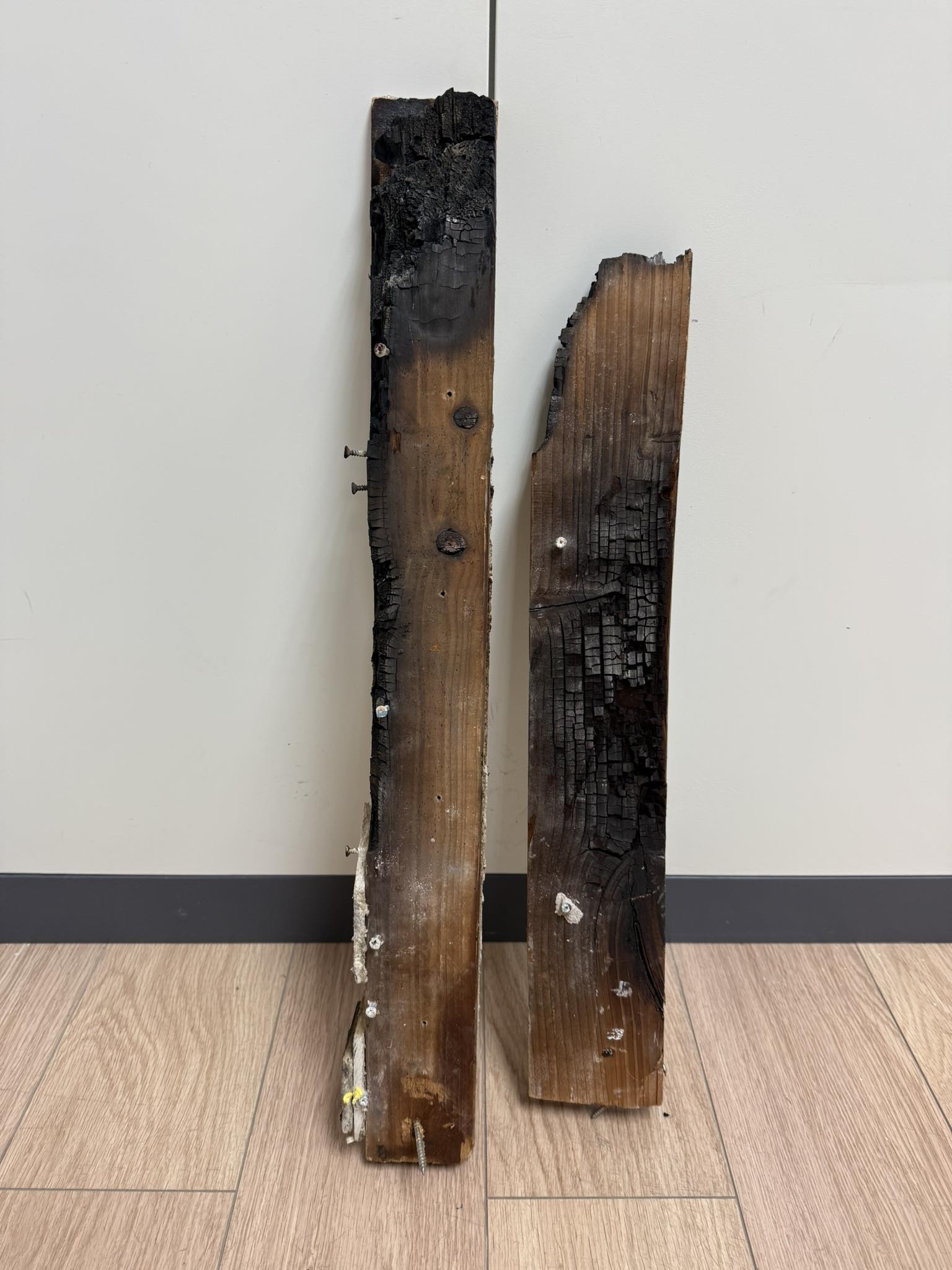
These clearances are there to reduce the risk of fire and prevent excessive heat transfer into nearby walls, furniture, ceilings and decorative finishes. The exact distance will depend on the stove model, the flue system being used and the materials around the appliance.
This is why two stoves of a similar size can have very different installation requirements. The tested clearances listed by the stove manufacturer are the figures that matter.
What Is a Combustible Material?
A combustible material is anything that can catch fire, burn or deteriorate when exposed to high heat over time.
Common combustible materials around a stove include:
- Timber beams and wooden mantels
- Stud walls and timber framing
- Plasterboard
- Timber studwork
- Wooden flooring and laminate
- Curtains and blinds
- Rugs and carpets
- Sofas and upholstered furniture
- Shelving, cabinets and joinery
Some materials are less obvious than others. For example, plasterboard often gets mistaken for a safe surface, but if it is fixed to a timber frame or has combustible materials behind it, the full wall construction still needs to be treated with care.
As a rule, if a material is not clearly confirmed as non-combustible, it is safest to assume it is combustible.
What Is a Non-Combustible Material?
A non-combustible material is one that will not ignite when exposed to fire or high temperatures.
Common examples include:
- Brick
- Stone
- Slate
- Granite
- Marble
- Concrete
- Cement board
- Steel
- Toughened stove glass
These materials are commonly used for fireplace chambers, hearths, wall finishes and surrounds. They are far more suitable around a stove than timber based products, but they do not remove the need to follow the stove manufacturer’s instructions.
Common non-combustible materials used around a stove include brick, stone and specialist fireproof boards. You can read more in our guide on which boards are safe to use around a fireplace or stove.
Even with non-combustible materials, a stove still needs the correct space around it for safety, heat movement and access.
Why Distance to Combustibles Matters
Clearance distances are not just a technical detail in a manual. They are a core part of stove safety.
If a stove is too close to a combustible surface, heat can build up over time and increase the risk of ignition. Even where a surface does not catch fire immediately, long term heat exposure can dry it out, weaken it and make it more vulnerable.
Correct clearances help with:
- Reducing fire risk
- Preventing heat damage to walls and finishes
- Supporting safe stove performance
- Meeting installation and certification requirements
- Avoiding costly remedial work later
A properly planned installation is safer, performs better and is easier to live with long term.
How Far Should a Wood Burning Stove Be from Combustible Materials?
The minimum distance from a wood burning stove to combustible materials is not fixed across all models. It is determined by the stove manufacturer and listed in the installation instructions for that specific appliance.
A combustible material is any material that can ignite, char, degrade or overheat when exposed to stove heat. This includes timber, plasterboard with combustible backing, wooden beams, flooring, furniture, curtains and soft furnishings.
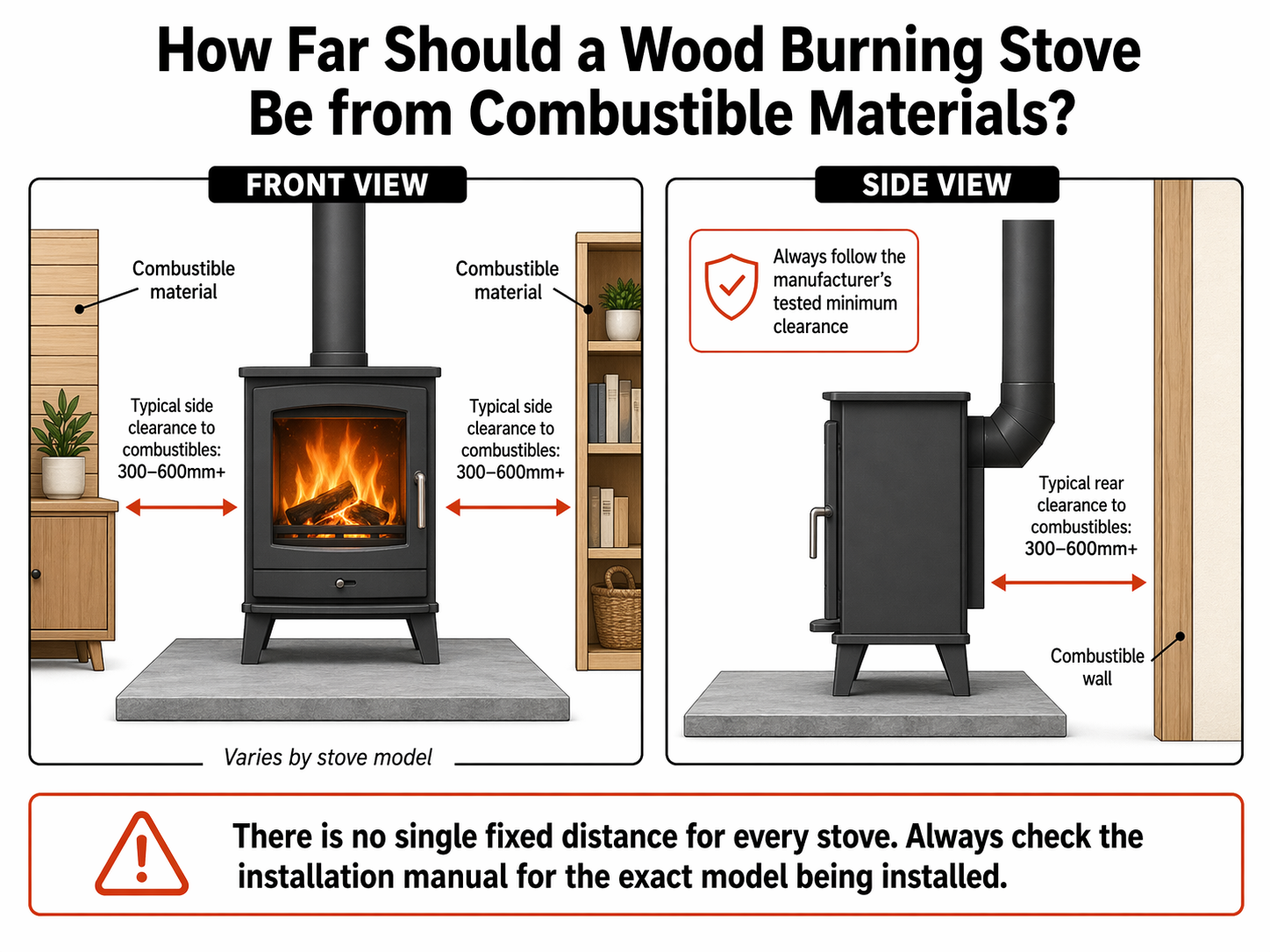
For many wood burning stoves, the required clearance to combustible materials is typically 300mm to 600mm or more, depending on the model. Some close clearance stoves are designed to reduce that gap, but only where the manufacturer has tested and approved it.
The correct clearance must always be maintained. The stove should not be installed closer than the stated minimum distance to any combustible surface.
Before buying a stove, check the manufacturer’s rear, side and top clearance requirements. This is especially important in fireplace openings, alcoves and smaller rooms, where a stove may look as though it fits but may fail once the mandatory clearances are applied.
How Far Should a Stove Be from Non-Combustible Materials?
A wood burning stove can usually sit closer to non-combustible walls than to combustible materials, but clearance is still needed. For a stove installed against a non-combustible wall and not in a chamber, a common guide is 150mm to the rear and sides, with a suitable non-combustible hearth beneath. For a freestanding stove, the hearth is commonly at least 840mm x 840mm.
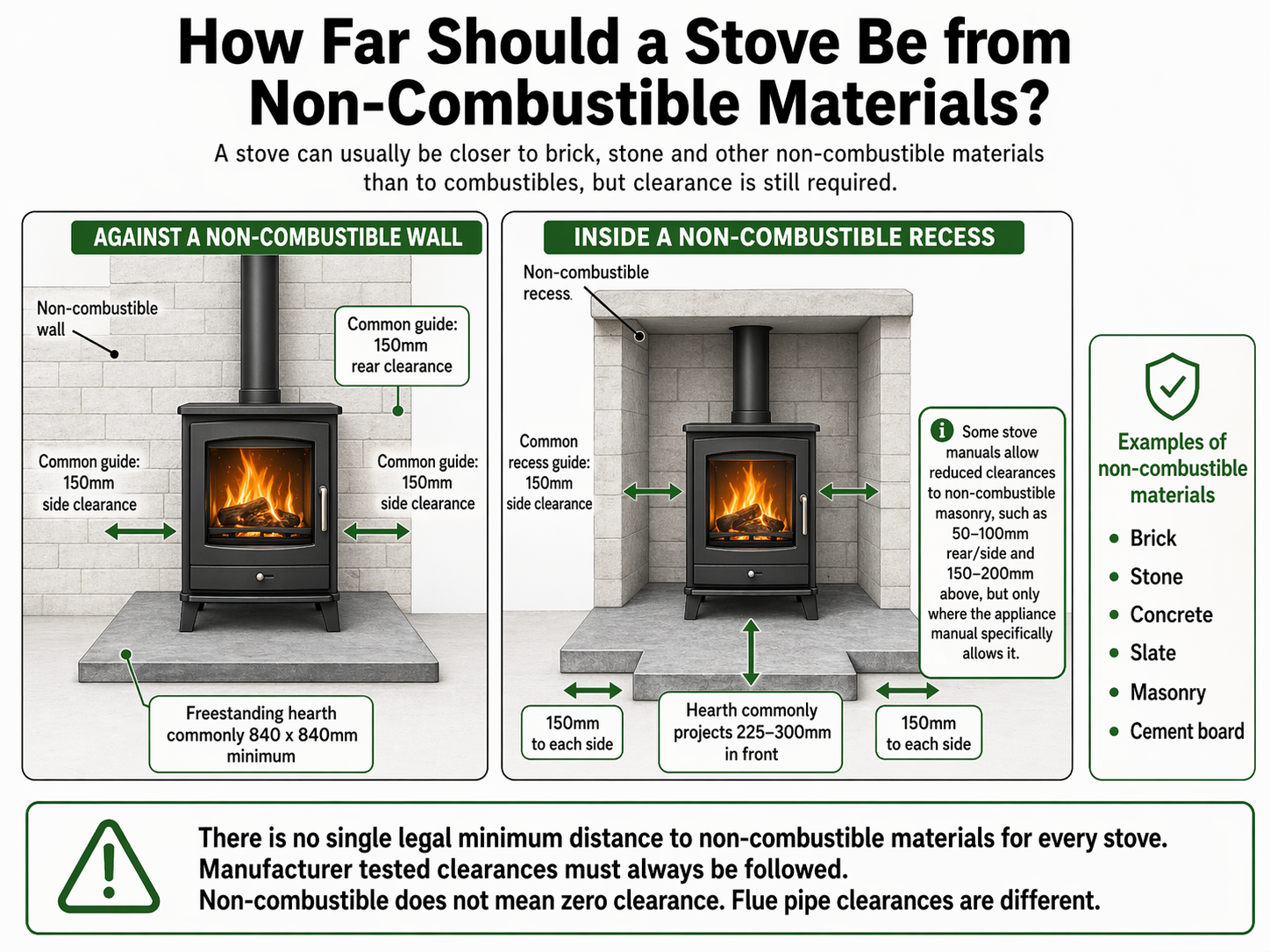
For a stove installed inside a non-combustible recess, the hearth commonly projects 300mm in front and 150mm to each side. Some stove manufacturers allow reduced non-combustible clearances such as 50mm sides, 50mm to 100mm rear, and 150mm to 200mm above, but only where the surrounding masonry is thick enough and the appliance manual specifically allows it.
Non-combustible does not mean no gap is needed. The stove manufacturer’s tested clearance figures must always be followed.
Related Links:
Chamber Linings and Non-Combustible Boards
If a stove is being installed inside a fireplace recess, the chamber lining can make a major difference to safety, finish and installation flexibility. Non-combustible chamber linings such as suitable fireplace boards, brick slips, stone and other masonry-style finishes are commonly used to create a safer chamber around the stove than timber, plasterboard or other combustible materials.
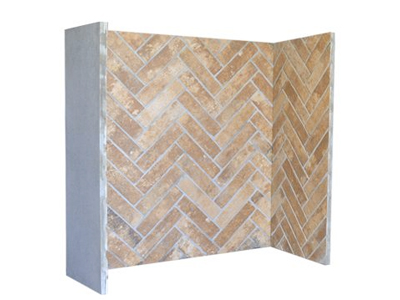
Using suitable chamber linings does not automatically reduce the stove’s tested distance to combustibles, but it can help create a non-combustible recess that may allow the reduced non-combustible clearances stated by some stove manufacturers. The final distances must still come from the installation manual for the exact stove model being installed.
This is especially useful in older fireplace openings where the existing chamber may be damaged, uneven or finished with unsuitable materials. Re-lining the recess with the correct non-combustible materials can improve safety, create a cleaner finish and make the installation more practical.

If you are choosing materials for a stove chamber, you can browse our range of fireplace chamber linings and also read our guide on which boards are safe to use around a fireplace or stove.
Clearance Around the Flue Pipe
Clearance is not only about the stove body. The flue pipe also matters.
If you have a freestanding stove with a visible flue, the flue must also be kept the correct distance away from combustible materials such as timber, plasterboard, joists and beams.
Single Skin Flue Pipe
A single skin stove pipe must usually be kept at least 3 x its internal diameter away from combustible materials. In simple terms, a 125mm pipe needs 375mm clearance and a 150mm pipe needs 450mm clearance. This is why single skin flue pipe cannot usually run close to timber, plasterboard or boxed-in areas.
Twin Wall Insulated Flue
A twin wall insulated flue has much lower clearance requirements because it is insulated. Typical tested distances are 50mm to 60mm to combustible materials, depending on the flue manufacturer and system. The exact clearance must always be taken from the installation instructions for the specific twin wall flue being used.
Can a Heat Shield Reduce Clearances?
In some cases, yes.
A heat shield can help reduce the heat reaching nearby combustible materials, which may make a stove installation possible where space is limited. This is especially useful where there is a timber beam, wooden mantel, stud wall or compact fireplace opening that would otherwise be too close to the stove.
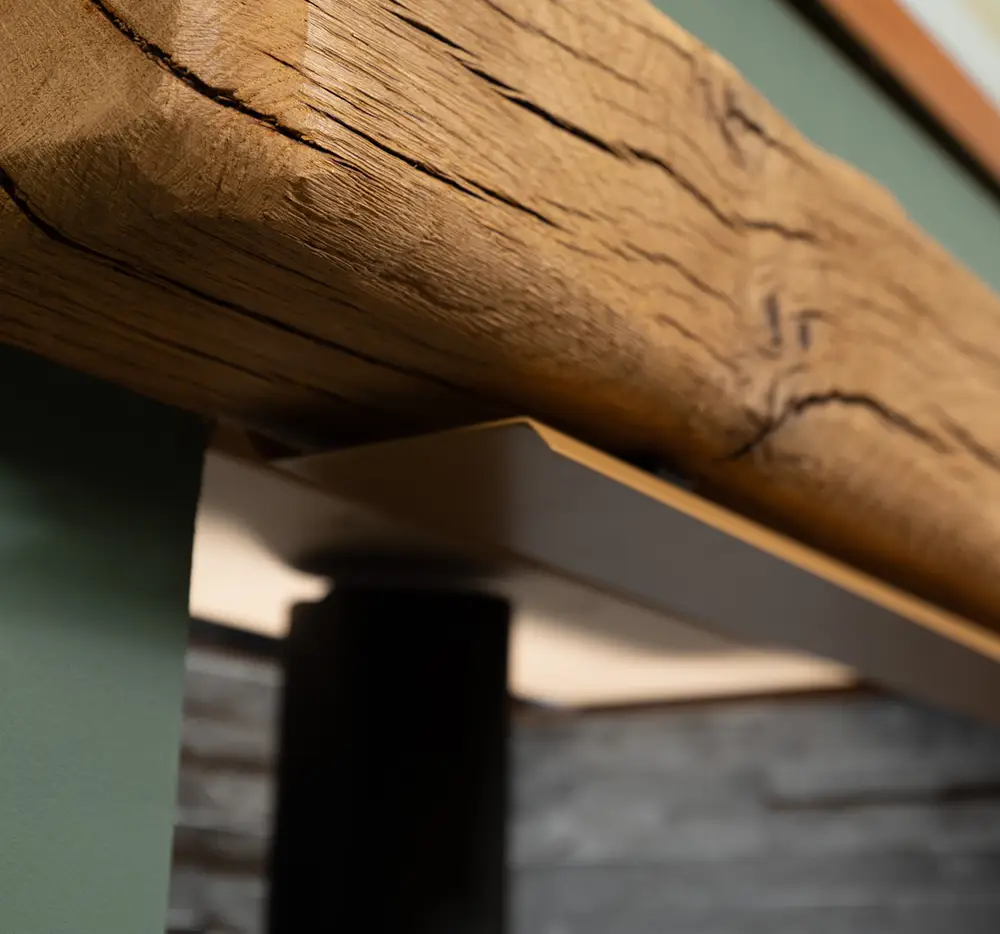
For a heat shield to work properly, it must be installed correctly. It should allow airflow behind it, must not trap heat against the wall or beam, and needs to cover the area being protected. It also has to be suitable for the specific installation and used in line with the stove manufacturer’s guidance.
If you are trying to protect a beam above a stove, a heat shield for fireplace beams can be a practical solution where appropriate. We also offer a wider range of fireplace heat shields for installations where combustible materials need added protection.
If you want to understand how heat shields work, when they can help, and what to consider before buying, read our heat shield guide for wood burning stoves.
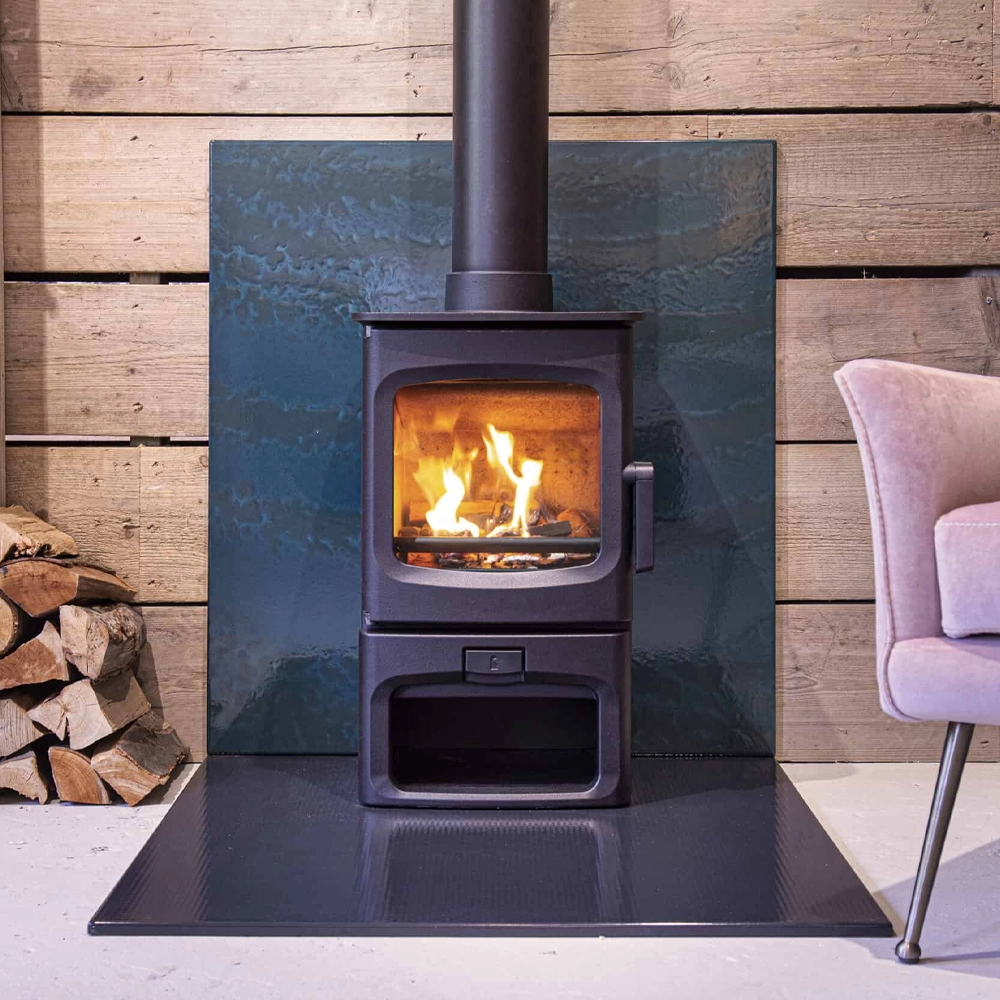
Some wood burning stoves also have optional rear heat shields fitted directly to the appliance. These can reduce the rear clearance on selected stove models, but only where the manufacturer specifically states this in the installation instructions.
A heat shield should never be treated as a shortcut or guess. It must form part of a properly planned installation, with the final clearances confirmed against the stove manufacturer’s tested figures.
Timber Beams and Mantels
A timber beam is combustible, so it must be positioned a safe distance from the stove and flue pipe. The correct clearance depends on the manufacturer’s instructions for the exact stove model and should always be checked before installation.
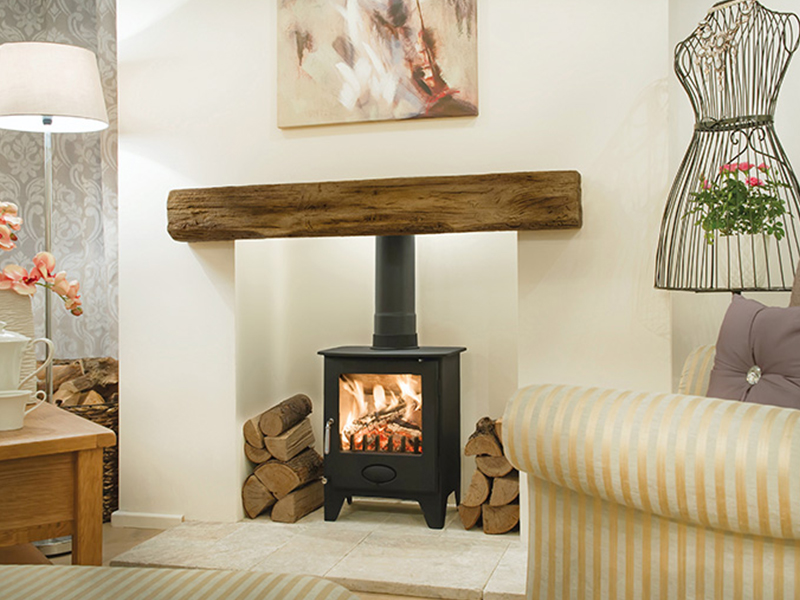
If a wooden beam is too close, the installation may need to be changed. Common solutions include moving the beam higher, choosing a stove with lower tested clearances, using approved shielding where suitable, or replacing the timber beam with a non-combustible fireplace beam.
For many installations, a non-combustible beam is the safest and simplest option because it gives the same style without the same clearance concerns as real wood. For more guidance, read our article on fireplace beam height rules, regulations and safety tips.
Hearth Requirements
A wood burning stove must be installed on a non-combustible hearth. For a closed stove, the hearth should normally extend at least 225mm in front of the stove door and 150mm to each side. For a freestanding stove, a common minimum hearth size is 840mm x 840mm.

If you are choosing a new hearth for your installation, you can view our range of fireplace hearths.
If the stove has been tested so the hearth temperature stays below 100°C, a 12mm hearth can usually be used. If not, the installation will generally need a 125mm constructional hearth.
The stove manufacturer’s instructions always take priority, so the hearth should be sized and specified before installation begins.
Choosing a Stove for a Small Space
If you are installing a stove in a smaller room, narrow chimney breast or compact fireplace opening, the clearance figures should be checked before the stove is chosen. A model may look small enough, but it may still need too much distance to the sides, rear or above once installed.

Many small wood burning stoves are designed for tighter spaces and can offer features such as lower tested clearances, compact dimensions, optional rear heat shields and lower heat outputs for smaller rooms.
Features that can help include:
- Lower tested side and rear clearances
- Optional rear heat shields
- Compact body dimensions
- Corner installation suitability
- Lower output models for smaller rooms
The most important point is that a stove suitable for a small space is not defined by its physical size alone. The tested installation clearances are just as important.
Common Mistakes to Avoid
Assuming a wall is non-combustible
A wall may appear solid, but the construction behind it may include timber or other combustible materials.
Buying the stove before checking the manual
A stove may fit visually but fail once the required air gaps are applied.
Forgetting the flue
The flue system must also meet clearance requirements, not just the appliance itself.
Treating heat shields as a universal solution
A heat shield can help in some installations, but it must be correctly specified and installed.
Focusing only on the look
Beams, chambers, mantels and decorative finishes all need to work with the stove’s tested clearances.
Need Help with Wood Burning Stove Installation?
If you are planning a wood burning stove installation and need advice on clearances, hearth requirements, timber beams, non-combustible materials or flue design, our team can help. We supply and install wood burning stoves across Berkshire, Hampshire, Surrey, Oxfordshire and London.
Get a quote for wood burning stove installation

Final Thoughts
Understanding the distance to combustibles and non-combustibles is essential when planning a wood burning stove installation. It affects safety, stove choice, flue design, fireplace construction and the overall layout of the room.
There is no one-size-fits-all measurement. The correct clearances depend on the exact stove model, the flue system and the surrounding materials. Timber, plasterboard, furniture and fabrics all need careful consideration, while even non-combustible surfaces still need to follow the manufacturer’s instructions.
Getting this right at the start will help you avoid problems later and ensure your stove is installed safely, correctly and in a way that works for your home.
Need Help Choosing the Right Stove?
At Bonfire, we supply and install wood burning stoves across Berkshire, Hampshire, Surrey, Oxfordshire and London. If you need help choosing a stove with suitable clearances for your room, or want expert advice on a planned installation, our team can help.
FAQ
Distance to combustibles means the minimum safe air gap that must be left between the stove or flue pipe and any material that could catch fire or be damaged by heat. This includes timber, plasterboard on studwork, furniture, curtains and other combustible surfaces. The correct distance is set by the stove or flue manufacturer and must always be taken from the installation instructions.
They can be. Even if the outer surface looks solid, the wall construction may include timber framing or other combustible materials behind it.
As a practical rule, combustible materials should be kept at least 750mm from the front of the stove. This helps reduce the risk from radiant heat, sparks and embers. Side and rear clearances are not fixed for every stove and must be checked against the tested figures for the exact model being installed.
A stove can usually be closer to a non-combustible wall than to a combustible one, but clearance is still needed. A common guide is 150mm to the rear and sides, although some stove manufacturers allow reduced distances such as 50mm to 100mm where the surrounding masonry is thick enough and the appliance manual specifically allows it.
Yes, a wood burning stove can be installed in a fireplace recess, provided the chamber is suitable and the required clearances are maintained. In many installations, the hearth commonly projects 225mm to 300mm in front of the stove and 150mm to each side, but the final dimensions must always match the stove manufacturer’s instructions and the installation layout.
Yes. A single skin flue pipe normally needs clearance to combustible materials of at least 3 times its internal diameter, so a 150mm pipe needs 450mm clearance. A twin wall insulated flue usually has much lower tested clearances, often around 50mm to 60mm, but the exact figure must be taken from the flue manufacturer’s instructions.
In some cases, yes. A correctly installed heat shield can help reduce heat transfer to nearby combustible materials such as timber beams, wooden mantels and stud walls. However, it does not override the stove manufacturer’s tested clearance requirements and should only be used as part of a properly designed installation.
For most closed wood burning stoves, the hearth should normally project at least 225mm in front of the stove door and 150mm to each side. For a freestanding stove, a commonly used minimum overall hearth size is 840mm x 840mm. If the stove has been tested so the hearth temperature stays below 100°C, a 12mm non-combustible hearth may be suitable; otherwise, a 125mm constructional hearth is generally required.