
Understanding MVHR Systems and Their Impact on Stove Installation
Mechanical Ventilation with Heat Recovery (MVHR) systems are designed to provide fresh air ventilation while recovering heat from the exhaust air. This technology is increasingly popular in modern, energy-efficient homes.
However, integrating a wood burning stove in such environments requires careful consideration to ensure safety, efficiency, and compliance with regulations.
Estimated reading time: 5 minutes
Table of contents
The short answer:
Yes, wood burning stoves can be installed in houses with MVHR systems.
However, a mechanical heat recovery system changes the air pressure which affects the performance of a log burner.
You can maintain safe air quality with a direct external air supply to a stove. These are an optional extra on many wood burners.

We would recommend a good quality stove with a tight door seal making it almost room sealed so that it is not affected by the change in air pressure.
A good indication of what wood burning stove to choose is to use the German DIBt standard which shows how well a stove is sealed.
We would recommend either a SCAN, Morso or Contura for a well sealed wood burner.
Or view our list of Dibt tested and certified stoves
Key Considerations for Stove Installation in MVHR-Equipped Homes
Ventilation Requirements
Installing a stove in a house with an MVHR system necessitates a thorough understanding of the ventilation requirements.
MVHR systems are balanced ventilation systems, meaning they provide a constant flow of fresh air while expelling stale air.

Introducing a stove, especially a wood-burning stove, can disrupt this balance if not properly managed.
Combustion Air Supply
Stoves require an adequate supply of air for combustion. In an MVHR-equipped home, it is essential to ensure that the stove has a dedicated air supply to avoid negative pressure issues.
This can be achieved by installing an external air supply directly to the stove. Failure to provide sufficient combustion air can result in poor stove performance and increased indoor air pollution.
Flue and Chimney Considerations
The flue system is crucial for safely expelling combustion gases from the stove. In homes with MVHR systems, the flue must be carefully designed to prevent back-drafting, where exhaust gases are drawn back into the house.
This can be achieved by ensuring the flue is properly sealed and has sufficient height and diameter to promote effective draught.
Heat Recovery Implications
One of the advantages of MVHR systems is their ability to recover heat from exhaust air. However, stoves generate high levels of heat that may not be compatible with the heat recovery process.
It is important to position the stove and its flue system in such a way that it does not interfere with the MVHR unit’s operation.
Additionally, using heat-resistant materials and ensuring proper clearance around the stove and flue can mitigate any potential issues.
Installation Best Practices
Professional Assessment and Installation
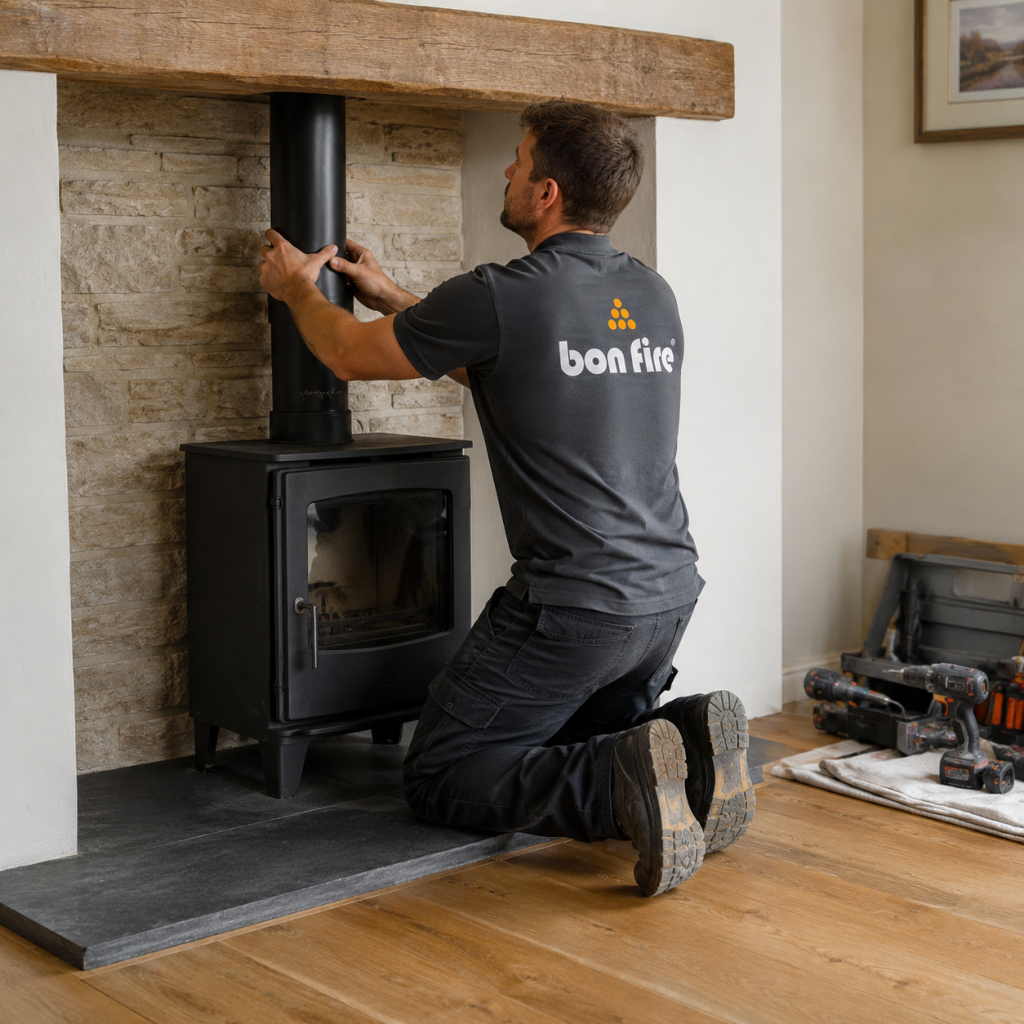
Engaging a professional installer with experience in both stove and MVHR systems is highly recommended.
Require a professional? Get in contact with us for your MVHR project today.

A thorough assessment of your home’s ventilation needs will need to be conducted and assurance that the stove installation complies will comply with all relevant building regulations and standards.
Regular Maintenance and Inspections
Regular maintenance of both the stove and MVHR system is essential to ensure their efficient and safe operation.
This includes cleaning the flue, checking seals and gaskets, and servicing the MVHR unit as per the manufacturer’s recommendations.
Related Links
Using Compatible Products
When selecting a stove for an MVHR-equipped home, it is crucial to choose models designed for airtight, energy-efficient buildings.

Look for stoves with a direct external air supply option and those that have been tested and approved for use in homes with mechanical ventilation systems.
Need help choosing? Speak to on of our experts on 0118 970 1717 or email info@bonfire.co.uk
Conclusion
Integrating a stove into a home with an MVHR system requires meticulous planning and adherence to best practices.
By ensuring adequate ventilation, a dedicated combustion air supply, and a well-designed flue system, you can enjoy the warmth and ambiance of a stove without compromising the efficiency and safety of your MVHR system.
We would recommend finding a specialist fireplace installer that often operates alongside MVHR systems. We’re and we can help! Contact us today
Regular maintenance and professional installation are key to achieving a harmonious balance between these two technologies.




so can you list which stoves you sell that are compatible with MVHR
Please view our list here: https://bonfire.co.uk/product-tag/dibt-certified-stoves/