Summer Stove & Fireplace Installation Deals
We’ll beat any like-for-like local installation quote.
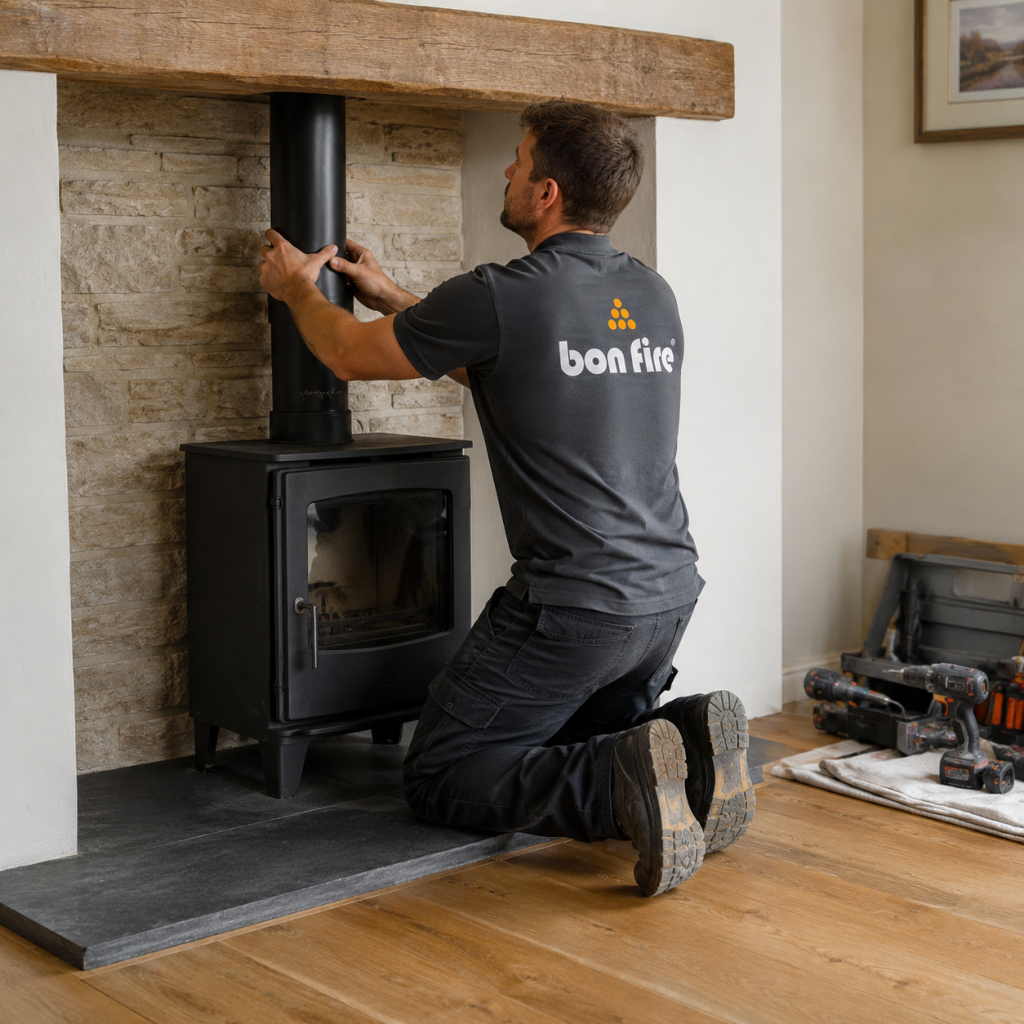
Save on your complete stove or fireplace, supplied and professionally installed — with or without a chimney.
Offices & Showroom:
Monday, 9am – 5pm
Tuesday, 9am – 5pm
Wednesday, 9am – 7pm
Thursday, 9am – 5pm
Fri, 9am – 4pm
Sat – Sun, Closed
Save on Stove & Fireplace Installation View Installed Offers
Expert answers about fireplaces, wood burning stoves, gas fires, electric fires, flues, chimneys, outdoor living products and Bonfire’s services.
Bonfire is an independent family run fireplace and stove specialist established in 2003. We supply and install fireplaces, stoves, fires, flues and chimney systems, with specialist advice available for projects ranging from simple appliance replacements to complete bespoke fireplace and chimney installations.
A fireplace is the complete architectural feature surrounding a fire or stove. It can include a fireplace surround, mantel, hearth, slips or back panel, chamber and the fire or stove itself.
A fireplace surround is the decorative structure that frames the fireplace opening.
It normally consists of two vertical legs and a horizontal mantel or header and can be made from materials including natural marble, limestone, Bath Stone, timber, cast iron and other suitable materials.
The surround is only one part of a complete fireplace, which can also include a hearth, slips or back panel, chamber and the fire or stove itself.
Yes.
A complete fireplace can be specified to include the fireplace surround, hearth, slips or back panel and a compatible gas fire, electric fire, wood burning stove or other suitable appliance.
Choosing the fireplace and fire together helps ensure the dimensions, materials, clearances and overall proportions work correctly.
Bonfire can help specify the complete fireplace rather than requiring each component to be selected separately.
There is no single fireplace type that is best for every home.
The right choice depends on:
Natural stone and marble fireplaces are popular for both traditional and contemporary interiors, while electric fireplace suites and media walls provide greater flexibility where there is no chimney.
A traditional fireplace can include:
Not every installation requires every component.
Fireplace surrounds are available in materials including natural marble, limestone, Bath Stone, sandstone, granite, timber, cast iron and manufactured stone products. The correct material depends on the appearance required and the type of appliance being installed.
Yes. Natural marble is widely used for fireplace surrounds and can create anything from a traditional period fireplace to a very contemporary design. Natural marble varies naturally in colour, pattern and veining, meaning every surround is individual.
Fireplace installation cost depends on what is being installed and the condition of the existing fireplace and chimney.
A straightforward electric fireplace installation can be relatively simple, while a project involving chimney alterations, a new hearth, natural stone, a gas fire or wood burning stove can require significantly more work.
Photographs, dimensions and your postcode can normally help us provide initial guidance before a home survey is arranged where required.
Natural marble is quarried stone with naturally occurring variation and veining. Micro marble is a manufactured material made from crushed marble and resin. It provides a more consistent appearance but should not automatically be used in applications designed for natural stone, particularly around high-temperature solid-fuel appliances.
A well-designed fireplace can improve the appearance and appeal of a room, but there is no guaranteed amount that a fireplace will add to a property’s value.
Quality of design, installation, the type of fireplace and how well it suits the property are likely to matter more than simply having a fireplace.
In period homes particularly, retaining or reinstating an appropriately proportioned fireplace can also preserve an important architectural feature.
“Fireplace insert” is a term commonly used for an appliance designed to fit within a fireplace opening or recess.
In the UK, terms such as inset fire, inset stove or cassette fire are also commonly used depending on the appliance.
Inserts are available in wood burning, gas and electric forms, and the existing fireplace opening and chimney must be suitable for the specific appliance.
The correct installer depends on the type of fireplace and appliance.
Fireplace installation can involve several different skills, including stone fitting, hearth installation, chimney work, carpentry, building work, electrical work, solid-fuel installation and gas work.
Where a wood burning stove is involved, appropriately registered HETAS professionals can undertake relevant solid-fuel work.
Gas work must be completed by an appropriately qualified Gas Safe registered engineer.
Bonfire can provide complete fireplace supply and installation for suitable projects.
Not necessarily. Many micro-marble fireplaces are designed primarily for electric fires and certain gas-fire installations. Always check the manufacturer’s permitted applications before using micro marble with a wood burning stove.
Fireplace slips are sections of stone, marble, slate or another suitable material positioned between the fireplace surround and the opening. They help frame the appliance or chamber and allow the fireplace opening to be sized correctly.
Sometimes.
Whether a hearth can sit flush with the surrounding floor depends on the appliance, hearth construction and applicable installation requirements.
Some modern stove and fireplace installations use a flush or nearly flush hearth for a cleaner appearance, while other installations require a raised or more substantial construction.
The hearth should always be designed around the appliance rather than appearance alone.
The chamber is the internal lining of the fireplace recess behind or around a stove or fire. Chambers can be lined in materials including brick, stone, slate, vermiculite and other heat-resistant materials.
A hearth is the non-combustible surface beneath and in front of a fire or stove. Its size, thickness and material depend on the appliance and installation requirements.
There is no single best hearth material. Popular choices include slate, granite, limestone, natural stone and glass. The correct material depends on the appliance, expected temperature and desired appearance.
Yes. Bespoke fireplace surrounds, hearths, slips and stonework can be made to suit individual chimney breasts, rooms and design requirements. Bespoke manufacturing is particularly useful for unusual openings, period properties and projects requiring specific proportions or natural stone.
Yes. Electric fireplaces can normally be created without a chimney. Wood burning and gas installations may also be possible using an appropriate new chimney or flue system. False chimney breasts and bespoke fireplace structures can also create a completely new focal point.
Yes. Electric fires require no combustion chimney. Some gas fires can use balanced-flue systems, while wood burning stoves can often use an insulated twin-wall chimney.
Sometimes. Electric fires are commonly installed beneath televisions in media walls. Wood burning stoves and gas fires require more careful consideration because of the heat they produce. Manufacturer clearances, ventilation and temperatures around the television must always be considered.
Ideally, choose both together. The appliance can affect the size of the fireplace opening, hearth, slips, chamber, clearances and flue requirements. Specifying the complete fireplace as one system reduces the risk of incompatible components.
Yes. Bonfire supplies standard and bespoke fireplace surrounds, natural stone fireplaces, hearths, slips, chambers and associated fireplace components.
A wood burning stove is an enclosed appliance designed to burn wood efficiently while providing heat to the room. Modern stoves use controlled combustion and air systems to achieve significantly greater efficiency than traditional open fires.
There is generally no practical difference. “Wood burning stove”, “wood burner” and “log burner” are commonly used to describe the same type of appliance.
A wood burning stove is specifically designed for burning wood. A multi-fuel stove is designed to burn wood alongside other approved fuels using features such as a grate and ashpan.
There is currently no general ban on owning or installing wood burning stoves in England. Modern installations must comply with applicable emissions, fuel, Building Regulations and Smoke Control Area requirements.
Smoke entering the room usually means the stove or chimney is not creating enough upward draught to carry the combustion gases safely outside.
Common causes include:
A small amount of smoke when opening the stove door too quickly can sometimes be caused by pressure changes, so open the door slightly first and then slowly open it fully.
Persistent smoke entering the room should not be ignored. Stop using the stove and have the appliance, chimney and ventilation checked by a suitably qualified stove installer or chimney sweep.
A cold chimney can sometimes create what is commonly called a cold plug.
A chimney works because warm flue gases rise and create an upward draught. If the chimney is very cold, particularly after the stove has not been used for some time, a column of dense cold air can sit inside the flue and resist the initial upward movement of smoke.
This can cause:
Cold-start draught problems are more common with exposed external chimneys, long cold flues and some twin-wall chimney systems.
The aim when lighting is to warm the chimney and establish upward draught as quickly as possible. Use plenty of dry kindling and follow the stove manufacturer’s recommended lighting method, with the air controls fully open during the initial lighting stage.
If the problem happens regularly, it may indicate more than simply a cold chimney. Chimney height, insulation, flue diameter, terminal position, ventilation, blockages and pressure within the property should also be checked.
Persistent draught problems should be investigated by a suitably qualified stove installer or chimney specialist.
Yes, provided the appliance and fuel meet the applicable requirements. When burning wood within an English Smoke Control Area, you will normally need an appropriately exempt appliance operated according to its conditions.
A DEFRA exempt stove has been approved for burning specified fuels, including wood where applicable, in Smoke Control Areas when operated according to the conditions of its exemption.
Sometimes, but it requires careful design.
A wood burning stove can produce significant heat above and around the appliance, which may damage a television or shorten its lifespan. The stove manufacturer’s minimum clearances must always be followed, along with the television manufacturer’s temperature and installation requirements.
Where a TV is positioned above a wood burning stove, a suitable non-combustible mantel, shelf or heat-deflecting detail may be required to help protect it. The chimney breast, recess, stove position and heat output should all be considered before installation.
For this reason, we recommend planning the wood burning stove and television layout together rather than adding a TV above an existing stove without checking the heat conditions.
Ecodesign requirements set standards covering factors including efficiency and emissions from solid-fuel appliances. Ecodesign compliance and DEFRA exemption are different things and should not be confused.
Stove output should be matched to the room. Room volume is important, but insulation, glazing, ceiling height, external walls, property age and open-plan spaces can significantly affect the amount of heat required. A bigger stove is not automatically better.
No. An oversized stove can make a room uncomfortable and may encourage the appliance to be operated too slowly, resulting in poorer combustion and increased deposits. Correct sizing is more important than maximum output.
Burn clean, dry and untreated firewood suitable for the appliance. Domestic firewood should generally have a moisture content of no more than 20%.
Wet logs burn less efficiently and create more smoke. They can also increase soot and tar deposits within the stove and chimney.
A wood moisture meter can be used to check split logs. For the most meaningful reading, split the log and measure the freshly exposed internal face rather than just the outside surface.
Common causes include:
Persistent blackening can indicate a fuel, operation or installation problem.
You need a suitable flue system, but this does not necessarily have to be an existing masonry chimney. Properties without chimneys can often use an insulated twin-wall chimney system.
No. Whether an existing chimney needs lining depends on its construction, dimensions, condition and suitability for the appliance. The chimney should be assessed before deciding whether lining is required.
Yes, in many properties. An insulated twin-wall chimney can often be installed internally or externally to provide the required flue route.
Some installations require dedicated combustion-air ventilation. Requirements depend on the appliance, property and installation conditions.
A correctly positioned carbon monoxide alarm is required by law in the UK for wood burning stove installations.
Solid-fuel installations must comply with Building Regulations. Using an appropriately registered HETAS installer provides a straightforward competent-person route for eligible installations.
Chimneys serving wood burning appliances should be swept regularly. The appropriate frequency depends on usage, fuel and the appliance, with more frequent sweeping often recommended during periods of regular wood burning.
Professional inspection and servicing is generally recommended at least annually, subject to manufacturer guidance and usage.
Depending on the appliance, servicing may include checking:
Yes. Bonfire supplies and installs wood burning stoves, fireplace components and complete chimney and flue systems.
The cost of installing a wood burning stove varies considerably depending on the property and the work required.
An installation into an existing suitable chimney may require a stove, hearth, chimney liner, connection components and installation. Properties without a suitable chimney may require a complete insulated twin-wall chimney system, which increases the amount of material and labour involved.
Other factors can include fireplace alterations, chimney condition, access, ventilation, scaffolding and making good.
For an accurate price, the complete installation should be assessed rather than comparing the stove price alone.
Yes.
Bonfire supplies complete wood burning stove installation packages rather than just individual appliances.
A complete project can include:
Specifying the stove and installation together helps ensure all components are compatible with the appliance and property.
Allow the stove and glass to cool completely before cleaning.
Many stove manufacturers offer dedicated stove-glass cleaners. Light deposits can often be removed using a suitable damp cloth or manufacturer-approved cleaning product.
Avoid abrasive products that could scratch or damage coated glass.
If the glass repeatedly becomes heavily blackened, cleaning it is only treating the symptom. Wet wood, low combustion temperature, restricted airflow or poor chimney draught may be causing the problem.
Yes, in many properties.
A traditional masonry chimney is not essential because an insulated twin-wall chimney system can often be installed to provide the required flue route.
Depending on the property, a twin wall flue system can travel internally through the building or pass through an external wall before continuing vertically outside.
The chimney route, height, supports, clearances and terminal position must be correctly designed for the property and stove.
Usually, a standard wood burning stove is primarily intended to heat the room or connected living space in which it is installed.
How much of the property benefits from that heat depends on the home’s layout, insulation, stove output and airflow between rooms.
A stove should not simply be oversized in an attempt to heat an entire property, as excessive output can make the main room uncomfortable and encourage inefficient operation.
There is no single wood burning stove that is best for every property.
The right stove depends on factors including:
A correctly sized stove that suits the property and chimney is generally more important than choosing a particular model solely because it has the highest output or efficiency figure.
Efficiency varies between stove models and should be compared using the manufacturer’s tested efficiency figures.
However, headline efficiency should not be the only factor when choosing a stove.
Correct sizing, chimney performance, dry fuel and the way the appliance is operated can all significantly affect real-world performance.
Any fuel-burning appliance can potentially produce carbon monoxide if combustion or the removal of combustion gases is compromised.
Correct installation, adequate ventilation, regular chimney sweeping and appliance maintenance are therefore essential.
A suitable carbon monoxide alarm should also be installed in accordance with the applicable requirements.
A wood burning stove installation must comply with the applicable Building Regulations.
Using an appropriately registered HETAS installer provides a competent-person route for eligible installations and allows the relevant work to be self-certified.
If work is carried out outside an appropriate competent-person scheme, Building Control requirements may apply.
Installing a wood burning stove does not automatically require planning permission, but the installation must comply with the applicable Building Regulations.
Additional restrictions can apply to listed buildings, conservation areas, unusual chimney alterations and some properties subject to specific planning conditions.
Smoke Control Area requirements should also be checked when selecting the stove.
Yes. A correctly installed stove does not give you permission to cause persistent smoke or nuisance to neighbouring properties.
Using appropriate dry fuel, operating the stove correctly and maintaining the chimney all help minimise unnecessary smoke.
Additional restrictions apply within Smoke Control Areas.
Smoke entering the room usually means the stove or chimney is not creating enough upward draught to carry combustion gases safely outside.
Common causes include:
Persistent smoke entering the room should not be ignored. Stop using the stove and have the appliance, chimney and ventilation investigated.
A very cold chimney can sometimes create what is commonly called a cold plug.
Cold, dense air sitting inside the chimney can initially resist the upward movement of warm smoke. This can cause poor draught or smoke spillage while the stove is being lit.
Typical symptoms include:
The aim when lighting is to warm the chimney and establish upward draught quickly using dry kindling and the stove manufacturer’s recommended lighting procedure.
If it happens regularly, chimney height, insulation, flue diameter, ventilation and pressure conditions within the property should also be investigated.
HETAS is a recognised Competent Person Scheme for solid-fuel, wood-burning and biomass installations in England and Wales.
HETAS-registered installers are assessed for competence in areas such as wood burning stoves, solid-fuel appliances and chimney or flue systems. For eligible work, a registered installer can self-certify that the installation complies with the relevant Building Regulations, avoiding the need for a separate Building Control application.
Bonfire uses appropriately qualified HETAS-registered professionals for relevant solid-fuel installation work.
A gas fire is an appliance that burns natural gas or LPG to provide a real flame and heat. Gas fires are available in traditional and contemporary designs, including inset fires, gas fire baskets and large glass-fronted fires.
Not always. Some gas fires use conventional chimneys, while balanced-flue gas fires use their own dedicated flue system.
Yes. Balanced-flue gas fires can often be installed in properties without traditional chimneys. The suitability of the appliance and proposed flue route must still be assessed.
A balanced-flue gas fire is a room-sealed appliance. It uses a dedicated flue system to draw combustion air from outside and discharge combustion gases back outside.
A conventional-flue gas fire uses a suitable chimney or flue to discharge combustion gases. The chimney must be compatible with the individual appliance.
Many modern balanced-flue gas fires achieve high efficiencies because the combustion process is sealed and controlled. Efficiency still varies considerably between individual appliances.
Yes, in many installations, but it depends on the type of gas fire and the manufacturer’s requirements.
Modern glass-fronted and balanced-flue gas fires are often installed beneath televisions, particularly in contemporary feature walls. However, gas fires can produce substantial heat above the appliance, so minimum clearances, ventilation and maximum permitted temperatures must be checked.
Some installations use a mantel, shelf or specially designed heat-deflecting feature between the gas fire and television.
The gas fire, television and fireplace or media-wall design should be specified together to ensure the TV is positioned safely and the installation complies with both manufacturers’ instructions.
Often, yes. The fireplace dimensions, chimney condition, ventilation and gas supply need to be assessed before selecting the appropriate appliance.
Yes, provided the fireplace and materials are suitable for the particular appliance. The fireplace opening, back panel, hearth and ventilation requirements should all be considered together.
Some models are available for LPG while others are natural-gas only. Always check the exact appliance specification.
Only where the manufacturer specifically permits conversion and the correct conversion procedure and components are available. Never assume that a gas appliance can be converted.
Some modern gas fires require an electrical connection for ignition, lighting, controls, fans or other features. Others can operate without mains electricity. Check the specification of the individual model.
Annual servicing by an appropriately qualified Gas Safe registered engineer is generally recommended. The manufacturer’s servicing requirements should also be followed.
Gas work covered by the Gas Safety regulations must be completed by an appropriately qualified Gas Safe registered engineer.
Yes. Bonfire supplies and installs natural gas and LPG gas fires using appropriately qualified Gas Safe registered professionals for the relevant work.
Gas Safe Register is the official register of businesses and engineers legally permitted to carry out gas work in the UK.
Anyone fitting, servicing or repairing a gas appliance must be appropriately Gas Safe registered for the type of work being carried out. Engineers carry a Gas Safe ID card showing the categories of gas work they are qualified to undertake.
Bonfire uses appropriately qualified Gas Safe registered engineers for relevant gas-fire installation and servicing work.
An electric fire creates a flame effect using lighting, projection, screens or other visual technology rather than combustion.
Many electric fires also contain an electric heater.
No.
Electric fires do not create combustion gases and therefore do not require a combustion chimney or flue.
Electric fires provide considerably more installation flexibility than combustion appliances.
However, electrical requirements, ventilation, dimensions, access and manufacturer clearances must still be followed.
Many do.
Built-in electric fires and media-wall installations may use concealed sockets or other electrical arrangements.
Always follow the manufacturer’s requirements.
On most modern electric fires, yes.
The flame and fuel-bed effects can usually operate independently from the heating function.
Many domestic electric fires provide approximately 1–2kW of supplementary heating, although this varies by model.
At the point of use, electric resistance heating converts essentially all of the electrical energy it consumes into heat in the room.
That does not necessarily mean electric heating is the lowest-cost heating method.
Realism depends on personal preference and the technology used.
Modern premium electric fires can include:
Seeing different fires operating in person is often the best way to compare them.
Yes.
Electric fires are particularly well suited to media-wall installations because they do not require a combustion chimney.
The wall must still meet manufacturer ventilation, access and clearance requirements.
Usually, yes, provided the installation meets the fire and television manufacturers’ requirements.
Electric fires generally require less routine maintenance than gas or solid-fuel appliances.
They should still be kept clean and maintained according to the manufacturer’s instructions.
Often, yes.
The existing fireplace may need alterations depending on the dimensions and style of the new electric fire.
Yes.
Bonfire supplies electric fires and can provide installation for suitable electric fireplace and media-wall projects.
A flue is the passage that safely carries combustion products away from a fire, stove or other combustion appliance.
A chimney is the structure or system that contains or forms the flue route.
The flue is the passage used by combustion gases. The chimney is the structure or system through which that passage runs.
A chimney liner creates a defined internal passage for combustion products within an existing chimney.
No. Whether lining is required depends on the chimney’s condition, construction, dimensions and intended appliance.
A flexible chimney liner is a metal flue liner designed to be installed inside a suitable existing masonry chimney. Different grades and constructions are available for different applications.
Twin-wall chimney is an insulated factory-made metal chimney system. It generally consists of an inner flue, insulation and an outer casing.
Twin-wall systems are commonly used when:
Yes. Twin-wall chimneys can often be routed externally, subject to correct clearances, supports, height and terminal position.
Often, yes. A properly designed system can pass through a suitable wall and continue vertically outside.
Yes. Twin-wall chimney systems are commonly routed internally and then through the roof. Correct roof penetrations, flashings, clearances and support must be used.
There is no single correct height for every chimney. The correct termination depends on roof geometry, nearby surfaces, openings, surrounding buildings, appliance requirements and applicable regulations.
Possible causes include:
The cause should be identified before changes are made.
Sometimes. Different cowls are designed for different problems, so the cause of the draught issue should be diagnosed before changing the terminal.
A chimney fan mechanically assists draught where natural chimney performance is inadequate for an appropriately designed system.
Yes. Chimney condition can be investigated using methods including sweeping, smoke testing and CCTV chimney surveys.
Drone inspection can be useful for assessing external chimney stacks, pots, terminals, flashings and difficult-to-access roof areas.
Sweeping frequency depends on the fuel and level of use. Chimneys serving regularly used wood burning appliances may require more frequent sweeping than lightly used systems.
Yes. Bonfire supplies and installs chimney liners, twin-wall chimney systems and associated flue components for suitable projects.
Our outdoor range can include products such as:
Product availability varies by range and manufacturer.
An outdoor fireplace is a purpose-built fireplace designed for use outdoors.
It can provide heat, atmosphere and a focal point for gardens, patios and outdoor entertaining areas.
An outdoor fireplace normally has a defined fire chamber and often a chimney or flue path.
A fire pit is generally more open and allows people to gather around the fire from several sides.
Outdoor fireplaces, barbecues, fire pits and similar appliances can generally be used in English Smoke Control Areas.
Different requirements can apply where an appliance chimney terminates through a roof or building.
You must also avoid creating a statutory smoke nuisance.
Use clean, dry and untreated wood unless the manufacturer specifies another suitable fuel.
It is better not to.
Wet timber produces more smoke, burns less efficiently and can create significantly more nuisance for neighbours.
It depends on the appliance and paving material.
The surface must be stable and suitable for the temperatures generated.
Heat-resistant protection may be required.
Always follow the manufacturer’s specified clearances.
Fire pits should be positioned away from buildings, combustible structures, vegetation, furniture and other materials that may be affected by heat or sparks.
Only where the manufacturer specifically permits it and there is adequate ventilation and clearance.
Never use an outdoor combustion appliance in an enclosed or poorly ventilated area.
Only if the product is designed or approved for cooking.
Decorative fire pits should not automatically be used as barbecues.
Corten is a weathering steel designed to form a protective oxidised surface.
The characteristic orange-brown patina is intentional and changes as the material weathers.
Corten develops a rust-like protective patina by design.
During early weathering, runoff can leave marks on nearby light-coloured paving or surfaces.
Follow the manufacturer’s instructions.
Some products benefit from protection against prolonged moisture, while materials such as Corten steel are specifically designed to weather outdoors.
Bonfire can assist with suitable outdoor fireplace and larger outdoor-living projects depending on the product and location.
We even provide a white glove service, dependant on location.
Bonfire is an independent family-run fireplace, stove, fire and chimney specialist established in 2003. We supply fireplaces, wood burning stoves, gas fires, electric fires, flues, chimney systems and outdoor living products.
Bonfire supplies a wide range of fireplaces, stoves, fires, flues, chimneys and outdoor living products for domestic and trade customers.
Our main product ranges include:
We also provide design, surveys, technical advice and professional installation for suitable projects.
Bonfire’s showroom and offices are open:
Our showroom is located at Unit 49, Easter Park, Benyon Road, Silchester, Reading, Berkshire, RG7 2PQ.
You do not need an appointment to visit the showroom during normal opening hours.
Yes, we have an easy to access free car park infront of our showroom.
Bonfire has been family run since 2003.
Bonfire is based in Silchester near Reading, Berkshire.
Yes. Bonfire has a 4,000 sq. ft. fireplace and stove showroom displaying a wide range of fireplaces, wood burning stoves, gas fires, electric fires and associated products.
It is the largest fireplace and stove showroom in Berkshire and one of the largest in the South of England, giving customers the opportunity to compare different styles, materials and live displays in person.
An appointment is not normally required simply to browse. For larger or more technical projects, providing information beforehand can help us prepare relevant options.
For the most useful advice, bring:
Yes, this is what Bonfire primarily do. Bonfire provides supply and installation services for suitable fireplace, stove, fire, flue and chimney projects.
Bonfire has a full in-house team of Hetas Registered installers. Relevant solid-fuel work is undertaken using appropriately qualified HETAS registered professionals.
Relevant gas work is undertaken by appropriately qualified Gas Safe registered professionals.
Yes, Bonfire has a full in-house team of HETAS registered surveyors. Home and site surveys can be used to assess fireplace dimensions, appliance suitability, chimney condition, flue routes and installation requirements.
A survey allows important details to be checked before an installation is finalised.
This can include:
Yes. Many products can be purchased for supply only, subject to manufacturer, delivery and product requirements.
Many products can be collected from our showroom or premises by arrangement.
Yes. Delivery options depend on the product, destination and order size.
We undertake suitable projects across Berkshire and surrounding regions, including parts of Hampshire, Surrey, Oxfordshire, Buckinghamshire, Gloucestershire and London.
Coverage depends on the nature and location of the project.
Yes.
We work with homeowners, architects, designers, developers, builders and other trade professionals.
Yes. Bonfire provides trade accounts for suitable businesses and industry professionals, including builders, developers, architects, interior designers, installers and other fireplace and construction trades.
Trade customers can access specialist product advice, competitive trade pricing and support across fireplaces, wood burning stoves, gas fires, electric fires, flues, chimneys and associated products.
Yes.
We can help specify the fireplace, hearth, appliance, chamber, flue and chimney requirements as one complete system.
Yes.
Bespoke stone fireplaces, surrounds, hearths and associated components are available for suitable projects.
Yes.
We regularly deal with older properties where chimney condition, fireplace proportions, existing construction and sympathetic design require additional consideration.
Any listed-building or planning requirements remain subject to the appropriate permissions.
Often, yes.
Electric fires require no combustion chimney, while suitable gas and wood burning appliances can often be installed using purpose-designed flue systems.
Yes.
Photographs of the room, fireplace/chimney breast, exterior chimney, approximate dimensions and your postcode can help us provide useful initial advice before arranging a survey.
Yes.
We regularly advise on fireplaces, stoves, fires, hearths, flues, chimneys, installation and product compatibility.
Include the exact product model, photographs and measurements where relevant.
Every fireplace and property is different.
For advice on a new fireplace, wood burning stove, gas fire, electric fire, chimney, flue or outdoor fireplace project, contact our team with photographs, measurements and your postcode.
Last reviewed: August 2026 · Reviewed by the Bonfire Technical & Installation Team
independant family run company.
Full in-house experienced, friendly and professional team.
located in Reading, Berkshire.
within 200 miles of our showroom.

We use necessary cookies to make our website work. With your consent, we also use analytics and marketing cookies to understand how our website is used and improve our services and advertising. You can accept, reject non-essential cookies or manage your preferences at any time.
Save on your complete stove or fireplace, supplied and professionally installed — with or without a chimney.